Showing posts with label Music - Review. Show all posts

Friday, May 15, 2009

Review - Together Through Life


Artist: Bob Dylan
Album: Together Through Life
Record Label: Columbia Records
Producer(s): Jack Frost
Release Date: April 28, 2009
Genre: Folk Rock, Blues Rock
Strong Points: Strong album all the way through; excellent production values, lyricism and instrumentation; very retro feel
Weak Points: None
Technical Score: A
Artistic Score: A+
Final Score (not an average): A+
Moral Warnings: None

There’s no in-between with Bob Dylan: you love him or you hate him. Call him what you will, Dylan has consistently reinvented himself through his albums. From troubadour to gospel man, from prophet to blues-man, Dylan’s music has always proven surprising throughout his four-decade long career. With this newest release, Dylan follows up his trio of dark, spiritual blues albums with an album that is not so much a reinvention but an evolution of his previous blues work.

The previous three albums that Dylan released, 1997’s “Time Out of Mind,” 2001’s “Love and Theft” and 2006’s “Modern Times,” dealt heavily in the murk of blues, and tackled subjects such as love, death and aging. There was a hopelessness to all three albums as well as a commonality in theme that united the three, causing some critics to hail them as a trilogy, a claim that Dylan denied in subsequent interviews.

For this, Bob Dylan’s 33rd studio album, Dylan pursued a feel similar to that of the 1950s Chicago blues scene, specifically that of Chess Records, with a distinctive bass and accordion added to evoke that particular sound. However, the album still sounds very much in line with the previous three, even though it feels rougher and somehow brighter. Dylan doesn’t so much bemoan love here as praise it. Where in 1997 he cried, “You left me standing in the doorway crying/Suffering like a fool,” here his intent is stated in the title.

“Together Through Life” begins with a confession of love to another. Dylan’s voice is immediate and needful. “Don’t know what I’d do without it/Without this love that we call ours,” Dylan croons on opening track Beyond Here Lies Nothin’, his voice weaving between blues guitars and a slowly pulsing band, propelling the music forward. The track that follows, Life is Hard, is filled with nostalgia. The guitars are lightly plucked and a slide wails in the background, texturing the music. At its base, Life is Hard is a song of longing and need, not unlike the previous track but from the perspective of someone who feels very much alone.

More along the lines of a classic blues song is My Wife’s Home Town, which plays lines juxtaposed against guitar melody. Dark and brooding, but with a playful side that still hasn’t left Dylan’s writing, the song jumps between indecision and devotion, despair and justification.

The rest of the album deals with a variety of issues, but all of the songs tend to be linked through concepts of need and desire. On If You Ever Go to Houston, the narrator bargains with an unknown person to help him find his lost love: “Last time I saw her was at the Magnolia Motel/If you help me find her you can be my pal/Mister Policeman, can you help me find my gal?” Jolene is an ode to devotion, perhaps unrequited, and This Dream of You rambles in a folksy way, continuing the idea of devotion to one’s love. Not one song fails to find its mark, resulting in an album that continues Bob Dylan’s recent string of successes.

Like much of Dylan’s later work, “Together Through Life” focuses on very personal, but immediately relatable, songs. The rage from his early work is gone, but so is Dylan the Confessor, last seen on 1975’s “Blood on the Tracks” and 1976’s “Desire.” Still, this is the first album since those two that takes such a positive view of love. Prior to this, it seemed like Dylan was testing the waters of the blues after a decade long hiatus from the genre, but even then he sounded comfortable. This album is the result of a band that fully realizes what it’s capable of. It’s the result of a songwriter who is comfortable in his own skin and comfortable experimenting with what he does best. Ultimately, “Together Through Life” is better for this experimentation. The raw sound, the cuts, the jagged edges, everything feels deliberate and flawless, though the running time seems almost too brief, especially considering the length of his previous albums. This is truly the work of a master.

Album Highlights:
Jolene
Beyond Here Lies Nothin’
This Dream of You
I Feel a Change Comin’ On
It’s All Good
Shake Shake Mama

-Drew Regensburger (drew@revolve21.com)

Read full article

Friday, May 1, 2009

Review - The Open Door EP


Artist: Death Cab for Cutie
Album: The Open Door ep
Record Label: Atlantic
Producer(s): Chris Walla
Release Date: March 31, 2009 (digital), April 14, 2009 (physical)
Genre: Indie Rock
Strong Points: Solid, enjoyable individual songs that incorporate everything that makes Death Cab one of the best Indie rock bands around.
Weak Points: None
Technical Score: A
Artistic Score: B+
Final Score (not an average): B+
Moral Warnings: Little Bribes describes the emptiness of Las Vegas, in one verse making a subtle reference to prostitution. One song, “I Once Was a Loyal Lover” is basically about what its title suggests.

With The Open Door EP, Death Cab adds one more to an already impressive collection of EPs (5 total), this one consisting of songs that didn’t match the overall feel of their latest studio album, Narrow Stairs. It’s short, containing 16 minutes of material total, but each song is an individual pleasure that holds strongly to the charming wit so often synonymous with Death Cab for Cutie.

The band lets their guns blaze right from the get-go with Little Bribes. It’s an irresistible, catchy, foot-tapping pop piece that immediately reminded me of The Sound of Settling from “Transatlanticism” and Crooked Teeth off of “Plans.” And though the music is more upbeat and pop-ish than normally associated with the band, the lyrics are wholly Gibbard, describing in poetic detail the glamor, yet ultimate emptiness, of Las Vegas: “You said this city has a beating heart/that pushes people down the boulevard/they’re all hoping for a wish fulfilled/in a desert for a dollar bill.”

From there, the album turns to very familiar territory. Both A Diamond and a Tether and I Once Was a Loyal Lover risk nothing in the band’s sound, nor do they particularly stretch Gibbard as a lyricist. But they’re enjoyable in their own right, and will likely be enjoyed particularly by fans of their older sound. Talking Bird is a demo from the Narrow Stairs album, and strips the song down to a ukulele and Gibbard’s voice. I’ll admit to not having been a big fan of the finished product, so I actually consider the stripped down version an improvement.

Along with Little Bribes, the third track, When My Mirror Speaks, is one of the songs that solidifies Death Cab for Cutie as one of the best indie rock bands around. Uptempo drums and an ever-so-slightly distorted guitar compliment Gibbard as he sings of the man that his mirror reveals: “I am standing face to face/with a man who hides/ from all that binds/in a mess of fading lines.” As always, his lyrics strike the listener as poetic and remarkably sincere, proving that he hasn’t lost his way with words over time.

The Open Door could be the best EP that Death Cab has released yet. It will more than please the band’s fans, and with its arrival nearly a year after Narrow Stairs, has enough lasting value to keep them content until their next album. Which still really can’t come soon enough.

Album highlights:
Little Bribes
My Mirror Speaks

-Zak Mellgren (zak@revolve21.com)

Read full article

Friday, April 17, 2009

Review - Wrath


Artist: Lamb of God
Album: Wrath
Record Label: Epic
Producer(s): Josh Wilbur
Release Date: February 24, 2009
Genre: Death metal
Strong Points: Solid instrumentals; raw sound from live recording
Weak Points: Songs strangely lack hooks; feels like a regression from previous efforts
Technical Score: B-
Artistic Score: D
Final Score (not an average): C
Moral Warnings: Profanity is featured throughout, particularly the various permutations of "f***"; violent imagery is prominent; one song (Fake Messiah) could be considered blasphemous

The state of the American metal scene was starting to seem pretty stagnant by the time Virginia’s Lamb of God burst onto the scene in the late-90s. Their debut, “Burn the Priest” (an eponymous album at that point; the name change came later), as well as the albums that followed, were well received by critics and fans alike, earning the band a significant audience because of both the ferocity of their albums and the brutality of their live shows.

In particular, 2004’s “Ashes in the Wake” and 2006’s “Sacrament” secured the band’s status as a lasting presence on the American popular metal scene; the former spawning the now-signature Laid to Rest, the latter contributing singles Redneck and Walk With Me in Hell to the band's name.

The problem here is that “Wrath” has to follow up two immensely successful and stunning albums, and it predictably cannot do so. Opening with instrumental track The Passing, LoG segues into In Your Words, a track dripping with political anger and a vow to “unleash this hate refined.” Following that is Set to Fail, a track that doesn’t attempt to hide its thrash metal influence, but loses itself with the chorus: “So go and weave your tale of woe/convincing yourself it’s so…,” a rhyme that simply does not resonate as it should, especially considering what listeners of this band are generally used to on the lyrical front.

For all of Lamb of God’s anger, all of the political lyrics and anger at the establishment, something just feels off on this newest album. Nothing hooks the listener in, though Grace and Broken Hands provide a stretch of solid metal that isn’t ably provided by many bands but Lamb of God. This is likely because not much of the album sounds like Lamb of God. All too often the band is taking pages from other band’s books, most obviously Metallica. That’s not a bad thing, but it’s not good when a band loses sight of who they are, and that’s what it feels like Lamb of God is starting to do here. Certainly there are parts of the album that ostensibly feel like Lamb of God-proper, such as Grace, Contractor, and Broken Hands, but parts of those songs still feel like they’re straying from the feel that the band established with their previous albums.

“Wrath” does have some things worth noting if you’re particularly concerned the moral content of the album. The lyrics all tend to focus around violent content, with songs speaking of crucifixion (In Your Words), violent patriotism (Contractor), and including violent imagery (Fake Messiah), and focusing on death and destruction (Grace, Dead Seeds, Everything to Nothing, Reclamation). Other songs deny repentance (Grace, Broken Hands) and accuse the church of hypocrisy (Choke Sermon). Foul language, particularly various permutations of "f***", are featured prominently throughout the album. The fifth track, Fake Messiah, could also be considered blasphemous.

None of this is to say “Wrath” is a bad album, because it isn’t; there’s plenty here to love. “Wrath” just never reaches the levels of excellence that previous efforts have, and as such is a solid album, but it is ultimately a disappointment. What “Wrath” could have been is hinted at in the brilliant final stretch, from the raging Dead Seeds to the expansive seven-minute epic Reclamation, but those last four songs are not enough to elevate “Wrath” up to anything beyond average.

-Drew Regensburger (drew@revolve21.com)

Read full article

Friday, March 13, 2009

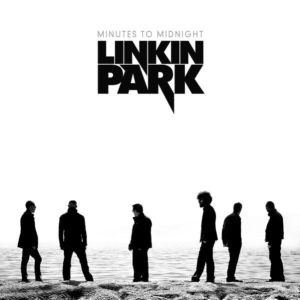
Review - Minutes to Midnight


Artist: Linkin Park
Album: Minutes to Midnight
Record Label: Warner Bros.
Producer(s):Rick Rubin, Mike Shinoda
Release Date: May 14, 2007
Genre: Rock
Strong Points: The band takes several big steps away from the repeat sound of Meteora, and does so surprisingly well; the bands lyrics remain simple, but are far more mature in nature.
Weak Points: The band seems to be straining themselves while reaching for a new sound.
Technical Score: B+
Artistic Score: B+
Final Score (not an average): B
Moral Warnings: A number of the songs use the F-word in them (Given Up, Bleed it Out, Hands Held High); the album is very politically charged against the former President Bush, with specific implications against the Iraq War.

Meteora was, ultimately, a carbon copy of Hybrid Theory. That album did not see Linkin Park growing as a band, musically or lyrically, as they performed a repeat of angry men growling angry words backed with angry music. Minutes to Midnight, while not perfect by any means, sees them taking several large steps in the right direction, and doing it with precision and grace. They attempt to shake the remaining dust from their previous sound and build a new image for themselves. Die-hard fans of Hybrid Theory and Meteora will likely have hard feelings towards this new album. For the rest of us, the result of the band's efforts is a Linkin Park that stretches for higher heights, newer sounds, and better music.

Despite this reach, the album is not without flaws. To change one's sound so extensively is a feat that must expect some mistakes along the way. Linkin Park is not immune. Even distantly, the band retains the feel of their previous work, and on occasion this conflicts with what they are trying to make new. For instance, the first song that shows a true difference in the band's style, "Leave Out All the Rest," reveals a far softer side to Linkin Park, but it's done through synthesized melodies and computerized beats that feel reminiscent to the final song off Meteora, "Numb."

In other areas of the album, the band strains for originality and just flat out misses the mark. One of the last songs on the album, "In Pieces," sounds like what would happen if Chester Bennington replaced Ben Gibbard's voice for The Postal Service. The song is well-written and performed, and on an album where the music is so varied, it fits in appropriately. But it's still a long stretch, and a sound that Linkin Park hopefully will not pursue in the future.

Indeed, songs like "In Pieces" or the ebow centered "In Between" seem to have been written for the sole purpose of Linkin Park being able to say that they're far from one dimensional. And they certainly have that right. Whether the change in sound is enjoyed or not, it's impossible not to be impressed at how they prove, song after song, that they deserve to be taken seriously.

In all the places where the band's old sound conflicts with the new, or the places when they stretch too far to find something new, there are just as many spots where old and new come together perfectly. "Given Up" shows Linkin park retaining their emotionally driven (that emotion being anger) lyrics and music. But the music is pure metal, something the band has never attempted before, and something they do with near perfection.

In comparison with the aggressive despair of "Given Up" and the politically charged "No More Sorrow," for most of the rest of the album, Linkin Park reveals a softer side - one far more thoughtful and mature than the Linkin Park from Hybrid Theory and Meteora. Perhaps the best example of this is "Valentine's Day", which is arguably the best song on the album. It's slow, gentle, melodic. The empty mood of the music reflects the story that Bennington sings of - a man who is burying his love after she has passed away. "And the crowds above moved closer/looking so dissatisfied/and the ground below grew colder/as they put you down inside." It's a lyrically simple, yet beautiful song, sure to tug at heart strings.

As far as moral content goes, the F-word is used on and off throughout the album, but no other bad language is used. The political attacks in Minutes to Midnight are frequent, and don't pull any punches, which could be a turn off for some. "Hands Held High" expresses the need to stand up and protest the war. "Jump when they tell us that they wanna see jumpin/**** that/I wanna see some fists pumpin'." "No More Sorrow," a metal song, has lyrics pretty close to hate aimed towards former President Bush. "Your crusade's a disguise/replace freedom with fear/you trade money for lies." Finally, "The Little Things You Give Away" expresses disgust for how Hurricane Katrina was handled.

Minutes to Midnight features several new sounds for Linkin Park, most of them fresh and impressively performed and writtten. Some will be disappointed in this switch in musical focus. For the rest, it's an impressive step in the right direction.

Album Highlights:

Given Up
What I've Done
Valentine's Day

Zak Mellgren - (zak@revolve21.com)

Read full article

Thursday, January 15, 2009

Review - Folie a Deux


Artist: Fall Out Boy
Album: Folie a Deux
Record Label: Island
Producer(s): Neal Avron, Pharrell Williams
Release Date: December 13, 2008
Genre: Pop-punk
Strong Points: Great and catchy melody writing; some interesting and witty lyrics; a sound that is a change of pace for the band while continuing to be fun and enjoyable.
Weak Points: The sound on a few of the tracks feels overly derivative.
Technical Score: B+
Artistic Score: B-
Final Score (not an average): B+
Moral Warnings: Many of the songs have sexual themes ranging from prostitution to affairs; vague drug references are made on three tracks; hopelessness presents itself on a few tracks; the f-word shows up twice on one track; one track iterates "oh hell yes" throughout the chorus


In my social circles, few bands get quite the response that Fall Out Boy does. Somehow, Fall Out Boy has consistently been a favorite band for my friends to hate. The few of us who actually appreciate their music tend to keep our appreciation a secret for fear of ridicule. It seems silly that guys on the latter part of college would behave that way, but that seems to be exactly the kind of reaction Fall Out Boy has gotten.

Now, being a self-declared fan of Fall Out Boy, I was looking forward to Folie a Deux, even if I wouldn't be sharing my anticipated enjoyment of it with friends. I had become a fan of the band's previous album, Infinity on High, with hits like "Thnks fr th Mmrs" and "This Ain't a Scene, It's an Arms Race," so my hopes were high for their newest album.

With my expectations as they were, I honestly have to say that I was surprised by Folie a Deux when I started listening to it. In so many ways, the band shifted its sound in the new release. Granted, Fall Out Boy has a decent track record of musical evolution in their releases, but when the album kicked off hinting at a ballad ("Disloyal Order of Water Buffaloes"), I was caught off guard. True, that song shifted into more familiar territory in a short bit into the song, but even that early on it's easy to tell that Folie a Deux shows a redefined direction for the band.

When the second track, "I Don't Care," starts off with a guitar riff that immediately reminded me of Soft Cell's "Tainted Love," I wondered what would follow for the rest of the album. What I found was a bit of a mixed bag.

See, Folie a Deux brought with it a number of new influences on the band's songwriting. In the case of "I Don't Care," this worked out well. In the case of other songs, however, the sense of musical influence comes across more as derivative than anything else. It's only on a couple of tracks that this is bothersome. In these cases, the band seems to take a few too many nods from their contemporaries, Panic at the Disco (especially that band's Beatles-influenced Pretty. Odd. album) and My Chemical Romance. Even in these cases, the songs are catchy and enjoyable; they just come off as too unoriginal for a band that is so prominent in the pop-punk arena.

Fortunately, Fall Out Boy continues to show songwriting talent. I can understand why it's considered cool to hate the band; they really are not pioneers in pop-punk music at all. Originality, in general, is not their strong suit. In spite of taking on numerous changes in musical direction, the band manages to keep a familiar feel that will not alienate their established fans. Still, the thing that sets Fall Out Boy apart as significant and successful in popular music is its melodic nature. The band's ability to get stuck in one's head for days at a time is a direct result of vocal melodies that are fun, interesting, and ridiculously catchy.

Then there is the lyrical aspect of Fall Out Boy's songwriting. In many songs, the lyrics are a bit ambiguous. The ideas songwriters Pete Wentz and Patrick Stump are trying to present are not exactly obvious. Much of the time, they seem to be writing in an ironic/satirical fashion. For example, the chorus on "Disloyal Order of Water Buffaloes" says "Boycott love/detox just to retox," making a point of running right back into the trap one was running from. "America's Suitehearts" deals with pop-culture idolatry: "Down, set, one, hut, hut, hike/Media Blitz/Let's hear it for America's sweethearts/But I must confess,/I'm in love with my own sins." Even so, lyrical clarity is not one of Fall Out Boy's strong suits on Folie a Deux.

With the general vagueness of the lyrics comes a mixed bag for those concerned with the moral aspects of the lyrics. On the one hand, the lyrics contain many moral issues in them; on the other hand, it is rare for the lyrics to be close to explicit. Several songs deal with immoral sexuality. A few of those songs allude to (though not very explicitly) prostitution. Another song hints at desire for an affair with another man's wife. In these instances, however, it seems to me that these sexual acts are condemned rather than glorified. Likewise, a handful of possible drug references are made, though vaguely (terms like "coke" and "sunshine" are used in a fashion that drug references could be inferred). Though Folie a Deux is not an emo album, there are times when despair is presented (such as the iteration of "I will never believe in anything again" on the chorus of "Coffee's for Closers"). One song, "27," uses the f-word twice. "West Coast Smoker" iterates "Oh hell yes" on the chorus. Two songs refer to God in an ambiguous fashion. "What a Catch, Donnie" asks the question, "They say the captain/Goes down with the ship/So, when the world ends/Will God go down with it?" "West Coast Smoker" states on the chorus, "Knock once for the Father/Twice for the Son/Three times for the Holy Ghost." The intent in both of these lyrics is quite difficult to discern, though.

On the whole, Folie a Deux is pretty much what most could expect it to be. It's a fun album full of vocal and instrumental hooks that can get stuck in your head for days. In spite of trying new things, the band doesn't really break any new ground; then again, music written for the mainstream is rarely revolutionary. Dealing with sexual issues in a way that doesn't carry much of an explicit message with it, the album is rather ambiguous in moral terms. Some may be put off by the presence of the topics, others will find that the ambiguity makes them less of an issue in deciding whether or not to buy the album. Still, in album terms, Folie a Deux is an enjoyable and worthy successor to Infinity on High, and it shows that Fall Out Boy is not going away any time soon.


-Kenny Yeager (kenny@revolve21.com)
Read full article

Friday, January 9, 2009

Review - Black Ice


Artist: AC/DC
Album: Black Ice
Record Label: Epic
Producer(s): Brendan O'Brien
Release date: 10/20/2008
Genre: Hard Rock
Strong points: Straight out, no bull, Rock N' Roll. Has excellent guitar work by the Young brothers, and emphatic singing by Brian Johnson.
Weak Points: AC/DC still doesn't know how to write lyrics that make any sense. Some songs are a bit on the lame side.
Technical score: A-
Artistic score: B-
Final score (Not an average):B+
Moral warnings: In typical AC/DC fashion, innuendo plays a big part of the lyrics, with the majority of the songs hinting at sex in some way or shape. “Smash and Grab” hints at theft, while “Black Ice” has the line "Gouge your eyes out."

AC/DC was formed in 1973, with a line-up of Angus Young on lead guitar, Malcom Young on rhythm guitar, Larry Von Kreidt on bass, Colin Burgess on drums, with Dave Evans as the singer. They never made any recording with this line-up, electing to change the line-up in subsequent years. After going through several bassists and drummers, they settled on Mark Evans on bass, and Phil Rudd on drums. In late-1974, Dave Evans was fired, and Ronald “Bon” Scott was hired. This line-up of Young, Young, Evans, Rudd, and Scott recorded several albums together, including High Voltage, Dirty Deeds Done Dirt Cheap, and Let There Be Rock. In '78, Cliff Williams replaced Mark Evans as bassist, debuting on the album Powerage. In '79, they recorded Highway to Hell, which is sometimes considered the greatest AC/DC album ever. However, Bon Scott only got to see some of the fame of AC/DC, and he died of “misadventure” (read: alcohol poisoning) in February, 1980.

In mid-1980, AC/DC hired Brian Johnson as their new singer, and the line-up that exists today was formed. In 1983, Phil Rudd left due to “disputes” with fellow band mates; Chris Slade replaced him until 1987, when Phil decided he wanted back in. In 1990, the band released The Razor's Edge and become the top band once again. The last album they recorded before going on a hiatus was Stiff Upper Lip, in 2000.

Now, in 2008, AC/DC has released Black Ice upon the world.

Black Ice sets it off with the first single from the album that the group released, “Rock N Roll Train,” a hard rocking anthem about....well, something. AC/DC's weakest point is lyricism, and it shows through when you read the lyrics. “Big Jack” has a catchy riff that you might find going through your head. “War Machine,” the band's second single, starts with an impending drum beat that gradually leads into the guitar. The song “Spoilin' for a Fight” has an absolutely flooring intro and main riff that will leave you stunned. “Stormy May Day” is quite possibly the best song on the album, with ominous lyrics and a smooth slide guitar.

This album is not, however, without its flaws. Songs such as “Wheels,” “Decibel,” “Rock N Roll Dream,” and “Anything Goes” seem more like filler than enjoyable rock songs. With uninspired riffing and just plain wacky lyrics, these songs are reason enough to use the “next” button on your music player, as you will likely be bored to no end with them. In a bit of a disappointment, the title track “Black Ice” is one of the weaker songs on the record.

There are some tracks that aren't bad per se, but they aren't great either. “Skies on Fire”, while a good song, just didn't seem to evoke the same emotions the other tracks did. The same is also true of “Smash N Grab,” “She Likes Rock N Roll,” “Money Made” and “Rocking all the Way.”

Is Black Ice a worthy contribution to the AC/DC library? Will it allow you to “rock again,” as the Wal-Mart ads say? Yes and yes. While this isn't the strongest AC/DC disc, it is one of the better albums they have released. If you don't mind some innuendo and some very poor lyricism, then you should consider Black Ice to your library.

Album highlights:
“Rock N Roll Train”
“Big Jack”
“Spoilin' for a Flight”
“Stormy May Day”

-Travis Martin

Read full article

Thursday, July 10, 2008

Review Quickie - Chase This Light


Artist: Jimmy Eat World
Album: Chase This Light
Record Label: Interscope Records
Producer(s): Butch Vig
Release Date: October 16, 2007
Genre: Alternative rock/Pop punk
Strong Points: Catchy rhythm and beats; poetic, well-engineered lyrics; sound that captures the listener's attention
Weak Points: Songs sometimes feel redundant; style tends to be generic
Technical Score: A
Artistic Score: B+
Final Score (not an average): A-
Moral Warnings: One song uses Jesus' name in vain (Dizzy)

Chase This Light is one of those albums you come across and think (after seeing the brilliant cover), “Ah, this is just going to be another album that’s like all the rest.” You get home and you start listening to it, and you’re actually pleasantly surprised. Jimmy Eat World breaks from the stereotypical confines of alternative rock and creates something refreshing with their albums. Chase This Light is a perfect example of this. The only problem I had was that many of the songs felt familiar. The lyrics are beautiful, and the front man, Jim Adkins, carries a voice that catches your attention from the start, while the music is nicely structured. Yet it just felt like they could’ve done a bit more. It’s a good album, but I think it could have gone just a few more inches to be great.


Album highlights:
Chase This Light
Dizzy
Big Casino
Firefight

-Riley McCarthy (riley@revolve21.com)
Read full article

Sunday, June 29, 2008

Review - Don't You Fake It


Artist: The Red Jumpsuit Apparatus
Album: Don't You Fake It
Record Label: Virgin
Producer(s): David Bendeth
Release Date: July 18th, 2006
Genre: Rock/Punk/Screamo
Strong Points: Musical and lyrical direction push listeners towards getting up and doing something; some very impressive lyrical elements; strong grasp of what makes for a good release in the genre
Weak Points: Some sounds are very reminiscent of other bands; many lyrics are too ambiguous for their own good; too much harmonization
Technical Score: B
Artistic Score: C+
Final Score (not an average): B
Moral Warnings: Generally ambiguous lyrics tend to focus on pain but look towards hope; "d---" is used in the aptly titled "D--- Regret"; typically Christian terms are used in "Justify," but the meaning is unclear; "The Grim Goodbye," a bonus track, crosses into resignation and implies drunkenness


The Red Jumpsuit Apparatus is one of those bands that gained smash hit status thanks to a single that makes it big. The band's single that rocked many of the hit charts in America is "Face Down." That single appeared on their first major label release, Don't You Fake It. In turn, the album reached platinum status with over a million units sold in the U.S. With a punk- and screamo-infused rock sound, Don't You Fake It has made a rather strong entrance into the realm of major record label music.

And Red Jumpsuit Apparatus' sound is a very solid one. Though it is very no-frills as a rule, lacking layers upon layers of extra tracks and effects, the natural talent in Don't You Fake It can shine through clearly. With genre-fitting driving guitars at full distortion, solid drum and bass sections, and good vocal work in melody and harmony, the band makes it clear that they know how to manufacture a good sound.

The sound is not a perfect one, though. Some songs are musical standouts, but the instrumental aspects of many tracks simply seem to get the job done. The album is very vocally driven. The guitar riffs, chord patterns, and rhythm structures, on the album are not generally exceptional. However, they work just fine as canvas for the vocal work to paint its picture.

And the vocal work does standout well. Frontman Ronnie Winter's vocal tone is great. Emotion comes through loud and clear without ever crossing into too much angst or pain. His melodic composition is catchy and fits very well with the rest of the band. The downfall in the vocal work is that harmonization seems practically constant on most tracks. It's not so much that it sounds bad that's the problem so much as it moves a driven rock band into a more pop-like territory that doesn't seem to maximize the band's potential.

Add to this the screaming present on several of the tracks, and it sometimes seems like the band had a bit of an identity crisis while making the album. To further weaken the originality their sound, it's hard not to consider the Red Jumpsuit Apparatus to be very similar to a more mainstream-ready version of contemporary artists like Hawthorne Heights.

Still, in spite of these things, the songwriting heard on Don't You Fake It is good, and it shows a lot of potential from the band's upcoming sophomore release. When it's all said and done, every song on the album is memorable. Though it is more the vocal aspects than the instrumental aspects of the album, the lyrical aspect does play a significant role in what sets Don't You Fake It apart.

Lyrically, a lot of the songs manage to land in a realm of ambiguity; they are full of words that sound good, but the underlying meaning isn't all that easy to discern. Still, some lyrics come across as surprisingly profound. For example, "Face Down" shows a strong grasp of cause and effect: "A pebble in the water makes a ripple effect / Every action in this world bear a consequence" Other songs, like "Seventeen Ain't So Sweet" are more straightforward: "There's a fire in your eyes / And I hope you'll let it burn / There's a scream in your voice / And I hope you will be heard." Then, the album's closing song and ballad, "Your Guardian Angel," is nothing short of beautiful: "I will never let you fall / I'll stand up with you forever / I'll be there for you through it all / Even if saving you sends me to heaven"

In moral terms, the lyrics are largely ambiguous. For what it's worth, it is worth noting that all of the band members claim to be Christians in spite of their choosing not to be labeled as a Christian band. Still, worthy of note, many songs deal with pain; these songs usually look forward with hope, however. "D--- Regret" says "d---" on the chorus. The album's bonus track crosses into resignation and surrender to pressure. There are a couple of references to drinking, with the bonus track stating: "Try to stay righteous, try to stay sober / But then I can't win."

In all reality, the album won't likely knock your socks off. It's a solid first mainstream release, but it does not reach its potential. Still, the band has produced an album that is catchy and a lot of fun; musically and lyrically, listeners are challenged to get out of their seats. There are a few moral hiccups in the release. All the same, Don't You Fake It may be just the kind of pick-me-up needed on a figuratively rainy day.

-Kenny Yeager (kenny@revolve21.com)


Album highlights:
"Face Down"
"Your Guardian Angel"
"Misery Loves Its Company"
"Waiting"
"Justify"

Read full article

Wednesday, June 25, 2008

Review - Viva La Vida


Artist: Coldplay
Album: Viva La Vida or Death and All His Friends
Record Label: Parlophone, Capitol Records
Producer(s): Brian Eno, Markus Dravs, Rik Simpson, Jon Hopkins
Release Date: June 17, 2008
Genre: Rock
Strong Points: Lyrics are once again strong; beautiful sonic soundscapes; moves away from the predominantly piano-based sound of past albums
Weak Points: Album feels too short
Technical Score: A
Artistic Score: A+
Final Score (not an average): A-
Moral Warnings: One song details a struggle with lust (Yes)


Sometimes a change in producers can change everything. After all, look what it did to Metallica: after staying with producer Bob Rock for years, the seminal metal band produced St. Anger, which was critically derided for moving to a more alt-metal, post-grunge sound. Or look what happened to Johnny Cash. His series of American records, the last in his career, were produced by Rick Rubin, and brought a more intimate view of the Man in Black to the public’s consciousness. A producer can ruin an album or bring it out of the gutter. Which is why when Brian Eno signed up to produce Coldplay’s latest, most that were familiar with his work knew that things would change.

Eno has produced some of the most acclaimed records of the past twenty-five years, including U2’s amazing albums, The Joshua Tree and The Unforgettable Fire, as well as the Talking Heads’ seminal Remain in Light and David Bowie’s foray into industrial rock, Outside. He’s also quite the accomplished ambient electronic artist, and that experience translates to his production for mainstream rock albums quite smoothly.

Under Eno’s watchful eye, the Oxford boys are back with an album that is harder, more epic sounding, and less introspective than before. Guitars are more of a focal point in Viva La Vida, and, although this is the case, that doesn’t mean that the band has abandoned the piano. Instead, wisely, they’ve chosen to use the instrument less as a focal point and more for rhythm, which means that Coldplay finally sounds like a band. Shocking, I know. Guitar solos are actually present in several songs, surrounded by swirling synth and string arrangements. In other words, you’re not going to find “Clocks” or “The Scientist” here, which is a very good thing.

Viva La Vida begins with “Life in Technicolor,” an instrumental track that seamlessly fits in with the end of the album. It showcases both angular guitars (reminiscent of U2’s The Edge, as all the guitars are on the album) and the synth sounds that the album uses to full effect. This is largely how songs on the album go: enveloping soundscapes combined with an excellent hook and no lack of poetic lyrics, which, this time, don’t succumb to lead singer Chris Martin’s obsessive introspection. Songs tackle subjects like politics, love, war, and God, but none of it is necessarily literal; instead, most songs are metaphorical in nature, and highly so, as if Martin wants the listener to speculate what’s behind the figurative mask that he wears.

As the album progresses, listeners are treated to “Lost!” a song that sounds necessarily hopeful despite the bleakness of its lyrics: “Just because I’m losing/Doesn’t mean that I’m lost.” These words amid claps, stomps, and a church organ. Later, “42” laments that “those who are dead are not dead/they’re just living in my head/and since I fell for that spell/I am living there as well.” Surrounded by a wall of sound, Martin speculates, saying, “Time is short/And I’m sure there’s something more.”

The sixth track on Viva La Vida, “Yes,” is easily my favorite on the album. This is largely due to the sound, which ventures away from a “typical” Coldplay sound, preferring instead to stray into a more Eastern-tinged sound, with words sung down low, into the chest voice, instead of in the trademark falsetto that Martin is known for. This is the one song on the album that feels intensely personal, almost like reading a page from Martin’s diary. “Yes” speaks of struggles with lust, and abstinence, in particular: “There we were dying of frustration/Saying, “Lord, lead me not into temptation”/But it’s not easy when she turns you on…” Yet there is no resolution to this song, only Martin saying, “God knows I’m trying my best.”

Lead single “Violet Hill” is another highlight, with pianos leading off the proceedings, followed by a hard guitar crunch that carries through the rest of the song and into a solo. Martin’s voice is mixed into the forefront, saying, “If you love me/Won’t you let me know?” This is, by far, one of the least “pop-like” singles that Coldplay has released and it reveals an interesting direction for the band. On the opposite end of that spectrum is second single and one-half-of-the-title track “Viva La Vida,” which opens with a catchy synth arrangement and a pounding drum, a song that either talks of being in love (if you take it as a metaphor) or being a king during the Crusades (if you take it literally). The song is catchy and radio-ready, and that’s really okay for a Coldplay song. With this song, at least, they’re doing something different with their sound, and not falling into repetition like they did on X&Y.

For all of the analyzing that I could do of the individual tracks, the fact of the matter is that Coldplay’s newest is a highly enjoyable, listenable album. The entire thing is good. It’s not at all hard to get into, and it shows that the band knew that they had to experiment and more fully embrace the source of their influences than they had before. In this respect, Viva La Vida is an absolute triumph. No, this isn’t Radiohead’s OK Computer, and it isn’t U2’s The Joshua Tree, but it’s close. The only question is, will Coldplay be able to duplicate the same success on their next album? Time will tell. For now, Coldplay has recorded the best album of their career and one that leaves the listener wanting more.

Album Highlights:
Lost!
Yes
Violet Hill
Strawberry Swing
Death and all His Friends

--Drew Regensburger (drew@revolve21.com)


===== Second Spin =====
I have to admit, it's been a while since I would have called myself a Coldplay fan. I loved songs on Parachutes and Rush of Blood to the Head, but X & Y kind of lost me. I wasn't thrilled about Viva La Vida, but reading Drew's review changed that for me. After listening to it a bit, I find myself pleasantly surprised.

The main review is right, Eno's magic touch is still magical, and it shines through brilliantly here. The album isn't as much of a departure from Coldplay's established sound as I thought it would be, but every track is solid and very well polished. I'm also very glad that the piano didn't disappear. It's nice that it now shares the spotlight more than it did on former albums, but it's still very much there, and it is very much a driving force.

On the whole, I feel fairly comfortable calling this the best Coldplay CD on the market. I think that established fans will find plenty to like here. Newcomers will also find a bit to enjoy. Overall, it's a very solid album.

-Kenny Yeager (kenny@revolve21.com)

Read full article

Wednesday, June 18, 2008

Review - This is Forever


Artist: She Wants Revenge
Album: This Is Forever
Record Label: Perfect Kiss, Flawless Records, Geffen Records
Producer(s): She Wants Revenge
Release Date: October 9, 2007
Genre: Darkwave, Goth Rock
Strong Points: Overblown goth rock stylings, reminiscent of Joy Division; slick production and emotive lyrics; heavy, danceable drums and bass
Weak Points: Lyrics tend to lean towards self-parody
Technical Score: B
Artistic Score: C+
Final Score (not an average): B+
Moral Warnings: Overall depressing content, as can be implied from the inspirations of the band; one f-word used (Written in Blood); religion is viewed as a negative (Checking Out); denial of God (Pretend the World Has Ended); mention of consequence-free sex (This is the End); casual sex mentioned (What I Want)

Editor's Note: The above artwork is not representative of This Is Forever's artwork. The artwork could be considered suggestive, and thus will not be shown.


She Wants Revenge burst onto the scene in mid-2005 and quickly rose to popularity through internet social networking site Myspace (I can’t believe I just described that). Featuring the talents of two seasoned hip-hop talents, in Justin Warfield and Adam “Adam 12” Bravin, the duo created music that throbbed with the echoing drum beats and tortured post-punk sounds of Joy Division, The Cure, and Depeche Mode, mixed with a healthy dose of seminal goth rockers Bauhaus. The music was tortured and angsty, immediately catchy and indescribably weird, much like their post-punk influences, and it remains much the same on their second album, This Is Forever.

By nature, the music is noir-ishly dark, fused with a romanticism that is very much modern and very much of the 1940s; the myths of the woman as the goddess and the femme fatale are alive and well here, and intentionally so. This style is even shown in the album artwork, with hard contrasts between darks and lights, and black and white pictures of vocalist Warfield and beatmaster Bravin earning a two page shot. That is, however, beside the point.

This Is Forever kicks off with a thumping bass, a kicking drum, and a simple piano melody on the instrumental track “First, Love.” From there, things move faster as “Written in Blood” begins. Warfield’s mostly-monotone delivery works well here, telling a tale of a doomed couple, one speeding through the dark, the other terrified. This song also really sets the tone for the album, Warfield’s voice constantly debating what the nature of love is: “You tell me that love don’t last…” and later, “…promise you that this is forever or until one of us dies.” This constant debate is a theme that runs throughout the album, and ebbing and flowing with each song.

Song after song, She Wants Revenge presents a bleak outlook on the relational landscape of today. One song, called “True Romance,” proclaims, “I know that you never really loved me/I know that you never cared at all/Maybe just one more dance/Cause that’s as close as we get to a true romance.” Throughout the song, thin, angular guitars penetrate the synth- and drum-heavy proceedings, adding an ominous layer to an already atmospheric track.

One of She Wants Revenge’s strengths is their lyricism. They’ve been criticized for using sophomoric lyrics, for their lyrics sounding like they came out of an angsty high schooler’s notebook. That’s pretty much true. But it’s also very intentional. Every song is about jilted lovers, about breakups, about obsession. It’s so layered on that it almost becomes a parody of itself, and the band is very much aware of this, much like they’re aware of wearing their influences on their sleeves. Warfield’s voice is a straight-up attempt to imitate the late, tortured Joy Division singer Ian Curtis, and the music throbs with the sound of the many bands that followed.

By the end of the album, however, it looks like Warfield may have seen the light at the end of the figurative tunnel, or at least realized a need for something a little less dark and gloomy. A realization is shown in “Replacement,” where Warfield sings, “And how you knew from the first kiss that I would break your heart.” Following that, “Rachael” begins, a simple song of a beautiful woman, a song that hints that it’s all going to begin again.

Sadly, This is Forever keeps up the band’s poetic use of sex as a weapon and nihilism as an excuse. One song questions a person’s faith, and the very next proclaims, “I’ve got no God to sell.” Certainly, This is Forever is a good album, but it’s not necessarily one to get if you’re uncomfortable with the content.

Album Highlights:
“It’s Just Begun”
“True Romance”
“She Will Always Be A Broken Girl”
“Replacement”
“Rachael”

--Drew Regensburger (drew@revolve21.com)

Read full article
Tuesday, June 17, 2008

Review - Accelerate


Artist: R.E.M.
Album: Accelerate
Record Label: Warner Bros. Records
Producer(s): Jacknife Lee and R.E.M.
Release Date: April 1, 2008
Genre: Alternative Rock
Strong Points: Crisp production; loud mix compared to previous recent releases; relevant, poignant, sometimes ambiguous lyrics
Weak Points: Short run time; album slows down a bit in the middle; not as amazing as early R.E.M. (from ‘80s through early ‘90s)
Technical Score: A
Artistic Score: B-
Final Score (not an average): B
Moral Warnings: One song seems to question faith (Hollow Man); another song questions the existence of heaven (I’m Gonna DJ); one F-bomb dropped (Horse to Water)

Suddenly faced with the prospect that the world had left them behind after 2004’s poorly received Around the Sun, the members of R.E.M. knew that something had to be done. Bassist Peter Buck even alluded to the band members’ acute awareness of their own plight, saying in interviews that the consensus was that, with another bad record, R.E.M. would be finished as a band.

So the veterans went to work, crafting ambitious and creative songs that, while not rivaling their early, phenomenal, landmark work, certainly aspired to live up to it, while being relevant to today’s world. What came out of that work was “Accelerate,” an album full of crunching, catchy rock songs that are introspective while looking out at the world.

Kicking off the disc is a cut called Living Well is the Best Revenge, a song that features a cyclical guitar and vocalist/lyricist Michael Stipe raging about being “set up like a lamb to slaughter,” later proclaiming that “the future is ours and you don’t even rate a footnote.” Certainly a political statement, and one that sets up for an exceedingly political work from the guys from Athens, Georgia, one that is more poignant than anything on Around the Sun could have hoped to have been.

Following that comes Man-Sized Wreath, a more melodious song than the previous one, but no less angry or political, with Stipe singing, “A motorcade of benign strength shows the people that you care.”

The lead single off of Accelerate is the next track, Supernatural Superserious, a song that evokes a sense of teenaged confusion and angst, from an adult perspective, at least. Hollow Man comes next, with an emotional, gutty, relatable lyric: “I’ve been lost inside my head/Echoes fall off me/I took the prize last night/For complicated mess/For saying things I didn’t mean and/Don’t believe.” As amazing as this song is, it doesn’t match the simple beauty of the next song, a ballad called Houston.

Houston is one of those songs, like The Beatles’ Happiness is a Warm Gun, that feels like it goes on forever while actually being pretty short. It’s a concentrated burst of paranoia (“If the storm doesn’t get me, the government will”), but it also brings to mind the beauty of cities, largely without saying anything more about the city than the name and a feeling. The real meaning of the song comes through with the last line: “Belief has not failed me and so I am put to the test.”

The title track comes next, and this is really where the album begins to hit a low. Accelerate is the halfway point, and is one of the final straight up rock songs on the album. After this, the songs tend to take a more relaxed route, and, while still good, aren’t as memorable as the first half of the disc. Until the Day is Done feels like a Civil War ballad out of time and completely in its element, while Mr. Richards seems to indict Michael Richard’s racist comments some time back.

The duo of songs that come next, Sing for the Submarine and Horse to Water, embrace more fully the slower sound that R.E.M. takes for the latter half of Accelerate. This is not a bad thing, since these songs happen to be some of the more beautiful songs on the album. Unfortunately, R.E.M. set a pace early on, and while none of the songs are bad, the sudden transition from the title track to a slower sound is a bit jarring. Horse to Water picks up the pace again without missing a beat, and the chorus is akin to a rowdy pub song: "I'm not that easy, I am not your horse to water," Stipe shouts, and with that, one of the catchiest songs on the album was crafted.

Even through the low points of Accelerate, the band still proves that they are more relevant and more in-tune with music than the vast majority of new bands that have come out in recent years. This might have something to do with the time that they started playing music, having kept a certain garage rock and jangle pop sound through their career, or it might have to do with musical evolution becoming stagnant. Either way, R.E.M. has proven that, like the last song on the album brags, they will DJ at the end of the world.

Album Highlights:
Living Well is the Best Revenge
Hollow Man
Houston
Horse to Water
I'm Gonna DJ

--Drew Regensburger (drew@revolve21.com)

Read full article

Monday, June 16, 2008

Review - The Legend of Chin


Artist: Switchfoot
Album: The Legend of Chin
Record Label: re:think, Sparrow
Producer(s): Jimmy Lee Sloas
Release Date: June 17, 1997
Genre: Rock
Strong Points: Catchy tunes; creative songwriting
Weak Points: Some sounds are over-processed
Technical Score: C+
Artistic Score: B
Final Score (not an average): B
Moral Warnings: "Underwater" seems to allude to alcohol dependency


Few Christian bands have seen as much mainstream success as Switchfoot has. Though The Beautiful Letdown (released by Columbia and Sony BMG) marked the band's move into mainstream popularity, Switchfoot had a strong following in the Christian music realm from the three albums released prior to Letdown. The Legend of Chin was the first of Switchfoot's albums to be released on a major label (Sparrow).

As Switchfoot's first major release, The Legend of Chin showed a great deal of promise for such a young band. The music, though generally simple, showed a strong grasp of songwriting. The lyricism showed an uncommon maturity. The Foreman brothers (along with drummer Chad Butler) showed talent in musical performance. Frontman Jon Foreman's vocal work was fairly unique in tone. For a first album, Legend was a strong entry into the industry. However, a solid first album is not necessarily an outrightly solid album that will hold up over time.

Fortunately, The Legend of Chin is no ordinary debut. In terms of songwriting, Jon Foreman shows an uncanny ability to write catchy melodies even at the start of his career. Songs like "Bomb" and "Edge of My Seat" have a tendency to get stuck in listeners' heads for days on end. Other songs, like "Might Have Ben Hur" and "Underwater," show a strong sense of song flow. Though it can't be said that all of the tracks on Legend are exceptional, it is very easy to forget that this is where Switchfoot began.

Though the songwriting is very solid, it is also limited. The songs are very clearly written for a three-piece band. The actual musicianship on the album is solid; all of the parts are well played, but few of them show much creativity. In terms of production, the album is very no-frills with few exceptions. This is not a bad thing in itself, but some of the tracks come off a bit two-dimensional. Almost comically, many of the tracks are actually over-processed. Effects added to the vocals tend to actually detract from Foreman's voice. Too much reverb seems common on most of the CD, and this is coming from a guy who adds a healthy bit of reverb to his recordings.

In spite of these complaints, Legend certainly shows the beginning of Switchfoot's sound. Though this is a very much a rock album, it manages to avoid dependency on formula. Heavy, and good, usage of the bass as a focus point in the music is a great thing. Jazz-esque influences work their way into many of the songs. The overall sound is fairly unlike any of Switchfoot's later albums, but the same cannot be said for for Foreman's vocal work. The unique vocals shine through in Legend just as much as later releases.

Lyrically, Legend is something of a mixed bag. On the one hand, Foreman's writing shows maturity and even a little bit of satire. On the other hand, the lyrics are often vague to the point that it's hard to guess what they actually refer to. In all of the lyrics, there is a feeling of Foreman baring his soul to listeners. "Home," for example, shows an honesty too often missed: "It's a long way from Miami to L.A. / It's a longer way from yesterday to where I am today / It's a long way from my thoughts to what I’ll say / It's a long long way from paradise to where I am today / All that's in my head is in Your hands / ... I've been poison, I've been rain / I've been fooled again / I've seen ashes shine like chrome / Someday I’ll see home."

On the whole, Legend is an exceptional first album. On its own merit, the album is still solid, very catchy, and rather well made. It's far from perfect, but it is a fun and enjoyable album. Fans of Switchfoot's later releases should have Legend in their collection. People looking for something that's just a little bit different may find it here. Legend is a commendable effort, and one that can be recommended (though not quite wholeheartedly).

Album highlights:
"Home"
"Life and Love and Why"
"Bomb"
"Might Have Ben Hur"

-Kenny Yeager (kenny@revolve21.com)

Read full article

Sunday, June 8, 2008

Review - Era Vulgaris


Artist: Queens of the Stone Age
Album: Era Vulgaris
Record Label: Interscope, Rekords Rekords
Producer(s): The Fififf Teeners (Josh Homme and Chris Gosse)
Release Date: June 12, 2007
Genre: Hard Rock
Strong Points: A variety of sounds and styles that feature excellent songwriting; strong production values; different from anything but a Queens album
Weak Points: Occasionally wears its influences on its sleeve
Technical Score: A
Artistic Score: B+
Final Score (not an average): A
Moral Warnings: Casual mention of taboo sexuality (including masochism and masturbation), mention of homosexuality in a satirical fashion, inferred violence on at least two songs (Sick, Sick, Sick and Suture Up Your Future), the Lord’s Name used in vain in one song (Misfit Love), “s—t” and “a—“ used in a mocking, sarcastic tone (in 3’s & 7’s).

Queens of the Stone Age, formed from the ashes of stoner-rock band Kyuss in the Palm Desert, CA-music scene, has been making quite the splash in the field of guitar rock since their inception some ten years ago. With the album Rated R, the band exploded onto the music scene with a hard hitting one-two punch of melody-driven rock songs and comedy-fueled metal. At this point, Josh Homme and Nick Oliveri were the group’s two frontmen, and they continued the formula in 2001’s phenomenal Songs for the Deaf, featuring ex-Nirvana drummer and current Foo Fighter Dave Grohl on drums.

In 2004, however, Oliveri left the band, taking with him the hard, biting metal and humor of the past couple of albums. Homme was left to make the band as he saw fit: what came from that was Lullabies to Paralyze, and in good time, Era Vulgaris.

Paralyze was very much a concept oriented album, and in some ways, Era Vulgaris is too. Where Paralyze found much of its inspiration in the dark, looming nature of Grimm’s Fairy Tales, Vulgaris finds its source material in the style of 1970s grindhouse and slasher films. It holds a gritty feel and attempts to be creepy and shocking at every turn, while, at the same time, being intensely satirical of the society from which it comes. This is not entirely unsuccessful, but Vulgaris doesn’t excel there. Where Vulgaris succeeds is in the strength of the songwriting, the musicianship of those involved (including guest spots by Queens regular Mark Lanegan, formerly of semi-obscure grunge rock band Screaming Trees, and Julian Casablancas, of The Strokes, as well as a bonus track with enigmatic Nine Inch Nails-frontman Trent Reznor, and backing vocals from Australian punk rocker Brody Dalle-Homme, of the now-defunct The Distillers) and the production values. In addition, the adept playing of the band allows for a switching of styles not heard in many other bands or albums. Songs go from bass-heavy rock, to industrial rock, to blues rock, hopping from styles from track to track. It’s done so well that, sonically, the album is near perfect.

Vulgaris kicks off with “Turning on the Screw,” an eerie sounding rocker that immediately quotes The Silence of the Lambs: “You got a question?/Please don’t ask/It puts the lotion in the basket”; appropriate for an album themed as this. Next up is “Sick, Sick, Sick,” a hard, nasty song that goes from suggestions of masochism to implications of monster movie madness. It’s a B-movie song, catchy and true to its name.

“I’m Designer” quickly comes to the forefront as one of the album’s highlights. Despite its content being somewhat questionable, the song comes off as a satire with both brains and bite. “Misfit Love” kicks off sounding like a Nine Inch Nails-style rocker with liberal use of the guitar. This is a very good thing, and a relatively new direction for a Queens song, though Homme’s cocky sneer of “If you bet on me/You’ve won” at the end of the song heads into familiar territory for the band.

Both “Into the Hollow” and “Batttery Acid,” though well written songs in their own right, sound a bit too much like typical Queens—slow, seeping-under-the-door, bass drenched guitar rock--seemingly detracting from the rest of the album. This isn’t a bad thing at all, but after the exploration heard on “Misfit Love,” it is a bit of a disappointment. After “Battery Acid,” however, there’s a bit of a shock: the blues-tinged song “Make It Wit Chu.”

Starting off with a pulsating drum and bass line, and continuing with a driving, flowing guitar lead, there’s no doubt that “Make It Wit Chu” is one of the better compositions from the Palm Desert rockers. Lead singer Homme is in fine form here, singing, “If I told you that I knew about the sun and the moon, I’d be untrue/ The only thing I know for sure/ Is what I won’t do” in a sultry, smoky voice that is both entirely fitting for the song and entirely out of character from the man who gave us “No One Knows.” It further cements the versatility of both Homme and the Queens of the Stone Age.

Immediately following “Make It Wit Chu” is a song that contains one of the most memorable guitar riffs in years. “3’s & 7’s” is easily the catchiest song on the album. This song appeared in video games Rock Band (alongside “Sick, Sick, Sick”) and Guitar Hero 3 for a reason. The riff is killer, and the time signature change mid-song adds a certain plodding something to an otherwise fast paced song.

The main problem, as I see it, with Era Vulgaris is not the occasional similar sound that you might hear. Simply put, the main problem is lyrical content. Each song might be a perversely funny satire of American culture, but for those that offend easily, QotSA’s latest outing is one that might be hard to swallow.

Album Highlights:
"I'm Designer"
"Misfit Love"
"Make It Wit Chu"
"Suture Up Your Future"

--Drew Regensburger (drew@revolve21.com)

Read full article

Saturday, June 7, 2008

Review - One-X


Artist: Three Days Grace
Album: One-X
Record Label: Jive
Producer(s): Howard Benson
Release Date: June 13th, 2006
Genre: Hard Rock
Strong Points: Every song is catchy and memorable
Weak Points: Overall sound, though solid, tends to lack inspiration
Technical Score: A-
Artistic Score: B
Final Score (not an average): B+
Moral Warnings: The lyrics are generally depressing in subject matter and can come across as hopeless; at face value, there are some allusions to alcohol, drugs, masochism, suicide, and acting in anger; f-word used once on two different tracks, "p---ed" is used once on one track


From a small town in Canada, Three Days Grace has hailed forth as a popular name in the nu-metal and modern hard rock circles since its self-titled release in 2003. With a driven sound and angst-filled lyrics, the band has held its own in the genre and has toured with other genre favorites including Breaking Benjamin.

From the platinum selling One-X album are four singles: "Animal I Have Become," "Pain," "Never Too Late," and "Riot" Each of these songs have gotten a bit of play time on mainstream radio, and each of these songs give listeners a good idea of what to expect from the rest of the album.

One-X has a very consistent and focused nu-metal/modern hard rock sound. There is a heavy emphasis on heavy guitars. In spite of most songs being predictable, there is enough diversity in the album to keep things from feeling repetitive. One-X is a very no-frills album. Though polished and well produced, the core songwriting is not buried beneath layers of post-production synthesizers and effects.

The lack of excess producing is to the album's credit. Indeed, every track on the album has memorable vocal lines and guitar riffs. The no-frills approach leaves the emphasis exactly where it should be; the focus stays on the band's solid songwriting. Regardless of where on the spectrum a song lands (be it a ballad or one of the album's hardest songs), Three Days Grace shows a clear understanding of what makes a song great.

Unfortunately, the songwriting rarely comes across as mind-blowing or overwhelmingly original. The songs are rock solid, but many of the tracks come off as formulaic to a discerning ear. This doesn't make the album weak, but there is room for the band to stretch out and try new things.

Just as the songwriting can come off as a bit paint-by-numbers, the overall tone of the band is solid, but not exactly unique. Frontman Adam Gontier's vocals are very fitting for the album, but will not stand out as in a crowd of nu-metal/hard rock artists. The instrumentation is similar in this regards. The instruments are all clear and easy to distinguish, but they don't stand out as exceptional.

Following this trend, the lyrics follow a similar path. The angst-driven nature of the lyrics varies in quality from uninspired to interesting. For example, "Pain" is too blunt and destructive to enjoy on a lyrical front ("Pain, without love/Pain, I can't get enough/Pain, I like it rough/'Cause I'd rather feel pain than nothing at all"). In contrast, "Animal I Have Become" is an interesting take on needing help to overcome destructive lifestyle patterns ("Help me believe it's not the real me/Somebody help me tame this animal I have become"). The rest of the lyrics tend to fall somewhere in between these ends of the spectrum with many questions and glimmers of hope.

In regards to the moral qualities of the album, interpretation definitely affects the meaning of the lyrics. At face value, there are a few profanities on the album (two uses of the f-word and one use of "p---ed"). The subject matter is usually dark, dealing often with pain and damaged relationships. "Riot" encourages acting on anger. There are a couple of songs that refer to drinking; one song refers to needles. Many songs seem to show hopelessness. Conversely, other songs show hope in hard times.

In short, One-X is a very solid release in the nu-metal/modern hard rock genre. The songs are memorable and well written. There's room for more originality, but the end result is still enjoyable. At face value, many of the lyrics will be a turn off for some listeners, but the majority of them can be approached from a satirical viewpoint. Your mileage may vary with One-X; fans of the genre that don't mind the lyrics will likely love it, but those that are not fans of the genre already will probably not find reason to change their minds. On the whole, One-X is a solid and enjoyable (even if a bit uninspired) effort by Three Days Grace.

Album highlights:
"Animal I Have Become"
"Never Too Late"
"Riot"
"Time of Dying"

-Kenny Yeager (kenny@revolve21.com)

Read full article

Friday, June 6, 2008

Review - Comatose


Artist: Skillet
Album: Comatose
Record Label: Lava, Ardent, Atlantic
Producer(s): Brian Howes, John L. Cooper
Release Date: October 3rd, 2006
Genre: Rock
Strong Points: Great sound in its own right; great lyrics after interpretation; memorable melodies
Weak Points: Sounds similar to mainstream releases prior to its release
Technical Score: A-
Artistic Score: C+
Final Score (not an average): B+
Moral Warnings: Read without interpretation, many lyrics come off as dark for what is expected of a Christian band, dealing with drugs, pain, potentially suggestive imagery, and even suicide


For the unaware, Skillet is one of Christian music's most predominant hard rock bands. Fans of the band have come to expect the unexpected from Skillet as their sound evolves from release to release. Comatose is no exception to this precedent; the album moves away from most of the metal inspiration of Collide into a more refined, polished, and dynamic, sound fitting a contemporary rock band.

Though heavy guitars and driving drums have by no means escaped Skillet in the latest release, much more emphasis has been given to pianos, synthesizers, string sections, and vocal work that plays back and forth between frontman John Cooper and his wife, Korey Cooper, in Comatose. The immediate result is that no song feels raw; every track shows itself to have gone through considerable refinement by skilled producers.

Cooper's skill in songwriting is easily the album's strongest point. If there's one thing that has remained consistent from album to album, it is melody composition that has a way of getting stuck in listeners' heads. The songs of Comatose are no exception to this rule; in fact, these songs may be some of Cooper's catchiest yet. While few melodies stand out as being truly exceptional, fewer yet are less than solid.

The melodies, when combined with the lyrics, really display the overall quality of Cooper's songwriting. The lyrical composition hits what could be considered a sweet spot for Christian artists: the lyrics require listeners to use a little interpretation to get their significance, but they are very significant when given a little thought. Take the album's title track for example: "I don’t wanna sleep/I don’t wanna dream/‘cause my dreams don’t comfort me/The way you make me feel/Waking up to you never felt so real" The meaning isn't buried deep beneath the surface, but it takes a little thought to understand. In this case, the lyric refers to getting lost in the distractions of life at the cost of missing out on God and living life more fully.

The instrumental direction of the album is also solid. As mentioned before hand, the production quality is very high on Comatose. This translates to a bit of orchestra-like sounds (as well as piano and synthesizer parts) filling in the sonic space on many tracks. Piano parts play a big role on the albums many ballad-esque songs. On some songs, the orchestrated parts play a prominent role, and the result is a good one on the whole.

Unfortunately, Comatose is far from being a perfect album. In the lyricism, songs like "Better than Drugs," though true enough, come off less as inspired than as cheesy. Make no mistake, Skillet is a Christian band. However, without this knowledge, it wouldn't be hard to assume that many of the lyrics simply refer to another person instead of the Divine. Though this isn't necessarily a problem in itself, it does land the band in a place of lyrical ambiguity.

That lyrical ambiguity may be a turn off to some listeners and parents. The lyrics of "Better than Drugs" refer to drug addiction and usage as an analogy for relationship with Christ. Many lyrics, if only heard in part or misunderstood, come across as hopeless. "The Last Night" deals with a suicidal individual. Taken out of context, "Whispers" is rather suggestive.

Returning to the musical aspects of the album, though no individual instrumental parts are really problematic, some songs come off as being overly-produced. More troublesome is that Comatose has songs that go in all sorts of musical directions. Tracks range from hard rock to ballads to punk and so on. The individual tracks are great, but Comatose, as a whole, lacks consistency in musical direction. Beyond this, there is a bit of similarity to releases from mainstream artists that came out before Comatose. On the harder tracks, there is considerable influence from nu-metal acts including Linkin Park and Disturbed. Tonality of the band (and even the vocal work of Cooper) is similar to what was heard on Papa Roach's Getting Away With Murder album. To be fair, the harder tracks show some of Collide's (Skillet's precious album) influence on Comatose.

All the same, Skillet does manage to veer enough from the mainstream acts to have a sound that can be called its own (in no small part due to Korey Cooper's presence); it would just be nice if the band could make up its mind as to what sound it wanted to pursue. In spite of these complaints, Comatose really is one of the better albums released in the realm of Christian rock in the last couple of years.

Album highlights:
"The Last Night"
"Comatose"
"Falling Inside the Black"

-Kenny Yeager (kenny@revolve21.com)

Read full article