Showing posts with label Film - Genre: Comedy. Show all posts

Friday, April 10, 2009

Review - Adventureland


Studio/Production Company: Miramax
Director: Greg Mottola
Written by: Greg Mottola
Rating: R for language, drug use and sexual references
Release Date: April 3, 2009
Genre: Comedy-drama
Strong Points: Excellent use of soundtrack; excellent acting all around; understated direction adds to the film; dialogue flows naturally; nothing feels forced or off kilter
Weak Points: Some cheap laughs thrown in feel out of place; not really a comedy
Technical Score: A
Artistic Score: A
Final Score (not an average): A+
Moral Warnings: Some drug and alcohol use; at least three scenes feature prominent marijuana use; profanity litters the film, including several uses of f*** and several blasphemies; sex is featured prominently, though no sex scenes occur, just implications

Once in a while, a movie will come out of nowhere and surprise the viewer with the sheer quality of the film presented. Often, a film like this will have no business being as good as it is, but somehow, through the efforts of the director or the actors or of something else, all the parts come together and make a whole that is, quite literally, stunning. This is in a word what “Adventureland” is: Stunning.

Coming from Greg Mottola, director of “Superbad,” and starring Jesse Eisenberg (“The Squid and the Whale”) as James Brennan, Kristen Stewart (“Into the Wild,” “Twilight”) as Em Lewin, and featuring Ryan Reynolds (“Waiting…”) in a surprisingly understated performance, “Adventureland” initially surprised me. Advertised as a comedy, the film is written and directed as more of a drama with subtle comedy elements. Much of the slapstick and witty dialogue of “Superbad” is left behind for more subtle comedy elements, greatly lending to the dramatic feel of the film.

In fact, one of the greatest things about “Adventureland” is its feel. Throughout the entire film, “Adventureland” remains understated. Each scene feels natural, and dialogue flows more naturally than Kevin Smith’s best work. What’s absolutely amazing is how skillfully Mottola makes us care for his characters, despite the occasionally horrible and often sophomoric things that they do. These are, absolutely, a group of the most fully realized college kids that I’ve yet seen on film, a feat that both impressed me as it occurred and stuck with me long after the film had ended its 107 minute runtime.

The premise is quite simple: James, a recent college grad, is forced to work at a small amusement park in his hometown after his parents inform him that not only is he not going to Europe for the summer (which they had volunteered to pay for as a graduation gift), but that they can’t help with his grad school payments, either. This set up introduces James to love interest Em, as well as secondary characters, such as nerdy Joel (Martin Starr), and eccentric Adventureland owners and husband-and-wife team Bobby (Bill Hader) and Paulette (Kristen Wiig).

Through the course of the film, as we see James stumble awkwardly through parties and pot smoke and romance, a feeling of sympathy is formed. Everything James goes through is utterly understandable, if not relatable: his feelings of isolation, his awkwardness, his mistakes.

Throughout the slow evolution of the film, we find both Mottola’s script and direction combining in skillful ways that, while not altogether innovative or unexpected, provide “Adventureland” with a directorial confidence rarely found in this type of film. James’ pubescent awkwardness is masterfully portrayed by Jesse Eisenberg, who conveys a sort of virginal fascination with the opposite sex without ever explicitly saying so, while Kristen Stewart’s Em seems simultaneously world-weary and naïve, innocent and sensual, something that hints at the skill that the young actress has at her craft.

If there would be any hesitation I would have about recommending this movie to others, it would be because of the content of the film. Two or three scenes feature prominent marijuana usage, and profanity litters the proceedings, with every word in the book, including blasphemy. Sex is also a major component of the movie, though there are no sex scenes, just scenes of sensuality, involving kissing and not much more.

“Adventureland” is, by far, the best film I’ve yet seen in 2009. It hits all the right bases and comes off as a sweet and sympathetic reflection on young love. Certainly it won’t be for everyone, and one’s enjoyment will likely depend on both age and personal experience, but for those for whom the film is meant, it feels like someone finally got it: that elusive feeling that comes with really falling in love for the first time while still being so uncertain about one’s sense of self.

-Drew Regensburger (drew@revolve21.com)

Read full article
Friday, March 13, 2009

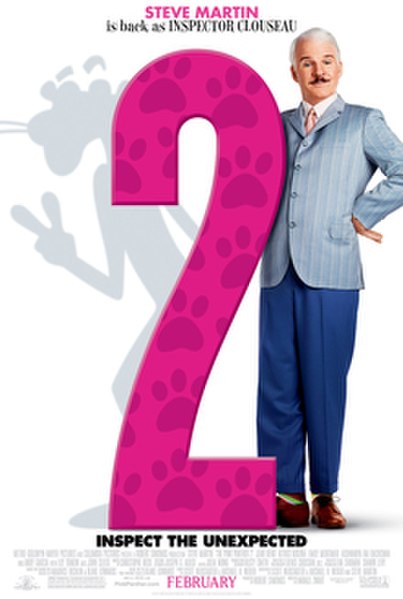
Review - The Pink Panther 2


Studio/Production Company: Columbia Pictures
Director: Harald Zwart
Written by: Scott Neustadter, Michael H. Weber, Steve Martin
Rating: PG for some suggestive humor, brief mild language and action.
Release Date: February 6, 2009
Genre: Comedy
Strong Points: Some pretty good slapstick; Steve Martin
Weak Points: Plot is weak and unoriginal; slapstick gets a bit out of hand.
Technical Score: C
Artistic Score: C
Final Score (not an average): C-
Moral Warnings: One or two curse words; more sexual references than would be expected in a PG film; a man grabs a woman's behind.

I'll go right off the bat here and admit it. I liked the Pink Panther remake. I enjoyed the over-the-top slapstick, Steve Martin's laughable accent, the zany dialogue. Critics, on the other hand, showed little love for it, whining that Peter Sellers would be rolling in his grave if he could see what his character had been turned into. I never saw the original Pink Panther films, so I can't compare. Either way, Pink Panther 2 continues where The Pink Panther left off - over-the-top slapstick, Steve Martin's laughable accent, and zany dialogue. Nothing has changed. If you didn't care for the first one, stay away. If you enjoyed it, Pink Panther 2 has more of the same fun from before.

Thus, Steve Martin reprises his role as the dumb, idiotic, and often tactless Inspector Jacques Clouseau. Clouseau has somehow managed to retain the status of "France's greatest inspector" from the 1st film, though Chief Inspector Dreyfus (John Cleese) still considers him a blubbering idiot, and justly so. But when a number of famous historical artifacts are stolen by a criminal known only as El Tornado, Clouseau is immediately requested to join an elite group of detectives from around the world to search for the thief.

Clouseau does so, and the "Dream Team" of detectives begin their adventure. It doesn't take the Inspector long to start making a fool of himself, and, really, this is the essence of the film. The plot plods along at a dully familiar pace from this point on, relying almost solely on Steve Martin to provide for entertainment. This isn't a terrible thing, however.

It does mean that those without much care for slapstick will likely be bored to death by the time the credits roll, because there really aren't any other elements of filmmaking or story telling there to keep them around otherwise. The characters are thinly drawn, moreso than than in the first film. The continuation of the romance twist between Clouseau and the far younger Nicole is orchestrated poorly, and seems to be there just for the sake of... well... being there. The biggest disappointment for me was the dumbing down of Ponton, Clouseau's "sidekick." Whereas in the first film, he was a normal, serious, intelligent detective (which made his interactions with Clouseau all the more humorous), he has now been turned into a character not much smarter than the Inspector himself.

Of course, as it is technically a mystery, there's a surprise ending. But without a decent plot or characters to be involved in, it's hard to genuinely care about it.

The Pink Panther 2 is rated PG, mostly due to mild sexual dialogue and humor. There is one scene where an HR rep describes a a somewhat sexual scene to Clouseau and tells him to keep a straight face, which he can't, evidently enjoying it. Later in the film, a man pats a woman's behind. The movie is mostly devoid of language, with only one or two curse words, along with a few uses of "Oh my god."

It's evident that Pink Panther 2 is aimed at a young audience, and the constant slapstick means that it will please that demographic. Unfortunately, there's not much more to it. Older viewers may find a few chuckles, but other that, will likely remain silent the 90 minutes taken to watch it.

-Zak Mellgren (zak@revolve21.com)

Read full article

Friday, February 20, 2009

Review - Burn After Reading


Studio/Production Company: Focus Features
Director: Joel and Ethan Coen
Written by: Joel and Ethan Coen
Rating: R for pervasive language, some sexual content and violence
Release Date: September 12, 2008 (theatrical), December 21, 2008 (DVD)
Genre: Black Comedy
Strong Points:
Weak Points:
Technical Score: B
Artistic Score: B+
Final Score (not an average): B+
Moral Warnings: Strong language throughout, including many F-words; affairs are a main theme of the film; there is a brief sex scene (it is seen in passing and for no more than a few seconds--nothing is really seen); two instances of violence, one of which is rather unrestrained and shows from a distance a man striking another man in the head with an axe. It is somewhat graphic.


In 2007, the Coen brothers, two of the most prominent filmmakers in the business, wrote and directed a masterpiece, No Country for Old Men. It received universal acclaim from both critics and movie lovers alike, and it won them the coveted Academy Award for Best Picture.

Burn After Reading sees these two young men returning what is perhaps their most familiar territory, the black comedy. Those expecting another No Country for Old Men will not find it here, but they should by no means be disappointed. Burn After Reading is smartly written, directed, and acted, earning its place right alongside other Coen greats such as Fargo and the Big Lebowski.

John Malkovich plays Osbourne Cox, an analyst for the CIA who has recently lost his position. Angered by at the demotion, he quits his job completely. His wife Katie (Tilda Swinton), rather dismayed by this, believes that the time has come to part ways with her husband and marry a man she has been having an affair with for quite some time (played by George Clooney). She is urged by her lawyer to get a copy of her husband's financial information; she does this, accidentally obtaining Osbourne's memoirs in the process. Unfortunately, the copy is accidentally lost in a fitness center, whereupon it is discovered by two fitness instructors (Brad Pitt and Frances McDormand). They find the memoirs on the disc, and take it to be top secret CIA documents, and the fun begins.

Much like some of the Coens' previous comedies, Burn After Reading's plot jumps all over the place. That's not to say that it is difficult to follow; it's rather easy, actually. Instead, it is the very essence of unpredictability. What occurs around the next corner is always an uncertainty. If you're of the habit of vocally proclaiming what will happen next in a film (like I sometimes do when watching a movie that lacks originality) you will, undoubtedly, look like an idiot by the time the credits are rolling. Guessing the next puzzle piece is impossible. And by the time all the pieces are in place, you'll be laughing at the ridiculousness of it all.

But the plot, though it is expertly and hilariously put together, is not what makes Burn After Reading so great. It's the characters and the teamwork that makes them so memorable. The Coens create and write, and the actors realize their parts. It's not often that one comes across such a strong script that is so strongly acted. But that's the case in this film. A number of the actors have worked with the Coens on previous occasions, of note being Frances McDormand and George Clooney, and the chemistry that they must have with these brothers is evident on screen. Clooney is hilarious as he worries about shell food and what it will do to his larynx, then eats it anyway and shrugs off the brief effects. McDormand brings laughs as she calls her legs "hamhocks" during a conversation with her doctor about plastic surgery.

But the greatest performance is firmly held by none other than Mr. Brad Pitt, who plays a nerdy, happy-go-lucky personal trainer. He is in a class of his own in this picture. I don't wish to take credit from the others involved in Burn After Reading, but the best laughs to be had come from him. Pitt takes the Coen's interpretation of his character and continues to add to it throughout the film, and that helps make this movie one of the best, if not the best of, comedies of 2008.

In reference to moral content, strong language is used from the opening scene until the end credits. The F-word is used more than any other curse word, and it is occasionally combined with the Lord's name. While sex isn't explicitly shown, there is a brief scene with some barely visible rear nudity. A man also builds a machine that allows a woman to pleasure herself, and its capabilities are briefly demonstrated (no one actually uses it). Additionally worthy of note would be a small number of acts of violence, all of which are rather graphic. A man gets shot in the head, and we see lots of blood afterward. Another man is shot in the chest, and there is a brief shot of one man striking another on the head with an axe. In short, the movie earns its R rating.

All in all, Burn After Reading is a welcome addition to the Coens' other great comedies. The zany characters are what ultimately makes the film so enjoyable as it balances great writing with great acting, with an especially notable performance by Brad Pitt. If you can stomach the moral content, and have enjoyed the Coens' past work, there is no reason to pass the film by.
-Zak Mellgren (zak@revolve21.com)

Read full article

Saturday, January 24, 2009

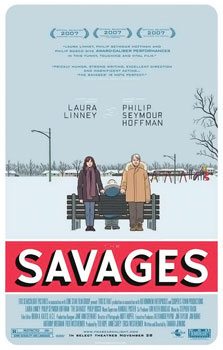
Review - The Savages


Studio/Production Company: Fox Searchlight Pictures
Director: Tamara Jenkins
Written by: Tamara Jenkins
Rating: R for some sexuality and language
Release Date: November 28, 2007 (theatrical), April 22, 2008 (DVD)
Genre: Comedy-drama
Strong Points: Terrific script and directing by Jenkins; Hoffman and Linney both deliver excellent performances.
Weak Points: None
Technical Score: A
Artistic Score: A
Final Score (not an average): A+
Moral Warnings: A brief sex scene is shown (no nudity); part of the plot involves a character having an affair; mild language throughout including several F-words.

It is difficult to define exactly what The Savages is. Tamara Jenkins approaches the content of the film with surprising honesty at all moments; there is no need for imagination to plausibly accept what is being shown on the screen. She writes a story that could easily have had more Hollywood comedy or more Hollywood drama, and there are many places where either would naturally seem to fit. But, instead, she decides to take an alternate and somewhat unexpected path.

The Savages is focused on the relationship of two adult siblings, Jon (Philip Seymour Hoffman) and Wendy (Laura Linney). Though what happened in the past is never demonstrated, Jenkins subtly reveals to her audience that Jon and Wendy's father was abusive to them when they were children. It is clear that this abuse has tainted all their relationships in painful ways, and not just in the context of the family. Wendy is having an affair with a much older married man. Jon is breaking up with his girlfriend of three years simply because her visa is expiring. But when they are told that their father is running out of time, they are forced to come back together. The rest of the film is about how these two siblings interact with each other and their dying father.

It is here that Jenkins takes her alternative path. Every camera shot, every line of dialogue is rooted in reality. The moments of humor, such as an extended scene wherein Hoffman wears a ridiculous contraption to help relieve tension in his neck, do not come across as intentional jokes. Indeed, there are few laugh-out-loud instances. The humor is there because it can be related to by everyone. The same is true in moments of drama (though they aren't dramatic by any means). The brokenness between these two siblings can be felt and, by many of us, remembered. Their relationship doesn't magically improve as they take care of their father. It struggles along slowly, painfully, with battles won and lost, as is the case with all tainted relationships in life.

The Savages is rated R, mostly for an occasional F-word and a brief sex scene that is devoid of any nudity. But the content is never more than it needs to be (I have to admit that I was very pleased with how little there was visually in the aforementioned scene). The sister Wendy is involved in an affair through the film, and there is mention to the siblings father being physically abusive when they were children.

Jenkins writes a sad, reflective story about broken sibling relationships that avoids all Hollywood comedy and drama cliches. Her story speaks the truth, whether or not it is easy to accept. This is magical in and of itself, and makes The Savages a rare gem of filmmaking.

-Zak Mellgren (zak@revolve21.com)

Read full article

Thursday, January 8, 2009

Review - Ghost Town


Studio/Production Company: DreamWorks Pictures
Director: David Koepp
Release Date: September 19, 2008 (theatrical), December 23, 2008 (DVD)
Genre: Comedy
Strong Points: Strong performances by the cast, led by the talented Ricky Gervais; smart script is met with smart directing; characters are strongly written and developed.
Weak Points: Laughs start slowly, but build throughout the film.
Technical Score: B
Artistic Score: B+
Final Score (not an average): B+
Content Rating: PG-13
Moral Warnings: Mild sexual dialogue, including one scene with descriptive mention of a mummified reproductive organ; 3 F-words; mild cursing; several mentions of a ghost character being disloyal to his wife while alive.


Ghost Town is based around a concept that would uniformly be found in a horror film - a man is able to see and talk to dead people. Indeed, it's very (or exactly) reminiscent of the concept in M. Night Shyamalan's The Sixth Sense. And while Ghost Town easily could have made jokes with spoofs of films like The Sixth Sense, it surprisingly doesn't.

Director David Koepp decides to take it in another direction. There is nothing comically scary about his dead characters. We do not see them as transparent beings. The only thing that visually separates them visually from the living characters around them is their ability to walk through walls. And, for some reason, every time a living person walks through a dead one, the living sneezes. Ultimately, it adds feeling and real character to these "ghosts," and it allows the film to stand on its own two legs without making fun of popular horror films. Those expecting spoofs will not find them here. And that's in no way disappointing.

According to the post-life mythology presented in Ghost Town, if those that die still had important unfinished business on earth at the time of death, their trip to the afterlife is put on hold. Instead, they are left to roam the world until they are able to right their wrongs, impart their message, or complete whatever task they were in the process of at the time of death. Unfortunately, as they are unable to interact with the living in any way, their options are somewhat limited. It is not surprising, then, that when a certain dentist by the name of Bertram Pincus (played by Gervais) comes back from the dead with the ability to speak with both the living and expired, it causes quite a commotion.

Pincus, however, is a narcissist, and borders on being a hermit; he loves himself and wants nothing to do with anyone else. When the dead begin to pester him, he is far from pleased, and in no way interested in aiding them get to the afterlife. But on the promise that they'll all leave him alone, he decides to help out one ghost (Greg Kinnear) who believes that his last task on earth is to prevent his widow (Tea Leoni) from marrying a bad man. Pincus becomes infatuated with the widow, and intends to present himself as an alternative. Thus a romantic comedy is born.

Ghost Town could have been carried on the shoulders of Ricky Gervais' talent, but it's not. That isn't to say that Gervais isn't perfect for his role. His comedic timing is great throughout the film, and he even manages to bring out some serious acting in moments that require a fair display of emotion. But he is well aided by the supporting cast, all of whom fit just as well in their roles as Gervais does in his. Tea Leoni is particularly worthy of note as she brings surprising depth to her character. Granted, she doesn't give an Oscar-worthy performance, but the film doesn't call for one. She acts in a way that she is able to breathe life and freshness into a role that is typically devoid of such.

In addition to strong performances from the cast, the elements that set Ghost Town above the others in its genre is the combination of a smart script and smart directing. The dialogue is quick-witted and intelligent, the characters generally (though not always) shy away from cliches, and the development of both character and story feels natural. The laughing doesn't start right off the bat, and when first watching it I began to get worried that it wouldn't live up to my expectations, but once the laughs do arrive they are never far off. From there on out, Koepp keeps a firm pace that balances between laughs and plot.

In terms of moral content, Ghost Town is rated PG-13, but it doesn't push the rating to the max. I was surprised to count three F-words (one I only noticed because I was watching with the subtitles on), but that's the only instance where the content seemed a bit much. There is some casual swearing here and there, as well as some sexual references. The ghost Pincus chooses to help was disloyal in life, and this serves as a small part of the plot. Beyond this is the aspect of the afterlife being represented in a way not matching common Christian thought, but this is obviously for comedic and plot purposes.

Overall, Ghost Town is easily one of the better comedies of 2008. Strong performances by the cast, met by a well-written script and smart directing by David Koepp, set it above the norm of its genre. With a fresh and heartwarming story, Ghost Town should definitely be considered if one is in the hunt for a good romantic comedy.

-Zachary Mellgren (zak@revolve21.com)

Read full article

Saturday, December 27, 2008

Review - Step Brothers


Studio/Production Company: Columbia Pictures
Director: Adam McKay
Written By: Will Ferrel/Adam McKay
Release Date: July 25,2008 (theatrical), December 2, 2008 (DVD)
Genre: Comedy
Strong Points: Excellent, humorous chemistry between Ferrell and Reilly.
Weak Points: Story is unoriginal and characters are rather bland; Ferrel and Reilly acting like babies all the time becomes a drag in some places.
Technical Score: C+
Artistic Score: C
Final Score (not an average): C-
Moral Warnings: Some strong, sexual dialogue and sexual humor throughout; lots of swearing including many F-words

Step Brothers is directed and co-written by Adam McKay who also co-wrote and directed Talladega Nights and Anchorman. This means that he once again goes after his audience through a near-brainless and immature humor that will, also once again, win only a particular crowd. If you didn't like Talladega Nights or Anchorman, pass this one by. Otherwise, Step Brothers is a fun comedy for a rainy day.

The premise of the film revolves around the acting chemistry of Will Ferrel and John C. Reilly. The two play 40 year old men in separate homes, both of whom, instead of going out into the world and making a living for themselves, have decided to remain at home with their parents and live the much easier lifestyle of ten year olds.

The plot picks up quickly in order to get the laughs going, and Brennan's (Ferrel) mother sparks a romance with Dale's (Reilly) father. They find commonality in their inability to send their sons away at such a late age, and the inevitable occurs. They decide to get married. Such is the catalyst for the film Step Brothers.

Brennan and Dale are forced to share a room together, and they begin their relationship by threatening violence against the other. Ferrel and Reilly have great chemistry with one another, each working off the other to play immaturity. Their chemistry carries the film through as the two step-brothers humorously work out their differences and become best friends.

The problem is that this chemistry really is the only thing that Step Brothers has going for it. The plot is blandly predictable, and the characters are forgettable. The formula is to be expected of a summer comedy, but its mistakes aren't necessarily easy to forgive.

As far as moral content goes, be forewarned that the film's humor revolves around crudity. Profanity abounds, including a large number of F-bombs throughout. Sexual humor is constant, and there's one clothed sex scene (two if you watch the Unrated version). Throughout the film there is a small sub-plot of Dale having an affair with his step-brother's (not Brennan's) wife. There is also a brief shot of Brennan's (fake) testicles that is rather unseemly. It more than earns its R rating.

In conclusion, Step Brothers relies fully on the performances of Ferrell and Reilly as they rant and whine and cry like ten-year-olds through the entire film. If you're not laughing within the first five minutes, you'll likely find the rest to be quite droll.

-Zachary Mellgren (zak@revolve21.com)

Read full article

Thursday, July 24, 2008

Review - WALL-E (2008)


Studio/Production Company: Disney/Pixar
Director: Andrew Stanton
Written by: Andrew Stanton, Peter Docter, Jim Reardon
Rating: G
Release Date: June 22, 2008
Genre: Comedy
Strong Points: Good laughs for children and adults alike; very clever; heart warming characters that are easy to get attached to; sweet story.
Weak Points: None.
Technical Score: A-
Artistic Score: A+
Final Score (not an average): A
Moral Warnings: Some explosions and sequences of action; very brief crude humor.


For over a decade Pixar has been the number one name in family-friendly films, introducing such titles as Toy Story, Monsters INC., Finding Nemo, and Cars. With the release of WALL-E, Pixar continues their trend of creating films that are funny, sweet, wittingly clever, and appeal to both children and adults alike.

WALL-E is the name of an adorably cute and naturally inquisitive little trash compactor robot who happens to be the last living (or operating) thing on planet Earth. Given the amount of neatly piled trash in the opening scene, it is reasonable to assume that WALL-E has been there for a very, very long time.

Nonetheless, WALL-E seems to enjoy his work. He hums or plays music that he’s recorded the night before as he goes along, happily picking up the still-remaining trash, compacting it in his little box-shaped stomach, and stacking it away. While he may enjoy his work, it’s soon enough clear that WALL-E is lonely.

But when another robot, EVE, lands on Earth, the loneliness ends and an adventure begins - one that will bring these two closer as they try to wake mankind from its current state of apathy.

As always, Pixar is able to tell a beautiful story. And once again, they prove themselves to be masters of their art. WALL-E has a touching, almost gracelike charm to it that few children’s films are able to capture. The characters are simple, yet so easy to become attached to. The setting is adorably and oftentimes humorously clever. And the story itself will warm your heart.

What’s most interesting (and also rather impressive) is the lack of dialogue between the main characters. EVE has about five or six words in her vocabulary. WALL-E has even less. So with usual Pixar cleverness, the animators focused on “body” language and their robot “noises” much like in the style of R2-D2 from the Star Wars films (humorously enough, Ben Burtt, the one who created the sounds of R2-D2, created the ‘voice’ of WALL-E).

The animation honestly makes you wonder what tree these guys picked their ideas from, because some of it is genius. By the end of the film I was half-convinced to go to Wal-Mart and see if they had any real life WALL-Es for sale in the appliance section. I love my cats, but I could easily see them being replaced by this trash-cleaning robot. The animators truly did a wonderful job of bringing depth and warmth to WALL-E.

And it's not just WALL-E, either. Every robot has character and all add to the charm of the film, whether they have as much screen time as WALL-E and EVE, or just show up once.

What’s sad is that some are already complaining that WALL-E has some underlying political message or agenda. Some say that it’s ‘anti-capitalist’ while others claim that it preaches the typical environmental message of the day. While there is certainly a ‘keep-the-earth-clean’ feel to it (and last time I checked, keeping the earth clean is a good thing), the first assumption is ridiculous. WALL-E is ultimately a love story and a sweet one at that. Nothing more. Adults will no doubt be able to pick out some extra themes from the film (I myself found it somewhat reminiscent of George Orwell’s Nineteen Eighty-Four), but like any Pixar film, WALL-E is to be taken at face value. At the very least, some of the extra themes can provide for some good parent-child discussions.

Despite being rated “G”, there was definitely some violence to be had in WALL-E. Most of it is humorous, but there were a number of explosions throughout the film. The cartoonish violence is really the only thing to mention as far as moral content goes, save for possibly the noting of when WALL-E is looking through the trash and finds a bra.

Pixar outdo themselves yet again in WALL-E, releasing one of their strongest films since Finding Nemo. With such a wonderful story, heart warming characters, and humorously clever animation, the only question that arises from the film is: what will they think of next?

--Zak Mellgren (zak@revolve21.com)

Read full article

Wednesday, June 25, 2008

Review - Get Smart


Studio/Production Company: Warner Bros.
Director: Peter Segal
Release Date: June 20, 2008
Genre: Comedy
Strong Points: Constant flow of jokes ranging from good to hilarious; some excellent spoofs on modern spy movies.
Weak Points: A couple jokes are a little too familiar and unoriginal; stereotypical romance plot that wasn't really necessary.
Technical Score: B+
Artistic Score: A-
Final Score (not an average): B+
Moral Warnings: Some mild language including a one finger salute, humorous violence, sexual content riddled throughout including some homosexual references and a male-male kiss.


In 1965, Mel Brooks and Buck Henry created a comedic television show called Get Smart to spoof films of the spy genre such as James Bond. It ran for four years, ending in 1969 with a fair amount of success. Bearing the same name nearly 40 years later, Get Smart is an adaptation of the show, and one that doesn't demand having seen the television show to enjoy it fully.

Steve Carrel plays Maxwell Smart, who is part of a government organization known as CONTROL. He's an analyst for them, and he's very, very good at it, being incredibly thorough to the point where no one wants to read his reports anymore due to death from boredom. Even so, his incredible knowledge about CONTROL's enemies soon lands him a position as an agent, and right away he is assigned to work alongside the greatest agent of them all - Agent 99 (Anne Hathaway). Together, and with a little help from their friends, they work together to try and foil the plans of KAOS, a terrorist group selling nuclear missiles to people that aren't the biggest fans of America.

While it has its fair share of drama and plenty of action (most of it is sprinkled with plenty of humor), both of which are done well enough in their own rights, Get Smart is ultimately a comedy. The jokes fly, and they fly in hoards, almost as though the writers were trying to jam as much as they could into the two hour film. It's one of those joke-a-minute films. Fortunately, all of the jokes range from good to great, and there are a couple that are simply fantastic. There was rarely a moment where a joke was delivered that I felt was supposed to be funny yet to make me laugh. Instead, I was laughing out loud from beginning to the end credits.

In those incredibly rare instances of failed laughter, the problem is familiarity. In some cases, it's quite alright to perform jokes and physical gags that have been done before in previous films. In fact, sometimes it's downright impossible not to. Most of those jokes can still be humorous, even though the audience has seen them before. But there are a few that are simply on a "Do not repeat" list, and once or twice Get Smart borrows from this list, to which I shake my finger of accusation and say, "Naughty; naughty."

Even so, as the laugh counter continues to pile up with each passing minute, those select instances are quickly and rather easily forgotten.

And... boy, do the laughs pile up. The physical gags are simply superb, focusing on something that Steve Carrel is traditionally quite talented with. That being slapstick. While not overdone (thankfully), there are a few scenes where Steve Carrel nearly beats the crap out of himself from his own stupidity. Some are on the familiar side, yet others are genius. Seeing Mr. Carrel shoot at himself with a pocket-knife-crossbow to break his bonds is something that I will no doubt be able to watch on numerous occasions and still enjoy.

Another thing is the overall cleverness of the spy spoofing (often mixed together with the slapstick). Some scenes are direct spoofs from specific films, while others are just general ones that make fun of the whole spy concept as a whole. And the gadgets... well, anyone that's ever seen an older James Bond movie will no doubt get a kick out of some of them.

As for the acting, the chemistry between the actors is fantastic. All of the actors, actually. Steve Carrel and Anne Hathaway are great together, but all of the minor characters also bring their best and interact with one another perfectly. The film certainly doesn't focus on Carrel for all of its laughs, as is the case with some of the previous films he has been a part of (Evan Almighty and Dan in Real Life come to mind).

One of the impressive things about the film is its ability to keep the plot moving while still providing the comedy at a constant level. The scenes flow naturally from one to the next, all building on each other without there ever being a scene just for comedy's sake. The plot itself is, of course, not the most original one you'll come across in your movie-watching adventures, but it stands up on its own two feet.

While it may seem like it given the amount of laughs I've described, Get Smart isn't pure comedy. There's drama. There's violence. More violence than drama, given the genre that Get Smart spoofs. Most of the drama comes from the relationship between Maxwell and Agent 99, both of them, through their various adventures on their mission, begin to feel something for one another. I actually found this slightly disappointing. Not unexpected in the least. What's a summer comedy film without a romance subplot, right? And it wasn't just because there was a romance subplot, but because of the way in which the subplot was developed and concluded. The obvious question of age between Maxwell and Agent 99 is handled somewhat humorously, but it doesn't exactly make for the best excuse.

And while the drama isn't exactly up to par in some cases, the action is (and even goes beyond it). Most of the action is what can be expected - brief gun fights, a few explosions, some hand to hand combat, and none of these elements are exactly what one would call "revolutionary." All fairly standard, but all well done, especially when the humor is thrown into the mix.

But there are some scenes that I just cannot describe in any way other than "impressive." One scene involves Maxwell and Agent 99 jumping from an airplane only to be greeted by a terrorist while free falling and having to dispatch him. It reminded me of Shoot 'Em Up, which came out last year and worked with the exact same concept. Except that Get Smart's scene was so much better. It was exciting and so much more visually pleasing than one would expect from a comedy. There are other instances that I won't give away, but let me say that the action is top notch and was a very pleasant surprise given the genre of film.

Morally, Get Smart is hot and cold. The violence is toned down, and I saw no blood or gore whatsoever, even when people were getting shot. Language in the film is slightly less than I had expected. The sexual content and innuendo, however, was more along the lines of PG-13 comedy. It doesn't necessarily push the PG-13 rating, but it fits quite comfortably inside it. Thankfully, there is no scene of sexuality. Agent 99 wears a dress that reveals quite a bit of leg at one part in the film. In that same part of the film she is forced to move gracefully to avoid laser beams, and this is done in somewhat of a sexual fashion. There is also a male-male kiss, though both men are straight. That's about as far as the visuals go, though. The innuendo is present throughout the film, though it never gets to the 'over-the-top' level, and Get Smart doesn't rely on it for the majority of its jokes.

Anyone who's a fan of Steve Carrel or just spy films in general will get many good laughs out of Get Smart. Easily one of the funniest films of the summer.

-Zak Mellgren (zak@revolve21.com)

Read full article