Showing posts with label Film - Review. Show all posts

Saturday, May 30, 2009

Review - Terminator: Salvation


Studio/Production Company: Warner Brothers
Director: McG
Release Date: May 21, 2009 (theatrical)
Genre: Action
Strong Points: Masterful visual style; the post-apocalyptic world we’ve been waiting to see for years is fully realized; strong performances by both Christian Bale and Sam Worthington; some impressive camera work.
Weak Points: Good characters, script, and plot have been tossed out the window and replaced with a constant bombardment of action.
Technical Score: B
Artistic Score: B
Final Score (not an average): C
Moral Warnings: The action is intense and frequent; some minor curse words throughout including one use of “son of a *****”.

Buckle up, kiddies. Terminator is back. Under the direction of McG (the visionary director of "Charlie’s Angels" and that one football movie everyone has already forgotten about), the post-apocalyptic world and the war with the machines is finally revealed 25 years after the first "Terminator" film. And it’s war all right, as probably 112 of its 115 minutes are filled with explosions and gunfire and terminators and people screaming. You know. The things that sell tickets.

Salvation takes place in 2003 in the post-apocalyptic...no, wait. That’s later. The opening scene is of Marcus Wright (Sam Worthington), a man on death row in 2003. We don’t know what he did, but he feels pretty bad about it and we get the Oh-the-terrible-things-that-I’ve-done-and-do-you-believe-in-second-chances-blah-blah-blah moment. If my heart was supposed to go out to him for that, it didn’t. After discussing his inner turmoil/angst to a doctor (Helena Bonham Carter), he signs his body away to Cyberdyne for some unknown project (I wonder what on earth THAT could be) and is executed.

Okay. NOW we’re in 2018. For the uncultured, there’s a cute "Star Wars"-ey opening crawl that gives a quick recap on exactly what the heck is going on in 2018, though really it’s pretty easy to figure out if you just watch the screen and don’t fall asleep, which should be no problem considering how many explosions and gun fights and lions and tigers and Terminators-oh-my show up.

Basically, it all boils down to man vs. machine, and this is something that the previous "Terminator" films have all been able to pull off quite successfully. However, since Salvation takes place in the post-apocalyptic world we’ve only seen brief glimpses of in the previous films, it’s man vs. machine on a remarkably larger scale.

For those who have spent significant time dreaming about what this machine-controlled 2018 would look like (because you’re weird like that), I say unto you: dream no longer. Because it’s here, and it’s beautiful. And by beautiful, I mean desolate, despairing, disturbing, and many other negative adjectives that start with the letter “D.” If there’s any place that McG and his team have succeeded in full, the creation of this world is it. It’s barren, empty, and makes you believe that Judgment Day really happened. Think "Children of Men" with Terminators as the bad guys instead of people (coincidentally, "Children of Men" was one of McG’s main influences for the setting).

Add that with some truly impressive cinematography by Shane Hurlbut. Shaky hand held camera work and one-shot takes are all over the place, and it’s gorgeous. They’ve set this world up and captured it perfectly. Mr. Hurlbut, I echo the words of Mr. Bale when he said: “Oh, good for you.”

Unfortunately, this isn’t enough to save "Salvation" (see what I did there?). It’s not a mess, no. Not at all. But its flaws are too significant for it to be the fourth "Terminator" film that we all wanted it to be. The characters are one-dimensional and underdeveloped, particularly John Connor (Christian Bale). My guess is the writers figured they could rely on his development in the previous two films and throw him in as-is, leaving more room for explosions and helicopter crashes.

Okay. I’ll admit it. The helicopter sequence was awesome.

Though, really, the show doesn’t go to Connor. It belongs to Marcus, the Terminator who thinks he’s human. Sam Worthington actually made me like his character, but even then there wasn’t any big feeling of attachment like the one I got out of "Terminator 2" (poor Arnold).

What replaces this character development? Action. Very well done, heart-pounding, visually striking action. But still action, and my mind begins to wander at the possibilities of how much better Salvation could be if just fifteen minutes of Terminators were taken out and well-constructed dialogue put in. Maybe we’ll find out when the sequel is made. Time will tell.

"Salvation" isn’t a light PG-13. It’s a dark film, wrought with intense fire-fights, frequent explosions, helicopter chases, and just overall plenty of violence to go around. Language was surprisingly sparse, though it is there. In one scene, a group of men intend to rape a woman, but they are stopped before they can do anything.

"Terminator: Salvation" has its flaws, and it certainly could have started the “beginning of the end” on a better note. But there’s a lot that’s done right here, and that gives me a good deal of hope for whatever the next step is for this series.

-Zak Mellgren (zak@revolve21.com)


Second Spin by Drew Regensburger

As I read Zak's review, it seemed apparent that I had either had different expectations for the newest "Terminator" film, or that I had watched a different film. I don't know. But after the mess that was "Terminator 3," I wasn't expecting much. What I got was a movie that was both fun and visceral, a movie that didn't betray the previous films in the franchise but embraced them. John Connor, while not the sole main character of the film, really comes into his own here, echoing the slow transformation we began to see in "Terminator 2." Anton Yelchin is in top form as Connor's teenage father Kyle Reese, going so far as to emulate speech patterns that Michael Biehn had in the first two "Terminator" films.

And the visual style is impressive, as mentioned above. But when it comes to the character development already present, I have to disagree. It's not entirely unreasonable to expect viewers to be familiar with previous material in a series; after all, "The Empire Strikes Back" assumed familiarity and didn't rely on exposition in film to establish previously established characters. That means that in the fourth film in a series, focusing more on developing new characters makes more sense than expanding upon a character that has been built up over the course of three films and over twenty-five years.

All of that said however, "Terminator: Salvation" is--barring some clunky and corny dialogue--a treat to watch. It's a lesser "Terminator" film, but then, it's hard to surpass the first two films in the series, simply because of their status as sci-fi/action classics. Still, it towers over the diminutive and unimpressive "Terminator 3," and sets up the continuation of the series, leaving me (much like Zak) hoping that the next film in the franchise will be that much more impressive.

Read full article

Friday, May 22, 2009

Review - The Informers


Studio/Production Company: Senator Entertainment
Director: Gregor Jordan
Written by: Bret Easton Ellis and Nicholas Jarecki
Rating: Rated R for strong sexual content, nudity, drug use, pervasive language and some disturbing images.
Release Date: April 24, 2009
Genre: Drama
Strong Points: Captures the atmosphere of the 80s exceedingly well; some very strong performances from the cast; excellent cinematography and editing; strong script
Weak Points: Fractured feel, largely in part to unresolved plot; depravity of characters and plot can feel oppressive; characterizations tend to feel one-dimensional
Technical Score: B
Artistic Score: A
Final Score (not an average): C+
Moral Warnings: Sex and drugs permeate the film; profanity is heavily used throughout the film, including blasphemy; male and female nudity occurs frequently; some violence is featured, but not heavily.

In the late-80s, author Bret Easton Ellis came onto the scene with “Less than Zero,” a nihilistic take on youth, drugs and sex in Los Angeles, circa the mid-1980s. A film, starring Robert Downey, Jr., and Brat-Packers Jami Gertz and Andrew McCarthy followed, and was the first of several Easton Ellis adaptations. Later projects included “American Psycho,” a novel and film about facades and insanity in the yuppie crowd (and starring Christian Bale in an amazing, chilling role), and “The Rules of Attraction,” a novel and film about drugs, sex and debauchery in the 1980s college crowd.

In that way, “The Informers” is no different an adaptation than any of those previous; it deals with drugs, sex and a nihilistic group of people in the early 1980s, and follows them for a short period of time. All of the characters are connected in some way, through theme, chance encounter or sexual partner. Sometimes it’s a mix of all three. At other times, the connections are harder to make.

Like any ensemble piece, “The Informers” relies heavily on the strength of its players. Strong performances from Mickey Rourke, Kim Basinger, and Billy Bob Thornton lead the way, but those actors never turn anything surprising in. They simply provide a solid backbone for the story to rest on, backstory and context when it’s needed. Oddly enough, these are also some of the most fascinating characters in the film, which isn’t saying much when the vast majority of the characters are portrayed as one- and two-dimensional addicts with no life and no remorse for their despicable actions.

Brad Renfro, in his final role (he died in early 2008 from a heroine overdose), appears as Jack, a young, struggling actor who lives in a dump and without confidence, and is dealing with his uncle Peter (Mickey Rourke) taking advantage of him and doing things that are not strictly legal. Graham (Jon Foster) is the son of William (Billy Bob Thornton), and is a rich kid who deals drugs on the side, lives with his girlfriend Christie (Amber Heard) and occasionally his best friend Martin (Austin Nichols), a music video director who leads a particularly hedonistic lifestyle. One of their friends, Tim (Lou Taylor Pucci), recently went on vacation with his alcoholic father Les (Chris Isaak), who thinks his son might be gay. On top of all of this, pop star Bryan Metro (Mel Raido) is dealing with a heavy drug addiction, a pressing tour schedule and a host of other problems.

None of these characters are particularly likable. None of the characters are necessarily engaging. Part of the appeal of “The Informers” is that fact, that the characters both repulse and compel. This is the stuff of soap opera tragedy, a story that feels almost tragicomic in its melodrama. And comical it would be if the subject matter weren’t so dark. Easton Ellis has long been a satirist in his novels. “American Psycho” dealt heavily with that, featuring a man whose answer to his own inhumanity and insensitivity was to kill, and kill brutally. In that film, Christian Bale’s Patrick Bateman murders both colleagues and prostitutes while commenting on popular music in a very nonchalant fashion. Here however, the destruction on display is of the personal kind and finds itself in even less comical territory than “American Psycho” ever did. Characters often wake up in bisexual threesomes, or find themselves unable to relate to another because of their inability to relate to themselves. There is no redemption here, and maybe none is wanted.

Themes of love and death juxtaposed run through the film, though one has to wonder: Do any of the characters actually care? When we reach certainty about love, certainty about death, at least for one of the characters on display here, it’s almost too late. Those with answers are given no screen time; those without them do what they want and then bemoan their misfortune when the world crashes around them. It seems in some ways that we, as the audience, are almost expected to judge the characters presented here, to analyze and condemn them while the film coldly displays their actions.

Perhaps the best thing about “The Informers” is how well it captures that quintessential 80s vibe. Everything, from costume design to art direction to music selection, is dead on, often betraying a real affection for the era. Nostalgia does permeate the film, but so does anger and sadness and a feeling of being directionless. Morality is a grey area here and sex is thrown around as a commodity, just like the drugs.

Nudity abounds in “The Informers,” with at least one major character’s breasts exposed for the majority of her scenes. Full frontal nudity is shown several times, including both male and female, though not often in focus. At least one graphic sex scene is on display, and one character is heavily bisexual, sleeping with more than one character and making no secret of it. Drug use runs rampant, from cocaine to pot to what seems like heroine. One character kidnaps a child with the intent to sell him. Another punches a woman in the face after she propositions him sexually. At the beginning of the film, a character is hit by a car; blood is everywhere from the act. Incidental blood is shown from cuts on the hands to two major characters. Profanity is everywhere, with most words in the book used. Blasphemy is used, but not prevalent.

None of this is to say that “The Informers” is not interesting, or that it’s a bad film. It’s well made and holds a sort of morbid fascination for the viewer. But when all the sex, drugs and glamour fade away, we find that most of the characters have not progressed, and those that have are not necessarily better for it. The ones that haven’t feel like lost causes, their faces spattered with blood or their noses powdered with cocaine. They haven’t learned a thing from their experiences, and maybe neither have we. Either way, “The Informers” is what it is: An intriguing, albeit vile, character study, drenched in sexual and moral ambiguity. It is a film that is both hard to watch and hard to stomach, and one that I’m not sure needed to be made.

Drew Regensburger (drew@revolve21.com)

Read full article

Thursday, May 7, 2009

Review - X-Men Origins: Wolverine


Studio/Production Company: 20th Century Fox/Marvel Studios/Seed Productions/Dune Entertainment
Director: Gavin Hood
Written by: David Benioff, Skip Woods
Rating: PG-13 for or intense sequences of action and violence, and some partial nudity.
Release Date: May 1, 2009
Genre: Action
Strong Points: Strong performances from principal actors; well-done special effects; excellent opening sequence
Weak Points: Poor representation of every character; bad script; corny dialogue; weirdly jumps between bloody and bloodless; bad effects for Wolverine’s claws
Technical Score: C+
Artistic Score: D
Final Score (not an average): D
Moral Warnings: Violence runs throughout the film; an intense sequence in Vietnam and in World War II early in the movie; some profanity scattered through the film, including s*** and a**h***; blood is present in the movie, but not an extreme amount; some sensuality is implied; some characters are ruthlessly murdered; Wolverine is seen naked from a distance at one point

The “X-Men” film series, much like the “Spider-Man” series, has had its share of ups and downs. The first two films in both series, arguably, were the best, followed by weaker third installments. In the case of the final “X-Men” movie, it wasn’t bogged down by silliness, but it wasn’t as moody or character driven, either. That was the main problem with that movie, and the reason why some felt so disappointed with it.

“X-Men Origins: Wolverine” doesn’t suffer from that problem, but adds many of its own to the list. Wolverine (Hugh Jackman) is just as angsty and angry as ever, but gone is the mysteriousness and complexity from previous films. In its place is exposition, and here, it’s just not that good. The script is full of bad, almost laughable dialogue. Characters that were intriguing and captivating in previous films are now almost parodies of themselves, which is really a shame when so many skilled actors are part of the film, turning in strong performances. Sadly, strong performances without good dialogue don’t add up to much.

Disappointingly, here is where the screenwriters decided to add in fan favorite characters beyond the more famous X-Men. Deadpool (Ryan Reynolds) is the worst casualty of the bunch. Here is a sarcastic, funny character perfectly suited to the actor, and the writers used none of the actual Deadpool source material. Looking at the film without understanding the source material, one finds that the filmmakers underutilized Reynold’s, throwing him out ten minutes into the film and otherwise sabotaging the character itself. Gambit (Taylor Kitsch) is another such casualty, though not to the degree that Deadpool is. As one of the most anticipated Marvel characters to make the transition from panel to screen, one would think that the filmmakers would take more care in presenting the character. This largely is not the fault of the writing, because Gambit is nearly spot-on, ignoring some aspects of his past that the characters elaborate on. Instead, the problem is with the actor who plays the character, a person who bizarrely seems to have hardly any presence on screen, despite his character’s otherwise flashy powers.

Ignoring the lack of faithfulness to the source material, the film is still mediocre at best. The plot feels like an amalgamation of a number of disparate plot threads, muddied by ham-fisted and comically bad dialogue. Special effects are used everywhere, which isn’t normally a bad thing, but it is when they’re of this quality. Somehow, the claw effects that looked so convincing on Wolverine in the past three films now look fake and cartoony. A number of exciting chase sequences end in bad CGI followed by a bad one-liner.

There are a number of very cool things in “Wolverine” that are unfortunately stuck in the mire that is this movie. Sabretooth (Liev Schreiber) and Wolverine’s relationship is well done, mostly because of the chemistry that the actors have between them. Several fight sequences are intense, including one where Wolverine destroys a helicopter. These sequences, however, are few and far between compared to the things that don’t work, and those are what end up killing the movie.

Speaking of fight sequences, most of them are relatively bloodless. Compared to the first three “X-Men” movies, “Wolverine” hardly has bloodshed, though there is some on dead bodies and in a few key close ups. The profanity in the movie is about average for a PG-13 film, and includes s*** and a**h***. Wolverine himself is seen naked from behind at one point, and only from a distance. There’s also some mild sensuality involving Wolverine early in the film.

For what it’s worth, the cinematography is well done, as is the sound design. And, as was said before, there are a number of surprisingly good performances by the leads, despite the bad script. None of that is enough to save “X-Men Origins: Wolverine,” however, which begs the question: Are further installments in this series necessary, or even worth it? After seeing this mess, it’s hard to be enthusiastic.

-Drew Regensburger (drew@revolve21.com)

Read full article

Saturday, April 4, 2009

Review - Watchmen


Studio/Production Company: Warner Brothers/Paramount Pictures
Director: Zack Snyder
Written by: David Hayter and Alex Tse (graphic novel by Alan Moore)
Rating: R for strong graphic violence, sexuality and nudity.
Release Date: March 6, 2009 (theatrical)
Genre: Action/Drama
Strong Points: Awesome visuals are met with smart direction by Zack Snyder, and strong performances by the actors; it’s a story with so many themes and messages that it requires several viewings to absorb everything and much thought to properly understood
Weak Points: Suffers from occasional narrative lull
Technical Score: A
Artistic Score: A
Final Score (not an average): A-
Moral Warnings: The violence is gritty, dark and graphic. It is used only when necessary to carry the plot forward, but when it appears, it is gruesome and occasionally disturbing (for example, one scene shows in detail a man’s arms being cut off with a chain saw while he is still alive, then dying from blood loss/trauma); language is frequent, with the F-word popping up 20 times or so; there is an extended sex scene where bare breasts and buttocks are shown; one of the characters is often naked (he glows with blue energy, which takes away some of the realism, but his genitals are not often covered)


For those who don’t know, this movie is based off of the graphic novel of the same name. It totaled 12 issues, which were released between September of 1986 and October of 1987 and then went on to become basically what the movie trailer called it - the most celebrated graphic novel of all time. Watchmen introduced the world to an alternative 1985 America - one where masked avengers were not confined to comic books, but were a part of history.

The movie is the closest thing to a panel-by-panel adaptation that one can get. The problem with this is that, while it will almost certainly please the fans, it runs the risk of confusing the wider audience that haven’t read it. Critics have been quite split on this issue, and I guess I’m one of those that took Watchmen for brilliance. I had no trouble at all following the plot nor understanding the characters (though the film certainly rewards study after the initial viewing).

As previously mentioned, Watchmen takes place in an alternative 1985 America (mostly New York). This America is darker, grittier, and at the same time recognizable. Unlike most superhero films, Watchmen doesn’t require much of an active suspension of disbelief, as its alternate reality really isn’t all that hard to accept as a possibility. It’s an America that could have been and still could be. That alone is a chilling thought.

What brought this nation to such a despairing state? A collection of things, no doubt, but ultimately it’s fear. An energy crisis has caused the Cold War to escalate to dangerous levels, and its effect on the American citizenry is disgusting. Rampant crime, riots, and prostitution are the norm. At one point, costumed heroes would have been expected to help quell these problems, but “masks” have recently been outlawed, due mostly to the public’s violent demand for it and the government’s desire to keep the peace. And now, amidst all this chaos and fear, someone is one by one assassinating the retired vigilantes that once referred to themselves as Watchmen.

I won’t give away any more of the story, as it really is a delight to watch unfold, though it’s not without its issues. The plot briefly suffers from the two words no director or screenwriter wants associated with his film - narrative lull. But this was mostly because of backstory on the characters, and while it did temporarily disrupt the natural flow that carried the rest of the plot, the backstory is well done and was interesting enough to hold my attention. Probably because I don’t get bored when people aren’t slamming knives through other people’s elbows and cutting off arms with chain saws.

Or maybe that’s just me.

Even so, there is plenty of action/gore to go around for the action/gore buffs, and the rest of us will be impressed anyway. Watchmen is directed by Zack Snyder, who caused quite the stir with his 2007 blockbuster hit 300. 300 featured some of the most incredible action visuals ever seen in cinema, as well as some of the lamest dialogue and most uninspired of plots. Granted, it wasn’t mean to be anything more thant an action flick, but it nonetheless remains a film of very, very little substance.

Watchmen combines those impressive visuals with everything that 300 lacked - a great script, great characters, great acting, a fantastic plot, themes, a message, and, of course, substance. So while action is nowhere near the core of the film, when it shows up, it’s a thing of beauty. They’re the kind of action/fight scenes that you look up randomly on YouTube just to again experience the greatness (and I will openly admit to having already done this). But the beauty is not just in the action. The whole visual style of the film is based around Dave Gibbon’s art work on the graphic novel, which means that the movie is pretty much cinematic eye candy from start to finish.

Yet as good and impressive of a film as Watchmen is, I couldn’t go around suggesting it to everyone I know. It’s a dark, sinister, mature movie - the kind that doesn’t hold punches, and lets the punches land hard. Humanity is depicted through the blackest of lenses, touching even on rape and the murdering of children. When violence occurs, it is often graphic and can be disturbing, depending on the viewer. Language is certainly present, and there is an extended sex scene with nudity (breasts and buttocks are shown). This all reflects the degenerate world that Watchmen takes place in, but it is a world that some will likely not feel comfortable entering.

In the end, Watchmen is a haunting piece of cinema. Its faithfulness to the graphic novel will please fans, and those that haven’t read it will find a film that deserves and rewards study and discussion. Not everyone will be able to appreciate its depth, which is unfortunate, as in the depth there is much to appreciate.

-Zak Mellgren (zak@revolve21.com)

Read full article

Tuesday, March 24, 2009

Review - Quantum of Solace


Studio/Production Company: EON Productions/MGM/Columbia Pictures
Director: Marc Forster
Written by: Michael G. Wilson, Paul Haggis, Neal Purvis, Robert Wade
Rating: PG-13 for intense sequences of violence and action, and some sexual content.
Release Date: November 14, 2008 (Theatrical), March 24, 2009 (DVD)
Genre: Action-Adventure
Strong Points: Consistently stylish, gripping direction; Daniel Craig continues to impress as Bond; the rest of the cast tends to shine; visually striking cinematography
Weak Points: Olga Kurylenko is no replacement for Casino Royale’s very human and very strong Eva Green; story is more enjoyable the second time through, but initially comes off as very weak, especially when compared to Casino Royale.
Technical Score: B
Artistic Score: B-
Final Score (not an average): B+
Moral Warnings: Plenty of violence, combined with revenge motivated killings throughout the film; one scene of mild sensuality; a scene of rear nudity; one or two mild profanities

Let’s get one thing straight right off the bat: Quantum of Solace is not Casino Royale, nor does it try to be. It's a weaker but visually stunning follow-up. As the first proper sequel in the James Bond franchise, it may not initially seem to have the impact of its predecessor, but it is strong and absolutely worthy on its own merits. It is far more violent and less focused on story and character development than Casino Royale was, but it makes no pretense in that direction anyway.

Quantum of Solace—quite possibly the strangest title in the Bond franchise (it means “the least amount of comfort”)—is, at its core, a revenge story. James Bond (Daniel Craig), left cold and calloused by the seeming betrayal and ultimate death of Vesper Lynd in Casino Royale, has nothing left to lose; he cares nothing for his life or for MI6 protocol, resorting to doing anything necessary to get the job done. The film picks up around an hour after Casino Royale ended. Bond is speeding away from a number of attackers, a man (Mr. White, played by Jesper Christensen) in the trunk of his car. The visual style of Solace is made apparent through this opening sequence, with both stylish camera angles and pretty unique camera cuts punctuating the action. Shots of a car flying off a cliff are interrupted, only resumed a moment later as Bond encounters the car falling in front of him. The whole scene reeks of the director Forster striving for a stylish action film, shot with plenty of panache, and mostly succeeding.

Unfortunately, this also means that it initially feels as though the movie is mostly fluff with very little substance to bring to the table. The new main characters aren’t as interesting as any of the central characters from Casino Royale, but the recurring characters continue to impress in roles both small and large. Of particular disappointment is Olga Kurylenko’s character, Camille Montes; she seems devoid of depth, remaining one dimensional for over half the film until some exposition is given. But at that point, it’s almost too little, too late. Any vestige of interest I had in her character disappeared, and attempts by the screenwriters and Forster to establish a meaningful relationship between Bond and Camille fall flat.

That said, their relationship isn’t the focus of the movie. Instead the film becomes one about how Bond’s internal turmoil affects his work and life, showing his evolution into the character that we’ve all become so familiar with over the past forty years. Violence is featured more throughout the movie as a matter of course with the typical Bond film sexuality taking a back seat because, as M (Judi Dench) says at one point in the movie, Bond is "blinded by inconsolable rage;" he’s interested more in making someone pay than wooing and seducing women.

Ultimately, Forster proves a capable director, albeit a lesser one than Casino Royale’s Martin Campbell, who brings interesting and different things to the table while continuing the plot and serious direction of 2006’s critically acclaimed Bond reboot.

By this point, you’ve probably noticed that I haven’t said all that much about the plot of the movie itself. That’s because it’s not exactly the most remarkable plot in the world, dealing with bioterrorism and political coups, nor is it the main point of the film itself. Here, the end justifies the means. Everything that happens to and around Bond is a way of justifying how and why Bond gets his revenge and finds his answers. This isn’t a movie about a crazy villain out to take over the world, though there is one, nor is it a movie about saving the world, though Bond does that as well. Instead, Solace finds its story in Bond saving himself from the self-destructive path that Casino Royale leaves him on, and this is ultimately the most important thing to know about the movie itself.

The DVD edition of Quantum of Solace contains several special features alongside a copy of the near-atrocious Jack White/Alicia Keys collaboration “Another Way to Die,” the theme song of this Bond film. The transfer on the DVD itself is quite good, with acceptable black levels and hardly any artifacts occurring. Sound quality is also very good with no visible lag or other problems with the audio itself.

Quantum of Solace features some minor sexuality, a scene with some nudity in it and quite a bit of violence and killing. The fight sequences are much more intense here, owing some to the Bourne movies, but not as much as many have said. Language is not a problem, though there may be one or two cases of blasphemy during the proceedings.

Quantum of Solace is not better than Casino Royale, which has widely been acknowledge as the best Bond film in recent years. However, it is still one of the stronger films of the series and an admirable movie in its own right. Its impact is not immediate but rewards the viewer with multiple viewings. Certainly there are flaws here and the theme music isn’t as stunning as it could have been, but this remains a significant and beautiful addition to the Bond legacy.

-Drew Regensburger (drew@revolve21.com)

Read full article

Friday, March 13, 2009

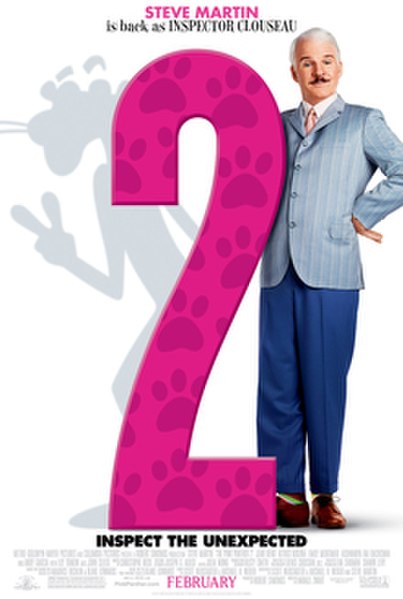
Review - The Pink Panther 2


Studio/Production Company: Columbia Pictures
Director: Harald Zwart
Written by: Scott Neustadter, Michael H. Weber, Steve Martin
Rating: PG for some suggestive humor, brief mild language and action.
Release Date: February 6, 2009
Genre: Comedy
Strong Points: Some pretty good slapstick; Steve Martin
Weak Points: Plot is weak and unoriginal; slapstick gets a bit out of hand.
Technical Score: C
Artistic Score: C
Final Score (not an average): C-
Moral Warnings: One or two curse words; more sexual references than would be expected in a PG film; a man grabs a woman's behind.

I'll go right off the bat here and admit it. I liked the Pink Panther remake. I enjoyed the over-the-top slapstick, Steve Martin's laughable accent, the zany dialogue. Critics, on the other hand, showed little love for it, whining that Peter Sellers would be rolling in his grave if he could see what his character had been turned into. I never saw the original Pink Panther films, so I can't compare. Either way, Pink Panther 2 continues where The Pink Panther left off - over-the-top slapstick, Steve Martin's laughable accent, and zany dialogue. Nothing has changed. If you didn't care for the first one, stay away. If you enjoyed it, Pink Panther 2 has more of the same fun from before.

Thus, Steve Martin reprises his role as the dumb, idiotic, and often tactless Inspector Jacques Clouseau. Clouseau has somehow managed to retain the status of "France's greatest inspector" from the 1st film, though Chief Inspector Dreyfus (John Cleese) still considers him a blubbering idiot, and justly so. But when a number of famous historical artifacts are stolen by a criminal known only as El Tornado, Clouseau is immediately requested to join an elite group of detectives from around the world to search for the thief.

Clouseau does so, and the "Dream Team" of detectives begin their adventure. It doesn't take the Inspector long to start making a fool of himself, and, really, this is the essence of the film. The plot plods along at a dully familiar pace from this point on, relying almost solely on Steve Martin to provide for entertainment. This isn't a terrible thing, however.

It does mean that those without much care for slapstick will likely be bored to death by the time the credits roll, because there really aren't any other elements of filmmaking or story telling there to keep them around otherwise. The characters are thinly drawn, moreso than than in the first film. The continuation of the romance twist between Clouseau and the far younger Nicole is orchestrated poorly, and seems to be there just for the sake of... well... being there. The biggest disappointment for me was the dumbing down of Ponton, Clouseau's "sidekick." Whereas in the first film, he was a normal, serious, intelligent detective (which made his interactions with Clouseau all the more humorous), he has now been turned into a character not much smarter than the Inspector himself.

Of course, as it is technically a mystery, there's a surprise ending. But without a decent plot or characters to be involved in, it's hard to genuinely care about it.

The Pink Panther 2 is rated PG, mostly due to mild sexual dialogue and humor. There is one scene where an HR rep describes a a somewhat sexual scene to Clouseau and tells him to keep a straight face, which he can't, evidently enjoying it. Later in the film, a man pats a woman's behind. The movie is mostly devoid of language, with only one or two curse words, along with a few uses of "Oh my god."

It's evident that Pink Panther 2 is aimed at a young audience, and the constant slapstick means that it will please that demographic. Unfortunately, there's not much more to it. Older viewers may find a few chuckles, but other that, will likely remain silent the 90 minutes taken to watch it.

-Zak Mellgren (zak@revolve21.com)

Read full article

Friday, March 6, 2009

Review - Valkyrie


Studio/Production Company: United Artists
Director: Bryan Singer
Written by: Christopher McQuarrie, Nathan Alexander
Rating: PG-13 for violence and brief strong language
Release Date: December 25, 2008 (theatrical)
Genre: Historical Thriller
Strong Points: Is relatively historically accurate; quite moving in most respects
Weak Points:
Technical Score: B+
Artistic Score: B+
Final Score (not an average): A-
Moral Warnings: One F-word, occasional uses of the 7-letter B-word, the D-word, and the H-word. God’s name is used in vain a few times. There is a fair bit of violence, including an explosion, a couple suicides and executions. They do not however, have any blood or gore. One person is hung by piano wire (the camera cuts away before anything is shown, but we see prior victims hanging lifeless). There is a good bit of drinking and smoking.

You may or may not know the name Brian Singer. But you have most likely heard of two movies he directed. He directed the X-Men movies, both of which were very popular.

Valkyrie is a “Historical Thriller," and is, therefore, based on events that actually happened. In the case of Valkyrie, the event is the July 20, 1944 plot to assassinate Adolf Hitler, supreme chancellor of Germany. For the sake of the movie, I won’t reveal what happens, but I will say that the movie follows the history of the event very accurately. The plot involved the German resistance attempting to plant a bomb in the bunker known as “The Wolf’s Lair” and remotely detonating it from a safe distance. If the plan went perfectly, those killed would also include some of the Axis’s finest generals and even Heinrich Himmler, head of the SS.

Our view of the story starts off in Africa, with Colonel Claus Von Stauffenburg (Tom Cruise). When he is severely wounded in an allied air attack on his group, he is evacuated to Germany to be treated. He loses a hand and several fingers, as well as one of his eyes. Meanwhile, Major General Henning von Tresckow (Kenneth Branagh) puts a bottle of alcohol rigged with a bomb in the Fuher’s private plane, attempting to assassinate him with it. The bomb fails to go off, and he orders General Friedrich Olbricht (Bill Nighy) to find a replacement for one of the conspirators that was captured in the failed attempt. The person he recruits is Von Stauffenburg. When Von Stauffenburg enters a meeting with the other conspirators, he is shocked to learn that there is no plan to assassinate Hitler. He is told to come up with a plan, which he does.

The plan is known as “Operation Valkyrie,” which involves the deployment of the Reserve Army to maintain order in the event of a national emergency. Von Stauffenburg gets promoted to a position where he can change the plan of “Operation Valkyrie,” which he does, so that the conspirators can control what happens in the event they succeed in the assassination attempt.

The acting is very convincing, and standouts in particular are Cruise and Nighy, with an honorable mention of Branagh. Nighy does an almost perfect version of his character, giving the viewer the impression that Olbricht is not a person you want to get on the bad side of. Cruise does a fantastic job of portraying Von Stauffenburg. In fact, he even looks somewhat like the real Stauffenburg did. Branagh does yet another excellent movie, portraying the highest ranking official of the conspirators.

The sound is excellent, with realistic sounds of warfare, and a fairly good soundtrack. Nothing in particular about the soundtrack stands out, but it does the job well. The cinematography in this film is super as well, with smooth camera work and excellent shots.

There is some content to be concerned over. The F bomb is dropped once, and there are a few instances of B******, D***, and H***. The Lord’s name is also taken in vain once or twice. Von Stauffenburg and his wife kiss a couple times, a reference is made to prostitutes. There is a good amount of violence, as this is a war movie, but the violence is neither bloody nor gory. There are a few execution scenes that are a bit disturbing. We see several people who have been hung by piano wire, and one person commits suicide by holding a grenade to his jaw.

If you are a fan of World War 2 history or of historical thrillers in general, then you will find this movie to be quite excellent. While it's most likely not the best movie out there, it certainly is good.

--Travis Martin

Read full article

Thursday, March 5, 2009

Review - Revolutionary Road


Studio/Production Company: Paramount Vantage
Director: Sam Mendes
Written by: Justin Haythe (based on the novel by Richard Yates)
Rating: R for language and some sexual content/nudity
Release Date: December 26, 2008 (Theatrical)
Genre: Drama
Strong Points: The entire cast gives spot-on performances, highlighted by Leonardo DiCaprio and Kate Winslet; Mendes' direction is powerful and poignant;
Weak Points:
Technical Score: A-
Artistic Score: A
Final Score (not an average): A-
Moral Warnings: The film covers a failing marriage; a man has an affair, though this is briefly focused on; abortion is a significant part of the plot; 5 or 6 F-words and lots of minor curse words, such as “hell” and “damn;” a woman’s breasts are shown briefly; two sex scenes, though there is no nudity.

Frank and April Wheeler (Leo DiCaprio and Kate Winslet) live with their two young children on the corner house of Revolutionary Road. Frank has a respectable job at Knox Business Machines, and though it’s not where he saw himself fifteen years ago, it pays well. April stays at home and watches over the children, cleans the house, cooks the meals, and performs other tasks associated with a housewife.

On the outside, the Wheeler family seems content and happy with the life they’ve chosen to lead. But on the inside, Frank and April are in turmoil. Whether they want to admit it or not, their marriage is falling apart, and we know this from the first scenes of the film. This story takes place in 1955. But what adds power, and tragedy, to Revolutionary Road is the fact that the problems brewing within the Wheeler’s marriage are problems still in the American culture today, in 2009. The old cars, slicked hair, and corded telephones serve as a mirror through which to see the astonishing lack of change between then and now.

Through flashbacks, we see the Wheelers as they once were - young, passionate, and both equally convinced that they will not buy into the American Dream that those around them have so easily fallen for. Frank speaks of Paris and the time he spent there, vowing to return. He refuses to sit behind a desk for the rest of his life like his father did. He will live life and enjoy it. April has the ambition to become an actress. It is her dream, and she shares this dream with Frank. During these moments, they seem alive, vibrant and, more importantly, different.

But these flashbacks are appropriately brief. Director Sam Mendes brings us back to the distant sense of despair and conformity that is so evident in the communication between this couple. Despite his vows, Frank does work at Knox Business Machines, and in the same position that his father did no less. April never reaches a main stage. She has a role in a community play, and Frank listens while those around him whisper how poor her performance was.

Soon, April realizes what we’ve known all along - that their life is fruitless and empty. So she presents a plan to her husband that comes across as somewhat crazy, even to us. She wants to move the family to Paris. Frank is reluctant to this idea at first, but he gives in quickly, for he knows what will become of their lives and their marriage if they continue with the living of their American Dream.

For a while, we get to see the Wheelers once more as they were, but in the present instead of through flashbacks. They experience freedom again. In those moments of the film, Mendes shows us the rapturous joy that the Wheelers feel when they let go of the burden that the culture has inflicted on them - which makes the spiral downwards and backwards all the more painful to watch.

And it is painful to watch, both before and after they achieve their sense of freedom. Mendes doesn’t treat the subject lightly. The arguments between Frank and April are intense. It’s difficult to appreciate the powerful performances when Winslet and DiCaprio make us feel so uncomfortable. Frank curses violently, throws things, and nearly comes to the point of physically harming his wife. April sits there, trying, and failing, to appeal calm. Anyone who had parents under the same pressure as the Wheelers can testify to the film’s realism in this aspect.

I should mention that later in the film, abortion plays a major part in the plot. There are no political intentions behind it, however. It serves as yet another reinforcement for how desperate and despairing the Wheeler’s situation is.

Through the remarkable, palpable chemistry of Kate Winslet and Leonardo DiCaprio, through the poignant direction of Sam Mendes, Revolutionary Road paints a picture. It reveals with a darkened lens just how wrong the American definition of a good and happy life is. Mendes doesn’t judge the Wheelers. He makes them what they really are - victims of a flawed culture.

-Zak Mellgren zak@revolve21.com

Read full article

Friday, February 20, 2009

Review - Burn After Reading


Studio/Production Company: Focus Features
Director: Joel and Ethan Coen
Written by: Joel and Ethan Coen
Rating: R for pervasive language, some sexual content and violence
Release Date: September 12, 2008 (theatrical), December 21, 2008 (DVD)
Genre: Black Comedy
Strong Points:
Weak Points:
Technical Score: B
Artistic Score: B+
Final Score (not an average): B+
Moral Warnings: Strong language throughout, including many F-words; affairs are a main theme of the film; there is a brief sex scene (it is seen in passing and for no more than a few seconds--nothing is really seen); two instances of violence, one of which is rather unrestrained and shows from a distance a man striking another man in the head with an axe. It is somewhat graphic.


In 2007, the Coen brothers, two of the most prominent filmmakers in the business, wrote and directed a masterpiece, No Country for Old Men. It received universal acclaim from both critics and movie lovers alike, and it won them the coveted Academy Award for Best Picture.

Burn After Reading sees these two young men returning what is perhaps their most familiar territory, the black comedy. Those expecting another No Country for Old Men will not find it here, but they should by no means be disappointed. Burn After Reading is smartly written, directed, and acted, earning its place right alongside other Coen greats such as Fargo and the Big Lebowski.

John Malkovich plays Osbourne Cox, an analyst for the CIA who has recently lost his position. Angered by at the demotion, he quits his job completely. His wife Katie (Tilda Swinton), rather dismayed by this, believes that the time has come to part ways with her husband and marry a man she has been having an affair with for quite some time (played by George Clooney). She is urged by her lawyer to get a copy of her husband's financial information; she does this, accidentally obtaining Osbourne's memoirs in the process. Unfortunately, the copy is accidentally lost in a fitness center, whereupon it is discovered by two fitness instructors (Brad Pitt and Frances McDormand). They find the memoirs on the disc, and take it to be top secret CIA documents, and the fun begins.

Much like some of the Coens' previous comedies, Burn After Reading's plot jumps all over the place. That's not to say that it is difficult to follow; it's rather easy, actually. Instead, it is the very essence of unpredictability. What occurs around the next corner is always an uncertainty. If you're of the habit of vocally proclaiming what will happen next in a film (like I sometimes do when watching a movie that lacks originality) you will, undoubtedly, look like an idiot by the time the credits are rolling. Guessing the next puzzle piece is impossible. And by the time all the pieces are in place, you'll be laughing at the ridiculousness of it all.

But the plot, though it is expertly and hilariously put together, is not what makes Burn After Reading so great. It's the characters and the teamwork that makes them so memorable. The Coens create and write, and the actors realize their parts. It's not often that one comes across such a strong script that is so strongly acted. But that's the case in this film. A number of the actors have worked with the Coens on previous occasions, of note being Frances McDormand and George Clooney, and the chemistry that they must have with these brothers is evident on screen. Clooney is hilarious as he worries about shell food and what it will do to his larynx, then eats it anyway and shrugs off the brief effects. McDormand brings laughs as she calls her legs "hamhocks" during a conversation with her doctor about plastic surgery.

But the greatest performance is firmly held by none other than Mr. Brad Pitt, who plays a nerdy, happy-go-lucky personal trainer. He is in a class of his own in this picture. I don't wish to take credit from the others involved in Burn After Reading, but the best laughs to be had come from him. Pitt takes the Coen's interpretation of his character and continues to add to it throughout the film, and that helps make this movie one of the best, if not the best of, comedies of 2008.

In reference to moral content, strong language is used from the opening scene until the end credits. The F-word is used more than any other curse word, and it is occasionally combined with the Lord's name. While sex isn't explicitly shown, there is a brief scene with some barely visible rear nudity. A man also builds a machine that allows a woman to pleasure herself, and its capabilities are briefly demonstrated (no one actually uses it). Additionally worthy of note would be a small number of acts of violence, all of which are rather graphic. A man gets shot in the head, and we see lots of blood afterward. Another man is shot in the chest, and there is a brief shot of one man striking another on the head with an axe. In short, the movie earns its R rating.

All in all, Burn After Reading is a welcome addition to the Coens' other great comedies. The zany characters are what ultimately makes the film so enjoyable as it balances great writing with great acting, with an especially notable performance by Brad Pitt. If you can stomach the moral content, and have enjoyed the Coens' past work, there is no reason to pass the film by.
-Zak Mellgren (zak@revolve21.com)

Read full article

Friday, February 13, 2009

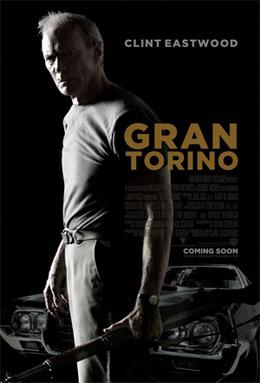
Review - Gran Torino (2008)


Studio/Production Company:
Director: Clint Eastwood
Written by: Nick Schenk (screenplay, story), Dave Johannson (story)
Rating: R for language throughout, and some violence.
Release Date: January 9, 2008 (theatrical)
Genre: Drama/Comedy
Strong Points: Eastwood can still act and direct with the best of them; the story is beautiful
Weak Points: Generally poor acting from the ensemble cast; Eastwood's glares and growls get somewhat repetitive at times
Technical Score: B-
Artistic Score: B
Final Score (not an average): B
Moral Warnings: Lots of swearing, including numerous F-words and many racial slurs; some brief sexual dialogue; a woman is cut up and bruised (we see her afterward) and it is revealed that she was raped.


Walt Kowalski (Eastwood) is a retired autoworker and a veteran of the Korean War. His wife, a good Catholic, has just recently passed away, leaving him with only two things to love in life - his dog and his 1972 Gran Torino, a classic car if there ever was one. He looks down upon his sons and grandchildren, who don't meet his expectations, and while they have some sympathy for the old man, they don't particularly like him, either. So, with no one to love, Walt spends his days polishing his car, mowing his lawn with a motorless mower, and drinking beer on his front porch where he can glare judgmentally at the Korean community that has taken upon residence in his town over the years.

Clint Eastwood has returned, ladies and gentleman. His acting hiatus is over with his first role in film since 2004's Million Dollar Baby, and I must say, seeing his face back on the big screen is pretty sweet. To those that have seen any of his many, many performances, Eastwood's portrayal of Walt Kowalski will be familiar. He squints, he growls, he frowns, he glares disapprovingly, but the familiarity of the role can't take away the fact that Eastwood can still hold his own with the rest of them. Indeed, the film thrives off his performance.

That is not to say, however, that it relies on it. No. There is much more draw to this film than a return-performance by Clint Eastwood.

Nick Schenk has put together a script so good that it's no wonder Eastwood would want to play Kowalski. It is ripe with humor and feeling, causing laughter and thought simultaneously. Watching Kowalski's heart slowly begin to warm to his Korean neighbors is a beautiful experience, one that pulls you in and makes you care.

Mostly, the film focuses on the developing relationship between Walt and a young Korean teenager, Thao (played by Bee Vang), who is forced by the community to help him out for a week after attempting to steal the Gran Torino. Walt, however, insistently does not need help. He knows how to take of himself and his things. So, he sends the boy directly across the street to fix up an abandoned house that he's had the misfortune of having to stare at for years. A friendship forms between the two in the process, one that lasts and continues developing through the rest of the film. This development feels natural and is often hilarious. It's just a shame that most of the actors representing the Korean community, including Bee Vang, are several large steps behind the caliber of Eastwood's acting, which makes it difficult to become attached to their characters. It's a small blight on what is otherwise an excellent film, but a blight nonetheless, and is what ultimately keeps the film from becoming great.

As far as moral content goes, Kowalski and many other characters aren't afraid to cuss. The F-word is thrown around often, including many racial slurs, particularly for Koreans. There is also one scene later on when a girl is shown bruised and very bloodied after being cut up and raped. Some may furthermore be concerned of Walt, a character who's very racist and who thinks church is for idiots, and his anti-hero role.

Gran Torino is a beautiful story met with humor and a return to the screen from one of the most legendary actors of our time. It may not be the best of Eastwood's films, but that's really not saying much. There is a good movie here. No doubt about it.

-Zak Mellgren (zak@revolve21.com)

Read full article

Friday, January 30, 2009

Doubt (2008)


Studio/Production Company: Miramax Films
Director: John Patrick Stanley
Written by: John Patrick Stanley
Ratting: PG-13 for thematic material
Release Date: December 25, 2008 (theatrical)
Genre: Drama
Strong Points: Superb screen writing by John Patrick Stanley; gripping, emotional performances by one of the finest casts that can be put together.
Weak Points: None.
Technical Score: A
Artistic Score: A
Final Score (not an average): A+
Moral Warnings: Plot revolves around the uncertainty of a priest inappropriately touching a school boy; one or two brief uses of mild cursing.

Doubt is fiery, no holds barred, unrestrained drama. Its roots are in the play written by John Patrick Stanley (who, coincidentally, wrote the screenplay and directed the film), and, as such, it relies on its script and acting. The result is some of the best performances of its actors' careers and a screenplay deserving of an Academy Award. Underlying it all is an important study of two differing viewpoints that all Christians should be aware of - following the spirit of the law, or the letter of the law, and what happens when the wrong path is chosen.

The story takes place in the Bronx in 1964. The setting is a Catholic church. Father Flynn (Philip Seymour Hoffman) is the priest, a kind, loving man with a big heart for the boys that attend their Catholic school. In his understanding and gentle ways, he is in direct conflict with the headmistress of the school, Sister Aloysius (Meryl Streep), a figure likely familiar to those that have attended a Catholic school. She is strict, hated and feared by the children she rules over. She has a firm, unwavering, nearly dogmatic belief in the old ways and the law, while Father Flynn believes that times are changing and the church needs to be friendlier.

If there ever were a proper set up for sparks to fly, it's here. Sister Aloysius considers Father Flynn a threat to her way of thinking and to the health of the parish. She'll take anything, anything at all that could compromise his position as priest, even going so far as to tell one of her teachers, Sister James (played by Amy Adams), to be on the lookout for unusual behavior. Sister James, with a heart just as big and twice as innocent as Father Flynn's, reports something that she believes could be strange between Flynn and a recently enrolled African American student. Aloysius believes that Father Flynn likely touched the boy inappropriately. With nothing more to go off of than a sneaking, malicious suspicion, she starts her subtle warpath to bring down the kind hearted priest.

It would be giving away the plot to tell the ways she attempts to ruin Flynn's reputation, but allow me to say that Sister Aloysius is devious. While teaching her ways to innocent Sister James, she explains that when "in pursuit of wrong doing, one steps away from God." During the course of the film, she takes several of these steps against her superior in a way reminiscent of Inspector Javert in Victor Hugo's epic novel Les Miserables. And when the two finally meet in battle, it is powerful to behold. Between the acting of Phillip Seymour Hoffman and Meryl Streep, two of the greatest actors of our time, and a script so powerfully written by John Patrick Stanley, there are scenes in this film that will hold you to the edge of your seat in ways no action thriller could ever hope to. I found myself literally holding my breath several times at the sheer intensity held between these two characters. The performances here are nothing short of remarkable.

Regarding moral content, most of the PG-13 rating is due to the subject matter of a priest being accused of inappropriately touching a school boy. I couldn't say that there are more than 2 or 3 curses in the entire film, the strongest of which being "bull****".

Some may find the film boring. There are, after all, no explosions. No gunshots. This film is held together by the script and the acting. Some may find it a dull, droll narrative. But to the rest of us, the performances and dialogue hold Doubt together like glue.


-Zak Mellgren (zak@revolve21.com)
Read full article

Saturday, January 24, 2009

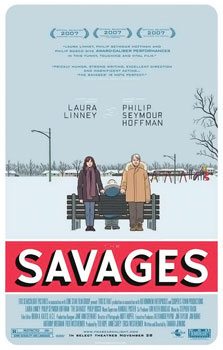
Review - The Savages


Studio/Production Company: Fox Searchlight Pictures
Director: Tamara Jenkins
Written by: Tamara Jenkins
Rating: R for some sexuality and language
Release Date: November 28, 2007 (theatrical), April 22, 2008 (DVD)
Genre: Comedy-drama
Strong Points: Terrific script and directing by Jenkins; Hoffman and Linney both deliver excellent performances.
Weak Points: None
Technical Score: A
Artistic Score: A
Final Score (not an average): A+
Moral Warnings: A brief sex scene is shown (no nudity); part of the plot involves a character having an affair; mild language throughout including several F-words.

It is difficult to define exactly what The Savages is. Tamara Jenkins approaches the content of the film with surprising honesty at all moments; there is no need for imagination to plausibly accept what is being shown on the screen. She writes a story that could easily have had more Hollywood comedy or more Hollywood drama, and there are many places where either would naturally seem to fit. But, instead, she decides to take an alternate and somewhat unexpected path.

The Savages is focused on the relationship of two adult siblings, Jon (Philip Seymour Hoffman) and Wendy (Laura Linney). Though what happened in the past is never demonstrated, Jenkins subtly reveals to her audience that Jon and Wendy's father was abusive to them when they were children. It is clear that this abuse has tainted all their relationships in painful ways, and not just in the context of the family. Wendy is having an affair with a much older married man. Jon is breaking up with his girlfriend of three years simply because her visa is expiring. But when they are told that their father is running out of time, they are forced to come back together. The rest of the film is about how these two siblings interact with each other and their dying father.

It is here that Jenkins takes her alternative path. Every camera shot, every line of dialogue is rooted in reality. The moments of humor, such as an extended scene wherein Hoffman wears a ridiculous contraption to help relieve tension in his neck, do not come across as intentional jokes. Indeed, there are few laugh-out-loud instances. The humor is there because it can be related to by everyone. The same is true in moments of drama (though they aren't dramatic by any means). The brokenness between these two siblings can be felt and, by many of us, remembered. Their relationship doesn't magically improve as they take care of their father. It struggles along slowly, painfully, with battles won and lost, as is the case with all tainted relationships in life.

The Savages is rated R, mostly for an occasional F-word and a brief sex scene that is devoid of any nudity. But the content is never more than it needs to be (I have to admit that I was very pleased with how little there was visually in the aforementioned scene). The sister Wendy is involved in an affair through the film, and there is mention to the siblings father being physically abusive when they were children.

Jenkins writes a sad, reflective story about broken sibling relationships that avoids all Hollywood comedy and drama cliches. Her story speaks the truth, whether or not it is easy to accept. This is magical in and of itself, and makes The Savages a rare gem of filmmaking.

-Zak Mellgren (zak@revolve21.com)

Read full article

Thursday, January 8, 2009

Review - Ghost Town


Studio/Production Company: DreamWorks Pictures
Director: David Koepp
Release Date: September 19, 2008 (theatrical), December 23, 2008 (DVD)
Genre: Comedy
Strong Points: Strong performances by the cast, led by the talented Ricky Gervais; smart script is met with smart directing; characters are strongly written and developed.
Weak Points: Laughs start slowly, but build throughout the film.
Technical Score: B
Artistic Score: B+
Final Score (not an average): B+
Content Rating: PG-13
Moral Warnings: Mild sexual dialogue, including one scene with descriptive mention of a mummified reproductive organ; 3 F-words; mild cursing; several mentions of a ghost character being disloyal to his wife while alive.


Ghost Town is based around a concept that would uniformly be found in a horror film - a man is able to see and talk to dead people. Indeed, it's very (or exactly) reminiscent of the concept in M. Night Shyamalan's The Sixth Sense. And while Ghost Town easily could have made jokes with spoofs of films like The Sixth Sense, it surprisingly doesn't.

Director David Koepp decides to take it in another direction. There is nothing comically scary about his dead characters. We do not see them as transparent beings. The only thing that visually separates them visually from the living characters around them is their ability to walk through walls. And, for some reason, every time a living person walks through a dead one, the living sneezes. Ultimately, it adds feeling and real character to these "ghosts," and it allows the film to stand on its own two legs without making fun of popular horror films. Those expecting spoofs will not find them here. And that's in no way disappointing.

According to the post-life mythology presented in Ghost Town, if those that die still had important unfinished business on earth at the time of death, their trip to the afterlife is put on hold. Instead, they are left to roam the world until they are able to right their wrongs, impart their message, or complete whatever task they were in the process of at the time of death. Unfortunately, as they are unable to interact with the living in any way, their options are somewhat limited. It is not surprising, then, that when a certain dentist by the name of Bertram Pincus (played by Gervais) comes back from the dead with the ability to speak with both the living and expired, it causes quite a commotion.

Pincus, however, is a narcissist, and borders on being a hermit; he loves himself and wants nothing to do with anyone else. When the dead begin to pester him, he is far from pleased, and in no way interested in aiding them get to the afterlife. But on the promise that they'll all leave him alone, he decides to help out one ghost (Greg Kinnear) who believes that his last task on earth is to prevent his widow (Tea Leoni) from marrying a bad man. Pincus becomes infatuated with the widow, and intends to present himself as an alternative. Thus a romantic comedy is born.

Ghost Town could have been carried on the shoulders of Ricky Gervais' talent, but it's not. That isn't to say that Gervais isn't perfect for his role. His comedic timing is great throughout the film, and he even manages to bring out some serious acting in moments that require a fair display of emotion. But he is well aided by the supporting cast, all of whom fit just as well in their roles as Gervais does in his. Tea Leoni is particularly worthy of note as she brings surprising depth to her character. Granted, she doesn't give an Oscar-worthy performance, but the film doesn't call for one. She acts in a way that she is able to breathe life and freshness into a role that is typically devoid of such.

In addition to strong performances from the cast, the elements that set Ghost Town above the others in its genre is the combination of a smart script and smart directing. The dialogue is quick-witted and intelligent, the characters generally (though not always) shy away from cliches, and the development of both character and story feels natural. The laughing doesn't start right off the bat, and when first watching it I began to get worried that it wouldn't live up to my expectations, but once the laughs do arrive they are never far off. From there on out, Koepp keeps a firm pace that balances between laughs and plot.

In terms of moral content, Ghost Town is rated PG-13, but it doesn't push the rating to the max. I was surprised to count three F-words (one I only noticed because I was watching with the subtitles on), but that's the only instance where the content seemed a bit much. There is some casual swearing here and there, as well as some sexual references. The ghost Pincus chooses to help was disloyal in life, and this serves as a small part of the plot. Beyond this is the aspect of the afterlife being represented in a way not matching common Christian thought, but this is obviously for comedic and plot purposes.

Overall, Ghost Town is easily one of the better comedies of 2008. Strong performances by the cast, met by a well-written script and smart directing by David Koepp, set it above the norm of its genre. With a fresh and heartwarming story, Ghost Town should definitely be considered if one is in the hunt for a good romantic comedy.

-Zachary Mellgren (zak@revolve21.com)

Read full article

Saturday, December 27, 2008

Review - Step Brothers


Studio/Production Company: Columbia Pictures
Director: Adam McKay
Written By: Will Ferrel/Adam McKay
Release Date: July 25,2008 (theatrical), December 2, 2008 (DVD)
Genre: Comedy
Strong Points: Excellent, humorous chemistry between Ferrell and Reilly.
Weak Points: Story is unoriginal and characters are rather bland; Ferrel and Reilly acting like babies all the time becomes a drag in some places.
Technical Score: C+
Artistic Score: C
Final Score (not an average): C-
Moral Warnings: Some strong, sexual dialogue and sexual humor throughout; lots of swearing including many F-words

Step Brothers is directed and co-written by Adam McKay who also co-wrote and directed Talladega Nights and Anchorman. This means that he once again goes after his audience through a near-brainless and immature humor that will, also once again, win only a particular crowd. If you didn't like Talladega Nights or Anchorman, pass this one by. Otherwise, Step Brothers is a fun comedy for a rainy day.

The premise of the film revolves around the acting chemistry of Will Ferrel and John C. Reilly. The two play 40 year old men in separate homes, both of whom, instead of going out into the world and making a living for themselves, have decided to remain at home with their parents and live the much easier lifestyle of ten year olds.

The plot picks up quickly in order to get the laughs going, and Brennan's (Ferrel) mother sparks a romance with Dale's (Reilly) father. They find commonality in their inability to send their sons away at such a late age, and the inevitable occurs. They decide to get married. Such is the catalyst for the film Step Brothers.

Brennan and Dale are forced to share a room together, and they begin their relationship by threatening violence against the other. Ferrel and Reilly have great chemistry with one another, each working off the other to play immaturity. Their chemistry carries the film through as the two step-brothers humorously work out their differences and become best friends.

The problem is that this chemistry really is the only thing that Step Brothers has going for it. The plot is blandly predictable, and the characters are forgettable. The formula is to be expected of a summer comedy, but its mistakes aren't necessarily easy to forgive.

As far as moral content goes, be forewarned that the film's humor revolves around crudity. Profanity abounds, including a large number of F-bombs throughout. Sexual humor is constant, and there's one clothed sex scene (two if you watch the Unrated version). Throughout the film there is a small sub-plot of Dale having an affair with his step-brother's (not Brennan's) wife. There is also a brief shot of Brennan's (fake) testicles that is rather unseemly. It more than earns its R rating.

In conclusion, Step Brothers relies fully on the performances of Ferrell and Reilly as they rant and whine and cry like ten-year-olds through the entire film. If you're not laughing within the first five minutes, you'll likely find the rest to be quite droll.

-Zachary Mellgren (zak@revolve21.com)

Read full article

Friday, September 12, 2008

Review - Bangkok Dangerous


Studio/Production Company: Saturn Films, Lionsgate Films
Director: The Pang Brothers
Written by: The Pang Brothers, Jason Richman
Rating: R for violence, language and some sexuality
Release Date: September 5, 2008
Genre: Action
Strong Points: Frequently striking cinematography, interesting action sequences, Nic Cage doesn’t freak out during the movie
Weak Points: A whopping two awkwardly placed and performed romances, false and arbitrary morality used to make the story work
Technical Score: B-
Artistic Score: C
Final Score (not an average): C
Moral Warnings: Several sequences at what appears to be a strip club (though no nudity is present); a topless woman lounges by a pool in another sequence; a sex scene is seen in passing; when the film erupts into violence, it does so with quite a bit of gore, including at least two dismemberment

I’ve not been a fan of straight-up action movies for a long time. They don’t tend to have a point, and I can’t stop myself from analyzing them to death. Basically, I can’t sit back and have fun with the movie itself, taking it for what it is. So I’ve become excessively picky in what I see.

Bangkok Dangerous is a bit different in this regard. I recognized the nods to Hong Kong action flicks in the trailers for this movie, but remained cautious, and with good reason. Star Nicolas Cage is fairly hit and miss in my experience. He can be absolutely amazing. Amazing, that is, until he freaks out and destroys any acting cred that he has. This is really unfortunate, because he’s demonstrated that he’s quite capable after turns in Wild at Heart, Moonstruck, Leaving Las Vegas and 8mm.

Bangkok Dangerous, for what it’s worth, doesn’t feature Cage freaking out. It does show him as a composed, lonely hitman, named Joe, who suddenly meets a girl and starts acting like a bashful high school kid on his first date. That was my first major problem with the movie. How does a man who kills people for a living end up stuttering and speechless in front of a mildly attractive woman? This is a man who is paid for his precise, confident work. It just doesn’t add up, and that really follows the film throughout this unfortunate romantic subplot.

Joe comes to Bangkok to complete four jobs. He spends much of his time in the city wandering the streets (to remember that he’s a part of the human race, he says) or in his town house (to hide in the shadows). As mentioned above, Joe pursues a relationship with Fon (Charlie Yeung), a deaf-mute pharmacist. It should be noted that at no time is this woman’s name actually mentioned on screen. If it is, I missed it. As with most of their communication, Fon tells Joe her name through poor pantomime and half-implemented sign language, which doesn’t exactly look convincing, and lends no credence to the idea of this couple’s burgeoning relationship.

Added to the mix is Kong (Chakrit Yamnam), a street con man who ends up acting as Joe’s errand boy. Kong is given strict rules (“You show up one minute late, you don’t get paid”) and sent off on his motorbike to shuttle briefcases between Joe’s hideout and a local strip club, where he meets Aom (Panward Hemmanee), a dancer who he immediately takes a completely unprofessional interest in, so to speak. This relationship is pursued in what seems to be fifteen minute spurts, largely without verbal communication of any sort, and starts escalating when Kong gives Aom earrings. It works, because he knows her so well and she’s accustomed to accepting gifts from strangers, like any beautiful woman is, obviously.

These thin threads of plot set up for some spectacular (in concept) set pieces that attempt to drive the story along as best they can. Their unfortunate deficiencies, as well as the wooden acting from much of the supporting cast, don’t help matters much.

Watching Cage set up each of the jobs that he’s paid to do feels a bit of a chore, and Kong being there to provide a false moral compass (one that feels like an awkward attempt at deus ex machina when none should be there) doesn’t help matters, especially when it’s been done twice before in recent history, and much better in both of those movies.

Take last fall’s Hitman, starring Timothy Olyphant as the amoral lead from the video games. While that movie wasn’t great, it did what it set out to do, and established a relationship between the titular character and a superimposed moral compass character in Nika. But it felt natural, with a sexual tension evolving between the two characters as they grew closer and encountered more danger.

And again, in this year’s Wanted, we see a conflicted character with a moral compass thrust upon him in the latter half of the movie. While that instance felt far less natural, it seemed far more plausible than what you see in Bangkok Dangerous. Cage’s Joe sees something in both Kong and his love interest, but I can’t tell what it is; the film takes place over the period of a month (as said by Cage in the beginning of the movie), which is certainly not enough time to either fall in love with a woman you can hardly speak to, or train a pupil who was initially planned to be killed.

No, it’s not enough time for either of those things, but for all my panning of the story, it really seems superfluous. This is not a movie about story or messages or morals, no matter how hard it tries to be. Cage’s dual sacrifices ultimately fall flat in a mire of politics and love, two things that can be successfully intertwined, but that the filmmakers cannot seem to handle. Ultimately, this is a movie about stylistic action sequences.

If that’s all that there was to movies like this, then The Matrix Revolutions would have done far better than it did. But it’s not. So it seems that ultimately, Bangkok Dangerous falls back onto its action sequences, all of which have some moderately memorable moments, but none of which are big enough, cool enough, or feature enough explosions to make them worth the price of admission.

On a purely technical level, Bangkok Dangerous often attempts to dazzle and often falls short. The cinematography is generally impressive, but pales in comparison to recent assassin films such as In Bruges and Wanted, which took the concept of an assassin to higher, better and alternately less and more violent levels. Still, it’s a solid looking picture that isn’t visually boring, but isn’t exactly visually arresting, either.

Bangkok Dangerous is, by its very nature, a violent film. Its story revolves around a man sent to kill four different people; each of these sequences is framed by a high action sequence that doesn’t skimp on the gore. Included in the film are at least two dismemberments, one via blade, the other from a grenade. Sexuality does figure into the movie, yet isn’t explicit. Several scenes take place in a strip club, but there’s no nudity, only skimpy costumes. There’s a sex scene glimpsed in passing, as well as a shot of a nude breast. Profanity is heard throughout the film, further securing its R-rating.

Bangkok Dangerous is a film that is not going to be enjoyed by the majority of serious film lovers. There’s too much fluff and not enough actual content here to satisfy anyone who really loves serious film. However, for those that enjoy fast paced, thrill-a-minute movies such as Crank, The Transporter and Shoot ‘Em Up, you can’t really go wrong with this movie. No, it doesn’t have charismatic leading men like Jason Statham or Clive Owen, and it’s not as fun as Death Race or Shoot ‘Em Up. It is, however, a solid action flick that’s pretty fun to watch, even if it borders on tedious at numerous points during its run time.

--Drew Regensburger (drew@revolve21.com)

Read full article

Friday, August 8, 2008

Review - 10,000 B.C. (2008)


Studio/Production Company: Warner Bros.
Director: Roland Emmerich
Written by: Hararld Kloser, Roland Emmerich
Rating: PG-13 for for sequences of intense action and violence.
Release Date: March 7, 2008 (theater), June 24, 4008 (DVD)
Genre: Action
Strong Points: Some fairly impressive visuals.
Weak Points: Plot is the very essence of simplicity, poorly written script, the special effects disappoint to a degree.
Technical Score: D
Artistic Score: C-
Final Score (not an average): D+
Moral Warnings: Violence throughout the film, some of which would be intense to younger viewers.


10,000 B.C. may possess the basic elements of a "fight-for-freedom" story, but its ultimate purpose is clearly to entertain, not to inspire. The problem is that the entertainment level is not high enough to carry the weight of the entire film on its shoulders. The cliches, rip-offs, and lackluster script all contribute to a very mediocre movie experience. If taken at face value, there is certainly some fun to be had, but only on rainy days when there’s really nothing better to watch.

The movie tells the story of a tribe struggling to survive at a time when their main supply of food is running desperately low. With the “white rain” (it’s called "snow," you morons) setting in and the lack of mammoth burgers glaring them in the face, the tribe must wait until the Last Great Hunt for the prophesied ‘Chosen-One-warrior’ to rise up and kill a mammoth. Hence bringing about the return of mammoth burgers. And quite possibly grandma’s home made mammoth stew.

The first twenty minutes of 10,000 B.C. feel unfocused, then half of the tribe gets kidnapped and the plot actually picks up. A select few, including the un-confident Chosen One, chase after their fellow tribesmen in an attempt to save them from their horse-riding captors. From there on out the story treads upon familiar waters to avoid sinking. Which was probably a good idea.

While the plot is decent enough, the script isn’t. The dialogue between characters feels forced. Often to the point where you start guessing how many days they put the thing together in. It’s like someone pitched them the story idea and asked them to have the script written out later that afternoon so they could start filming.

Not only is the dialogue poor, but the character development also happens to be be a far shot from mediocre. What you see is what you get. Let me save you the suspense and tell you that you’re not going to get much.

So... the script is pretty bad. “How about those special effects?!” you ask. I can honestly say that they’re better. Though... saying that isn’t saying a whole lot. Still. It’s better.

The tribesmen and their enemies have a few close encounters with some some strange creatures along the way, and the creatures all look very, very CGI. The subsequent monster-chases-human scenes are very reminiscent of the Jurassic Park films and Peter Jackson’s King Kong. Except without that darker, slightly horrific edge to them.

Despite the rip-off, the monster/creature scenes are somewhat fun. Thrilling? No. Entertaining? Yes. To a certain degree.

That’s not to say that the movie is compiled of constant action and CGI monsters. The special effects never dominate. To be honest, there was less of an emphasis on special effects than I thought there would be. 10,000 B.C. is actually somewhat balanced between plot and action. As mentioned, neither of these elements are stellar, but the balance between manages to keep the film afloat.

For a PG-13 film, 10,000 B.C. is pretty clean. There’s plenty of violence to go around, but it’s neither gruesome nor graphic. Some small amounts of blood are seen, but never in an excessive amount. There is one slightly awkward scene where a man intends to take advantage of a woman, but he is stopped before he can do anything. And considering that it takes place... you know... so long ago, there’s practically no bad language.

10,000 B.C. attempts to attract both the younger men and women with its violence for the guys and romance subplot for the girls, but with such a poor script and uninspired acting it’s really no more than a cheap thrill. A mildly entertaining but ultimately empty movie experience.

-Zak Mellgren (zak@revolve21.com)

Read full article

Thursday, July 24, 2008

Review - WALL-E (2008)


Studio/Production Company: Disney/Pixar
Director: Andrew Stanton
Written by: Andrew Stanton, Peter Docter, Jim Reardon
Rating: G
Release Date: June 22, 2008
Genre: Comedy
Strong Points: Good laughs for children and adults alike; very clever; heart warming characters that are easy to get attached to; sweet story.
Weak Points: None.
Technical Score: A-
Artistic Score: A+
Final Score (not an average): A
Moral Warnings: Some explosions and sequences of action; very brief crude humor.


For over a decade Pixar has been the number one name in family-friendly films, introducing such titles as Toy Story, Monsters INC., Finding Nemo, and Cars. With the release of WALL-E, Pixar continues their trend of creating films that are funny, sweet, wittingly clever, and appeal to both children and adults alike.

WALL-E is the name of an adorably cute and naturally inquisitive little trash compactor robot who happens to be the last living (or operating) thing on planet Earth. Given the amount of neatly piled trash in the opening scene, it is reasonable to assume that WALL-E has been there for a very, very long time.

Nonetheless, WALL-E seems to enjoy his work. He hums or plays music that he’s recorded the night before as he goes along, happily picking up the still-remaining trash, compacting it in his little box-shaped stomach, and stacking it away. While he may enjoy his work, it’s soon enough clear that WALL-E is lonely.

But when another robot, EVE, lands on Earth, the loneliness ends and an adventure begins - one that will bring these two closer as they try to wake mankind from its current state of apathy.

As always, Pixar is able to tell a beautiful story. And once again, they prove themselves to be masters of their art. WALL-E has a touching, almost gracelike charm to it that few children’s films are able to capture. The characters are simple, yet so easy to become attached to. The setting is adorably and oftentimes humorously clever. And the story itself will warm your heart.

What’s most interesting (and also rather impressive) is the lack of dialogue between the main characters. EVE has about five or six words in her vocabulary. WALL-E has even less. So with usual Pixar cleverness, the animators focused on “body” language and their robot “noises” much like in the style of R2-D2 from the Star Wars films (humorously enough, Ben Burtt, the one who created the sounds of R2-D2, created the ‘voice’ of WALL-E).

The animation honestly makes you wonder what tree these guys picked their ideas from, because some of it is genius. By the end of the film I was half-convinced to go to Wal-Mart and see if they had any real life WALL-Es for sale in the appliance section. I love my cats, but I could easily see them being replaced by this trash-cleaning robot. The animators truly did a wonderful job of bringing depth and warmth to WALL-E.

And it's not just WALL-E, either. Every robot has character and all add to the charm of the film, whether they have as much screen time as WALL-E and EVE, or just show up once.

What’s sad is that some are already complaining that WALL-E has some underlying political message or agenda. Some say that it’s ‘anti-capitalist’ while others claim that it preaches the typical environmental message of the day. While there is certainly a ‘keep-the-earth-clean’ feel to it (and last time I checked, keeping the earth clean is a good thing), the first assumption is ridiculous. WALL-E is ultimately a love story and a sweet one at that. Nothing more. Adults will no doubt be able to pick out some extra themes from the film (I myself found it somewhat reminiscent of George Orwell’s Nineteen Eighty-Four), but like any Pixar film, WALL-E is to be taken at face value. At the very least, some of the extra themes can provide for some good parent-child discussions.

Despite being rated “G”, there was definitely some violence to be had in WALL-E. Most of it is humorous, but there were a number of explosions throughout the film. The cartoonish violence is really the only thing to mention as far as moral content goes, save for possibly the noting of when WALL-E is looking through the trash and finds a bra.

Pixar outdo themselves yet again in WALL-E, releasing one of their strongest films since Finding Nemo. With such a wonderful story, heart warming characters, and humorously clever animation, the only question that arises from the film is: what will they think of next?

--Zak Mellgren (zak@revolve21.com)

Read full article

Wednesday, July 23, 2008

Review- Dark Knight (2008)


Studio/Production Company: Warner Bros.
Director: Christopher Nolan
Written by: Screenplay - Christopher Nolan, Jonathan Nolan. Story - David S. Goyer, Christopher Nolan.
Rated: PG-13 for intense sequences of violence and some menace.
Release Date: July 18, 2008
Genre: Action/Drama
Strong Points: Transcends the superhero genre; makes Batman, Gotham, and the villains more realistic than ever before; fantastic acting all across the board; script that rivals some of the greats.
Weak Points: There's an ending.
Technical Score: A
Artistic Score: A+
Final Score (not an average): A+
Moral Warnings: Very dark for a PG-13 film, some cruel violence (not descriptive), intense violence throughout, very mild language.

In 2005, a new series of Batman films were started with a movie called, appropriately, Batman Begins. The movie naturally explored how Batman came to be the superhero that is more familiar to the mainstream audience - the one that glides through the air dressed as a bat and beats the bad guys with his bare fists and his awesome gadgets. By the end of Batman Begins, an optimistic Bruce Wayne had started to find a happy balance between his personal life and his life as Batman; he had begun to capture the heart of the girl of his dreams; and he had that warm fuzzy feeling in his heart about saving Gotham, his beloved city.

That was Batman Begins. This is The Dark Knight.

Director Christopher Nolan and his brother Jonathan Nolan (who wrote the script) made a significant change of focus from that film to this. Batman Begins casually introduced its audience to a new Batman and the character behind him. We saw his good side, his optimistic side, essentially, his lighter side. Knowing that we are now familiar with their version of the hero, the two brothers use The Dark Knight to explore the darker side of Batman. And not only of Batman, but also of the city he protects and the people who inhabit it.

The result is two very, very different films. If you go into Dark Knight expecting an experience like the one you had three years ago, you are in for an incredible shock. There are familiar faces in the cast and familiar names in the crew, but this is not the same type of film. The ‘superhero movie,’ in this case, is not to be equated with ‘popcorn-eating-soda-drinking-feet-on-the-seat-in-front-of-you-fun.’ Not at all. Dark Knight is about a superhero, yes. But the movie itself transcends the superhero genre.

Why? Because this movie feels real. Batman Begins had moments of this spread out here and there, but it definitely held back so that the audience could receive more along the lines of what it expected. There was a stereotypical villain, the traditional love interest/conflict, plenty of one-liners to go around, and a theme that dealt with the hero coming to terms with who he is and what he stands for.

Dark Knight
pulls as far away as it can from these elements without completely shattering its intended audience. They are still vaguely present throughout the film, but that’s needed. People do not expect to come out of a film like this wanting to commit suicide. This is something the Nolan brothers thankfully realized. There are a few one-liners, a number of funny moments - all of which keep Dark Knight... well... not so much on an even keel, but certainly keep the ship from sinking completely in dark, thematic waters.

And while it may not sink completely, audiences can be assured that they will get much more than just their feet wet. Since we last left him, Bruce Wayne is still managing to balance his company and his acts of vigilantism as Batman. But as time moves on and his confrontation with the city’s newest villain, the Joker, becomes more and more inevitable, the darker side of him begins to be revealed. The Joker slowly and painfully wears him down, seeming to be always in control of the situation and always ready to test the hero’s convictions and his abilities. Not for his psychological interest in Batman, either. Just because it’s fun.

Ultimately, Wayne has to answer the question: How far do I have to go to stop men like him? Dark Knight demonstrates, oftentimes painfully, that being a good person and standing up for what is right is a hard path to follow. And in the most trying moments, Bruce contemplates giving up - as we all do at such times.

All is not dismal clouds and brooding contemplation, however. Butler Alfred (Michael Caine) and Lucius Fox (Morgan Freeman) are always there during the hardest moments to act as Wayne’s conscience. Their warm smiles and gentle advice are there to refresh both Wayne and the audience before the film drops back down into the dramatic pit. Caine and Freeman mostly play on the sideline in Dark Knight, seemingly moreso than in Begins. But both their performances are top notch and their time on the screen is always enjoyable.

A solid chunk of the credit for the revealing of Wayne/Batman’s darker side must go to Christian Bale. To play the role of Bruce Wayne is essentially to play two different characters - the calm and charming billionaire as well as the scarily powerful Batman. For an actor to do it as well as Bale is a true achievement.

It also helps that the Bat-suit is even more intimidating than last time, in order to reflect the darker side of Wayne. Modifications are made early in the film with a little help from Lucius Fox that both help Wayne move faster as well as turn his head, which he apparently couldn’t do in the first film (it makes sense if you think about it). But what truly adds to his appearance are his eyes, which seem to almost be a part of the suit. The designers truly perfected their use of Bale’s intense stare behind the mask, giving him an almost haunting look.

The one to cause the confusion and chaos that brings out this side of Batman is the famed Joker. The Joker explodes onto the scene within the first few minutes of the film, revealing his criminal genius, his cruelty, and his bizarre psychological issues with one punch. No explanation is given for the way he is, no backstory is told by the film or the characters. The Joker simply is. And this introduction to him is pure gold for the setting.

Heath Ledger’s performance is nothing short of brilliant. He attacks the role, absorbs himself in it, becomes the character. However you want to phrase it, Ledger is truly the standout in an all-star cast. His mannerisms, the way he carries himself, his facial expressions, straight down to the way he licks his lips, no one has ever captured the essence of the Joker like Ledger has in Dark Knight. And frankly, it’s hard to believe that anyone will ever be able to top it.

Many parents are probably wondering if The Dark Knight is too dark for children. While it is possibly the darkest PG-13 film I’ve ever seen, the content is surprisingly mild. Given the cruelty of the Joker, Nolan easily could have used more details in hopes of disgusting the audience even more. But he didn’t have to, and he doesn’t. There are some cruel deaths, but not once are any details shown. No gore, no blood. More often than not, death is implied and the scene finishes before anything can happen.

There is no glorification of violence. When there is violence, its only purpose is to move the plot forward or to define more of a character. This is something that is not often seen in films, and I applaud the makers of the film for it.

The language is pretty much the same. There are a few uses of “Christ” and one use of “Son-of-a-b****”, but that’s as strong as it gets, aside from a few “h***”s and “da**”s scattered sparsely throughout. For sexual content there are two kisses and that's it.

I should warn that when the villain Two-Face comes into the picture, the CGI burns on his face are somewhat graphic and could scare younger viewers. It reminded me of the Pirates of the Caribbean skeletons, save for burnt flesh and muscle being a considerable amount of the face.

While dark in nature, Dark Knight boasts a powerful message of persevering for good when it’s the hardest thing to do. And with such outstanding performances in almost every area, it’s not just one of the best movies this year, but one of the best in years.

--Zak Mellgren (zak@revolve21.com)


===== Second Spin =====

While I disagree with some very basic parts of Zak’s review (one-liners in both new Batmans? What are you talking about?), I agree with his view, overall. Batman went from a joke in the late-90s (face it, the Joel Schumacher movies were pretty much awful) to something absolutely amazing come 2005. Chris Nolan’s Batman series is dark, brooding and toxic, and Dark Knight is no exception. If anything, it actually expands on its predecessor. It drips atmosphere. The acting is all-around phenomenal, with the trio of Bale, Ledger and Eckhart standing apart from the rest of the ensemble (which includes Morgan Freeman and Gary Oldman).

That, in and of itself, is saying something. All of that is to say nothing of the story, the camera, the sound… all of it comes together in a brutal, oppressive, amazing whole that must be seen to be believed. Not only has Nolan lifted Batman out of the mire, but he has done so with an artful style that only comes from the best of directors. The Dark Knight has returned.

--Drew Regensburger (drew@revolve21.com)

Read full article