Showing posts with label Gaming - Review. Show all posts

Thursday, April 23, 2009

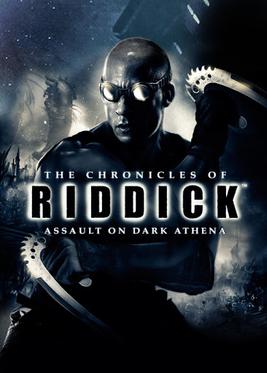
Review - Chronicles of Riddick: Assault on Dark Athena


Developer/Publisher: Starbreeze Studios/Tigon Studios/Atari
Release Date: April 7, 2009
Available On: Xbox 360, PS3, PC
Genre: Stealth shooter
Number of Players: 1-12
Strong Points: Excellent value for the money; Butcher Bay presents a challenging experience with few flaws; voice acting is top notch; Butcher Bay conversion looks and feels like an Xbox 360 game, rather than a port of a five-year-old game; story through both games is captivating and compelling
Weak Points: Dark Athena strays too far from franchise strengths; shooter segments are average and unsatisfying
Technical Score: A
Artistic Score: B+
Final Score (not an average): B
Moral Warnings: Violent and blood run rampant throughout; profanity is featured heavily in the game; brutal one-on-one combat a major part of game play; sexual references to rape and masturbation in both games

In 2004, right around the same time that everyone in the gaming industry had seemingly lost hope for movie tie-in games, “The Chronicles of Riddick: Escape from Butcher Bay” hit the original Xbox. Unlike many games related to movies where the player is asked to play through the events of the film itself, “Riddick” asked players to play a prologue of sorts to the films that had starred the character, Richard B. Riddick. The game did this by throwing the player into a “slam" (a prison), throwing away the key, and then taunting: escape.


Riddick’s subsequent escape is chronicled in “Escape from Butcher Bay,” the first and strongest part of “The Chronicles of Riddick: Assault on Dark Athena,” and its sequel, the eponymous “Dark Athena.” Much like “Thief” before it, “Riddick” is a first-person stealth game with an initial focus on brutally disabling both guards and fellow inmates. This is “Riddick” at its finest; the shooting elements, while solid, tend to be frustrating and more twitch based than anything else, detracting from the real strengths of the game.

Sadly, this also means that the latter half of “Dark Athena” isn’t what it could be. Once the player gains the SCAR, a remote detonating mine launcher, the game turns into something resembling a weak run-and-gun shooter. This disrupts an otherwise methodical game, replacing the basic risk and reward mechanic with trial and error, something that may work well with the likes of “Doom,” “Quake” or “Painkiller,” but most definitely does not play to the strengths of the developers here. That’s not to say that developer Starbreeze doesn’t know how to make a game with shooting as its focus, however. For example, their previous effort, “The Darkness,” featured shooting game play more prominently than it is here, but then that game also gave you an adequate health system, along with enemies that weren’t overpowered. In this case, the elements of what makes for a good stealth action title don’t equate a quality first person shooter, and herein lies “Riddick’s” main problem.

Beyond that, “Riddick” is a stunning success. Adding to the already well-implemented stealth game mechanics are adventure elements, requiring conversation but little finesse. Characters give side quests and scant background information, and that’s about it, but where that would be a shortcoming in other games, it works to the benefit of the game here, adding some depth without breaking up the flow of the game itself. “Riddick” is also hard, recalling “Butcher Bay’s” original release, and in itself indicative of the way that difficulty has been toned down in the five years since the game first came out. In “Butcher Bay,” the challenge is rewarding; in “Dark Athena,” it becomes something along the lines of prohibitive.

First person combat is one of the most intriguing and well-implemented aspects of “Riddick.” Not gunplay; I’ve already established that leaves something to be desired. Instead, I’m referring to fist fights, which are far more common in “Butcher Bay,” but still integral to “Dark Athena.” From stealth take downs to simple one-on-one brawls, impacts and attacks sound real and carry weight when they connect. This alone places “Riddick” in far more brutal territory than many M-rated games, its only comparison in brutality — but not depravity, since the “Riddick” universe does have a moral center, and a defined one at that — being the “Manhunt” series of games.

“Riddick” is also one of the more visually inconsistent games released to date on either the Xbox 360 or PS3. This is mostly due to “Butcher Bay’s” status as a polished port. Both games are good looking, and unless you were previously aware, you wouldn’t know that “Butcher Bay” was a port. Even so, “Dark Athena” holds the edge here simply because it looks smoother and the animation — and consequently, the characters — feel more realized and lifelike.

Enemy AI is a problem, proving to be both stupid and hypersensitive. Relying partially on line-of-sight and partially on extrasensory perception, the enemies in both “Riddick” games automatically discover the player when out of cover or in light, and otherwise haphazardly rely on line-of-sight, which enables the player to brutally kill the enemy. However, unlike other stealth games, such as “Splinter Cell,” where the player must hide the bodies of the dead or unconscious, here that never really comes into play, although it’s suggested. There’s just no real reason to hide the bodies. The guards aren’t smart enough to do anything about it if they find a body, and unlike other games, there’s no varying levels of alert or awareness to hinder the player’s progress and make their job harder. This does not, however, make the game play any less exciting or visceral during the stealth segments; it simply surprises me that such a basic element of stealth gaming could be left out of the equation, though with how solid the majority of the game is, it’s more a disappointment than anything else.

Of course, this wouldn’t be a big-budget action game without excellent voice acting, and here “Riddick” does not disappoint. In the first game, Vin Diesel, Cole Hauser, Xzibit and Ron Perlman all turn in top notch performances, only to be handily outclassed by the voice cast of “Dark Athena,” which includes Lance Henriksen and Michelle Forbes.

Much of the problem with the content with Riddick lies in the language that’s used by the various characters on display. Enemies use the full-range of profanities normally featured in an R-rated film, from variations of the f-word to lesser profanities, including blasphemies. One character drops the c-word twice and then mentions raping a female character that Riddick is helping out. Every word in the book is used during the course of both games, possibly — improbably — more in “Dark Athena,” a game not even set in a prison. In “Butcher Bay,” occasional references to prison rape are made. “Dark Athena” also has an inmate masturbating with his back to the player. Blood and gore splatter the walls, and enemies display wounds from attacks that they’ve received. Both games encourage players to hunt down and disable enemies, which can include brutal weapon disarms, unarmed kills and armed kills, all of which showcase Riddick’s particular brand of bloodlust.

“The Chronicles of Riddick: Assault on Dark Athena” comprises the best value seen in games since “The Orange Box,” and also contains one of the best Xbox games ever made. It is a testament to the fact that good movie games can and do exist, if the developers care about the project enough to implement quality game play. However, with that recommendation comes a warning: both “Riddick” games are astoundingly brutal, profane and dark, unrelenting in the atmosphere of oppression and captivity that they convey. This is a game based on an R-rated film franchise and is not for children; those mature enough and willing to venture into a prison and slave ship will find a rewarding, disturbing experience very much unlike any found on any system to date.


-Drew Regensburger (drew@revolve21.com)

Read full article

Friday, April 3, 2009

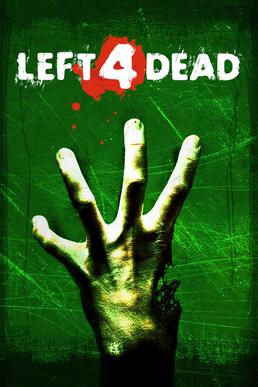
Review - Left 4 Dead


Developer/Publisher: Valve Corp. (Certain Affinity Xbox 360 version)

Release Date: November 18, 2008
Rating: M for Blood and Gore, Intense Violence, Language

Available On: PC, Xbox 360

Genre: First Person Shooter

Number of Players: 1-8 (online), 1-2 (local split screen)
Strong Points: Online and offline play; fast pace; solid gameplay; easy drop-in-drop-out play; lots of humor; high replay value; well-crafted horror setting (lighting, sounds, etc.); gives everyone a “this one time..!” story; lovable characters; ZOMIBES.

Weak Points: Not for everyone; limited weapons; single player is not enough to justify a purchase; just as described story is even less than a typical B movie; limited map selection (though DLC will increase this); the nature of the game can make getting an exact party difficult.
Technical Score: A-

Artistic Score:B+

Final Score (not an average): A

Moral Warnings: Lots of swearing (including GD and JC); “God is Dead” is spray painted a few locations; lots of violence; blood (splatters on HUD) and head explosions; violence includes sounds such as hearing your teammates screaming for help while being assaulted by various undead


Do you have your plan? Everyone needs one. I have had my plan for surviving the zombie apocalypse since I was about twelve. It predates my plans for supercomputer takeover, but not communist invasion. Whether you have one or not, Left 4 Dead gives us the best method for weeding out which of our friends you really want to keep around when the dead start shuffling; or rather running. Breaking from the Resident Evil and George Romero norm of stumbling, moaning brain eaters, Valve is following closer to the 28 Days Later style of dashing cannibals. I think this is mostly a control decision.

If Valve does one thing right, it is first person shooters. If you pit a team of four people who can headshot from the hip against old school zombies it might start out fun but lack of challenge will quickly kill the game. So instead of taking the Resident Evil or Silent Hill path of confining controls Valve chose a balance. They used fast zombies (“infected”) and “special infected," and they kept the shooting simple. There is no aiming down the sights (except with a scope) and no leaning to peer around corners or cover. As a straight FPS, L4D is rather basic, including when compared to Valve’s own products. They take this and implement it in a very “get from start point to safe room” gameplay style with lots of obstacles and events to make it fun along the way.


Another thing that you always need for your survival plan is guns. Lots of them and ammunition, too. This is something I have mixed feelings for in L4D. They provide two tiers of guns. The first consists of pistol, pump shotgun, and Uzi; the second has dual pistols, auto shotgun, assault rifle, and hunting rifle (the only gun with a scope). This basically limits the player to four weapons with nearly no variation. Even though it is a more practical design, I can’t help but be upset. Each gun is made very well however; great sounds, kick and firepower will keep you happy with what you do have. For a bit of an extra punch someone ran ahead of you and made large quantities of Molotov cocktails and timed pipe bomb grenades, both of which are perfect for killing massive quantities of zombies in a short period of time. But be careful with those Molotovs since survivors are flammable, too!

The last thing you need for firepower are the actual bullets, and they are fairly scarce in this game. As they should be. While this is not a resource managing game, if there was no end to the number of clips a survivor could carry, then nothing would stop them from holding down the trigger the entire game. I feel they hit the spot nearly on target, as I rarely have run out of ammo but often would if the group missed an ammo stockpile. Funny how there are heaping piles of all sorts of bullets lying around on tables at such a chaotic time (left by the same person as made the grenades?). I do think the shotgun could use a few fewer rounds as I have yet to run out and the assault rifle could use with perhaps one clip as I regularly run out with it.

But just who’s plans worked well enough to live long enough for you to play as them in L4D? Luckily, making great characters around the player through scripted events is something Valve takes pride in and does very well in L4D. I have talked with several people who, before knowing too much about the game, claimed that it would be much better if it was more customizable, specifically if it allowed players to make their own players. At first, prior to launch, I was leaning in favor of their argument. After playing it, though, I have to say they are completely wrong. Valve chose four characters and built the world around them. They each have very specific responses to locations, events, situations, and each other. They also have very specific voices, and I think this is incredibly important. Voice chat is a must, of course, but hearing the responses of the characters is incredibly moving, both in a uplifting and funny way, but mostly in a terrifying way as they are dragged kicking and screaming through near death again and again.

The four characters quickly grow on you and give you a feel for them and the situation; it associates them with the danger in a way that you would not get with a generically created avatar with the same voice as half the other players. You will be disappointed if you expect a great story but what you will get is a great experience. Most of the story that is there is told through writing scrawled on walls and floors through the levels and particularly in the safe rooms. From “God is Dead” and “We deserved this” and the like to messages for missing loves ones to a list of how many zombies the writer had killed. Portal, which was also a survival story without much story, used similar messages to depict the tales of those here in the past, to give you hints for what you may do in the future, and leave you with a chuckle now.


When, at last, one succumbs to the inevitable and becomes one of the undead, it turns out to actually be just as exciting as being alive, maybe even more so. When not playing through the game with three friends, or as many bots as needed to fill out the team, you can pit your team against four other former survivors in the Versus mode. Instead of respawning in a closet as usual there is no respawn at all and if at least one team member does not make it to the safe room they lose the round. As of the time of original writing, only two of the four campaigns are playable for Versus, but the rest will be added later for free by Valve. Until then, the rush of hunting down the other team in either a city or forest is more than enough.

Versus tends to make the game even more intense and exciting. While the AI is generally quite good, nothing compares to a living (or not so living), thinking human controlling your enemies. There is also nothing as exhilarating as pouncing a survivor as the hunter (a hoodie wearing, super jumping special zombie) or pulling one as smoker (a gangly special infected with a extra long tongue it uses to grab and pull as if fishing for humans) in a place you know no one will be able to save them. The point of that is that L4D makes you, as a survivor, completely dependent on your teammates. Without them to cover you, melee a special infected to save you, or to help you up you will die. When health reaches zero the survivor becomes incapacitated (with a “three strikes and you are out” rule for death) and will slowly bleed to death. Similarly, when pounced or hooked by a smoker, there is no way for you to free yourself.

The third special infected is not as deadly directly, but can wreak even more havoc; the boomer is a bloated zombie with a puke ability that will “slime” survivors and blur their screen. But that is not the worst of it. The regular infected are attracted to this goo and a horde of them will instantly spawn and come after anyone with it on their skin. The last playable infected is the tank. Basically the hulk lost his green and decided he likes to eat brains. Players are randomly chosen to play as the tank and will enjoy super strength and rock throwing abilities. I find it is better just to punch however, especially since logs and cars make for better people squishers than rocks. The last special infected is not playable but is perhaps the creepiest. The witch sits patiently in her spawn location crying and wailing until “startled.” Spooking a witch is very foolish. She instantly incapacitates anyone she hits at best and can kill them regardless of health. Stay away at all costs unless you are very good with the shotgun and can take her out before startling her. Otherwise turn off flashlights and don’t shoot around her or even get close.

On a more exact level, Left 4 Dead has a great interface and matchmaking system for easy play on both platforms. Getting a party is easy, just getting a party of people you know (the most fun way to play) can be hard and awkward, though it isn’t necessarily the game’s fault. Getting exactly four or eight people can leave teams lopsided, and if you want to play expert, you absolutely need four players. PC servers are sometimes buggy and good connections aren’t as common as they should be; it always takes a minute to properly establish the connections.


Sound plays a major role in any kind of horror or survival setting and Valve hits every note perfectly. From specific events to themes for witch and tank spawns to the sound effects, everything fits perfectly. The fear the witch’s cry incites or the terror of hearing the tank’s theme is incredible. Almost as good as those are terrible is the completion sound played when you make it into a safe room.

But that rewarding sound doesn’t come easy since the AI does an excellent job of keeping it challenging. Usually it does well for Survivor campaigns but it just doesn’t cut it in expert. It does have a few kinks still to work out, as they will do stupid things as all AI tend to do, but they generally function very well. In Versus it can actually be an advantage to have a bot on the Bloody Harvest campaign as they can "see" through trees and shoot infected when you would never have noticed. Valve also made a director AI that monitors stress levels of the survivors and sets up ratios against the number of infected currently spawned and killed and other factors to manipulate the game around the players. Hordes will be spawned suddenly or a witch or tank will be placed based on the player’s behavior and how well they are performing. Several times I have felt that the director hates particular teams when playing Versus, but that team has always been my own. so maybe it is just me. Versus, in the name of fairness, has also forced all tank and witch spawns to be in the same locations for both teams. In Versus, the teams take turns playing through each chapter of the each campaign so the second team will always know exactly what to expect as far as those two major obstacles are concerned. Hardly fair in my opinion.

Visually, both versions look very good. The Source engine is at its finest, but this game shows it is also clearly on its last legs. They are good but not great and certainly not amazing when compared to many other titles coming out. Valve did a very good job of prioritizing just what looks good, especially the animations. The faces of the survivors are depicted very well, and they portray their emotions (generally horror) particularly well. A special situation also throws the player into third person view and temporarily takes away control of the player. These situations provide a chance to see just how great he animations really are. Whether a hunter has you pinned to the ground and is tearing you apart, a witch just ran past and pushed you aside, or you are helping a teammate up, the animations and vocal responses fit perfectly. All the character models also look very good, the generic infected in particular have an immense number of skins keeping htem fresh visually, if not physically. Keeping with the B movie feel, this screenplay comes complete with a film grain slider bar to fit your personal preference when fighting off hordes of zombies. Oh, and there are several great explosions in the game that will make you smile, so don’t worry.

Left 4 Dead grabs the player and his friends and throws them right into a well crafted apocalypse with fun characters and terrifying enemies that will have them sweating bullets. Do you shoot the zombies and risk the harsh punishment of friendly fire, or do you call out and hope your friend reacts in time? Will you bleed out before your friends make it to you? Can you sneak past the witch, or will she completely destroy you with her Lady Deathstrike claws? I suggest you let the other guy go first.

I think the best part of Left 4 Dead is when you are talking about it. Nearly every time you play, it gives everyone playing a story to tell. A time you just made it to save all three of your team mates... or didn't. A time you blew a tank off the roof or were the tank and punched them all off. The possibilities are nearly endless and even though each campaign can be played through in roughly two hours, the variables of just Versus make them infinitely different in so many ways every time. In the four player Survivor campaigns there are different difficulties to create a constant challenge.

Besides the obvious violence the biggest issue this game has is language. Nearly every word in the book besides the f bomb is used and fairly regularly at that. It is not overly gory but there is plenty of blood. Fortunately, there is hardly any sexual content except a few zombies in hospital gowns show bare bottom.

When everything is lined up, I have to say that Left 4 Dead is an incredibly fun, incredibly replayable game simple enough for nearly anyone to enjoy but having enough depth and strategy for the hardcore. I can’t recommend it enough to those not put off by its moral content, especially with Valve’s promise and track record of content updates.

-Paul Alfred Brown, guest reviewer

Read full article

Review - God of War: Chains of Olympus


Developer/Publisher: Ready at Dawn Studios / Sony Computer Entertainment
Release Date: March 4, 2008
Rating: M for Blood and Gore, Intense Violence, Nudity and Sexual Content
Available On: Sony PSP
Genre: Action-Adventure
Number of Players: 1
Strong Points: Outstanding music and visuals; engaging combat; upgradeable weapon options; unlockables for further play-through
Weak Points: Short, only taking about 7 hours to complete; enemies repeat a lot; some control issues; story wasn’t satisfying
Technical Score: B+
Artistic Score: A-
Final Score (not an average): A-
Moral Warnings: Blood and gore is a big part of combat (blood sprays and enemies lose limbs); brutal violence (includes graphic executions); Mythology elements presented in the game (Hades, gods and goddesses, etc.); magic is used to some extent; exposed breasts are shown; there’s an optional sex mini-game as well


God of War: Chains of Olympus follows Kratos, a great Spartan warrior indebted to the gods. At the start of the game, he is tasked to defend Attica from the invading Persian army. He obeys and after cutting through the soldiers and successfully taking down a basilisk, Kratos notices the sun plummeting from the sky to the earth and sets off for it. So begins the game proper as Kratos is drawn to the aid of the Olympian gods once again.

The game is a prequel to the PS2’s God of War, so if you didn’t play that one, you’ll be fairly lost as to Kratos’ background since neither the manual nor the game expounds too much on him. While the story does involve strong voice acting and good looking cut scenes, it really didn’t tie up the loose ends and just left more questions. For those new to the series, it wasn’t that satisfying as a story, but I’m sure the fans of the PS2 iterations will get a lot more out of it.

Gameplay, on the other hand, is a much stronger experience. Combat for most of the game involves using your Blades of Chaos (swords chained to Kratos) in various weak and strong attacks to pull off combos. At first you’re given just basic chains to pull off, but as you progress you’re given stronger chain attacks, some able to clear entire rooms in seconds. Attack chains further in the story could begin with multiple area swipes into a focused explosive strike to break armor, and then you take that foe into the air, spin your metal chains around like a helicopter blade, throw out a chain to bring the helpless guy back to you, and then kick him back into the ground. That last sentence would only take about four seconds to pull off. You can also grab enemies, block, dodge, and counterattack through parrying, but these movements can be unresponsive sometimes.


Killing enemies and getting a higher combo-count will reward you with red orbs that go towards magic and weapon upgrades. Along with your various chain attacks, you’re given magic attacks throughout the game. The magic isn't as useful as pure melee, but it can get you out of some rough spots. Bigger enemies near defeat will have a button icon over them that, when pressed, Kratos will perform a special finisher (like kicking a blade into a cyclops’ eye) that will kill off that foe and reward you with various orbs. Finishing enemies with low health reward even more orbs (and in some cases, orbs to replenish health and magic) than killing the enemy with your average attacks. This is very useful when you’re facing off against the more deadly creatures further on.

Overall, the combat in Chains of Olympus will keep you on your toes and will cause player deaths many times over. The game ramps up the difficulty as you progress and enemies will even use attacks that require you to mash the shoulder buttons or break from grapples. Failing to do so will cause the next hit to instant kill you. If anything, I should mention that smaller enemies sit back and wait to attack. Quick time events with the analog stick are fairly tricky to pull off, but combat is a satisfying and visceral experience aside from that.

When not ripping the wings off a harpy or laying waste to armored skeletons, there are various puzzle elements for Kratos to overcome. This could be anything from run of the mill "put this here and turn this" to setting up statues to reflect into a central point. There are some clever puzzles to be had, but most objects that need to be interacted with will flash, making most of the puzzles easy. You will also come along chests that will either give you health and magic orbs before tough fights or give you items that will increase your max health and magic (once you collect 5 of each that is). Platforming is used to some extent, from scaling walls to swimming to cranking a massive gear to progress further into a level.

There are plenty of things for Kratos to do in each environment and keeps the game fresh since you’re just not running from point A to B all the time. As with the combat, quick time events are still a big part of the game, so you’ll be mashing the circle button to open chests and doors, move blocks, and so on. After completing the game, there’s a challenge mode to play and depending on which mode you beat the game on, you can unlock silly skins for Kratos, or even various Making Of movies from the developers. Chains of Olympus will only clock in about 7 hours on normal difficulty, but I believe it offers enough replayability for another one or two play-throughs.


If anything binds this game together nicely, it’s the presentation. The visuals closely resemble the PS2 game. With all of the various lighting and special effects running, it’s impressive that the game runs as smoothly as it does. The camera work will give you plenty of panoramas showing large draw distances and will pull back a few times, showing how insignificant Kratos really is compared to these massive environments. The cutscenes are a variation of CGI with an almost comic-book look, and the game engine rendered videos are just as well done. Most enemies are of low polygon count though, and are ugly compared to Kratos and the other characters in the game. It’s not a big problem since the game is drawing many of them, but it did bother me some. The music hits all the right notes as well, bringing the diverse areas to life and being distinct enough from each other to not sound thrown together. The voice actors bring some fine performances to the characters, and the combat sounds downright brutal, from the sound of flesh being sliced to the snapping of necks.

As for the moral content in the game, it easily earns it’s M-rating. Combat in the game is very bloody and enemies will split apart, be dismembered, beheaded, and so on. Blood sprays and spurts a lot, and the Hades level has rivers full of blood flowing past in the background. The way you dispatch foes is brutally violent as you can finish them by snapping their necks, kicking blades into them, ripping them in two, ripping heads off, crushing them, burning them, and other brutal means. The game mentions and takes place in Greek mythology, so you’ll see and talk to gods and demigods, and you'll face off against minotaur, harpies, skeletons, cyclops, and more. There’s a Hades level with flowing blood for rivers and Tartarus, where people are chained to the wall and are able to be killed for orbs. Magic is used by Kratos; one of the attacks summons Efreet to burn enemies. Breasts are shown in the game, once in a long cutscene, some in Tarturus from the prisoners, and on statues. There’s also a sex mini-game present which uses the quick time events and shows two women on each other with breast showing. The mini-game is optional, and doesn’t show sex on-screen, but you still hear heavy moaning and see a nearby candle shaking.

If you’re looking for an epic action game for the PSP, this is it. It is on the short side, but it’s an enjoyable ride to the end. While I didn’t particularly care for the story, it’s still grand in scope, and will be fun even if this is your first God of War game. With slick combat, great visuals, and virtually no load times after it first boots up, the developers at Ready at Dawn have given a great example of portable gaming done right. But those not fans of over-the-top bloody violence or the other moral subject matter should definitely sit this one out.

-Jonathan Andrews (jonathan@revolve21.com)

Read full article

Friday, March 13, 2009

Review - Soulcaliber IV


Developer/Publisher: Namco/ Namco Bandai
Release Date: July 29, 2008
Rating: T
Available On: Sony Playstation 3, Microsoft Xbox 360
Genre: Fighting
Number of Players: 1-4
Strong Points: Impressive graphics, both in the character models and environments; tight controls; solid single player and multiplayer; great character customization.
Weak Points: Voice acting is feeble at best; not as ‘deep’ as other fighters out there; as with most games of this genre, there is hardly a story to speak of.
Technical Score: B
Artistic Score: B
Final Score (not an average): B-
Moral Warnings: There is violence, though none of it is graphic or bloody; certain characters spot an unbelievable amount of cleavage; some minor language and “magical” attacks


The fan base to the Soulcalibur games has been anticipating the fourth installment in the franchise for quite some time. The fourth game doesn’t change much in gameplay from the previous entries, but as it is the first in the series to appear on next-gen consoles, the technical advancements are considerable, and it is also the first entry in the to include online play.
Soulcalibur IV sticks to the traditions set by past games of the series, in that it is an extremely fast fighter. This is both for good and ill. The plus side to the speed that this series offers is that it doesn’t rely on combo chains in quite the same way as a fighter the likes of Street Fighter or Virtua Fighter does. Instead of requiring the player to learn massive combos, and which combos/counters to use in a given situation, SCIV takes the quicker approach of “That button does this, this button does that” for its formula. This works perfectly for bringing in more inexperienced players, instead of restricting the game to the hardcore fighting nuts.

However, this is also one of Soulcalibur IV’s biggest downfalls: it’s just too easy to win. Button mashing will get even the most casual players a long way in a match. It’s not entirely uncommon for a veteran of the Soulcalibur series to fall to a newcomer. While it’s nice for gamers of all calibers to be able to access a game, the easiness of Soulcalibur IV will likely deter fans of the more complicated, deeper fighters out there. Granted, there are still a good deal of combos per character to memorize. But SCIV simply doesn’t feel as much of a fighter when compared to others of the genre; indeed, it will, on occasion, feel like an action game, simply because of the sheer speed. Still, even though it may not fill out to be a “true” fighter, Soulcalibur IV’s fighting system is extremely entertaining as far as ‘pick up and play’ games go.

The overall single player aspect to the game is quite solid. To start off with, there is the Story mode. After selecting this from the main menu, you’re given the option of choosing any of the many characters available at the start of the game (more will be unlocked by achieving certain goals throughout), and you will play through the events of the story as seen through this character’s perspective, with each ending being different. However, as with most fighting games, the actual ‘story’ is hardly there at all. You’ll usually get a vague idea of what happens at the end of the game to each character, but, if truth be told, most players could care less. That’s simply not why you play this kind of game.

Of course, there is always the classic arcade mode. For those wishing to forgo the tale telling, this mode offers up nothing but action. After selecting your fighter of choice, the game sends you through eight battles against foes of increasingly hard difficulty. After completing the challenges, you’ll be graded on how you did, such as time completed, Ring Outs (knocking your opponent out of the ring for the KO), etc. So, the better you do, the better your overall score. I found this to give the game some re-playability.

Further adding to the single player content in Soulcalibur IV would be the addition of the Tower of Lost Souls. In this game mode, you battle through multiple levels within a tower, under progressively difficult enemies. However, you receive no chance to replenish the health of your fighter, making the conservation of health of the utmost importance. Though that does sound hard, the game allows you to take along a partner through your journeys. While you cannot have both of your players onscreen simultaneously, Soulcalibur IV lets you switch out between your two characters with the mere press of a button. In this way it can be extremely enjoyable to string together interesting combos, and it also makes the would-be ultra hard Tower of Lost Souls much easier.

Now, if you are not the type of person who enjoys going through the single player part to these kinds of games, then the excellent multiplayer should keep you occupied. While it won’t revolutionize the genre, it is a solid experience that should please anyone who likes to pound on his or her friends, both locally and online.

Also, an interesting aspect of Soulcalibur IV is its character creator/editor. Here, you’ll be able to completely re-dress any character on the regular cast, as well as start out anew with an entirely original character of your design. While it may not be as detailed as games like Oblivion, Mass Effect or Fallout 3, it will, with the hundreds of accessories, clothing, armor and weapons available (some through unlocking), as well as an interesting body “manipulator”, certainly impress.

Graphically speaking, the game is, in a word, beautiful. The character models are absolutely gorgeous. Everything about them from how the clothing and hair sway with the wind, to the amazing detail put into the actual bodies and faces shine with polish. The explosive effects from certain character’s moves are a sight to behold, and environments you will be fighting in, with one or two exceptions, have a remarkable amount of detail. It’s hard to find any faults in the graphical package in Soulcalibur IV; it’s just… beautiful.

As stunning as the graphical aspect to SCIV is, the sound isn’t half as good. While the sound effects and yelps of pain and war cries are fine, the horrendous voice acting will make even the most non-caring gamer cringe with pain. The often grunted and forced dialog will make games such as Gears of War (which normally would be considered a ‘poor’ example of good voice acting) shine. It’s disappointing, because this truly does stand out in an otherwise outstanding game, when technically-speaking.

There are a couple things Christians out there should be warned about in this game. Obviously, being a fighting game, there is a violence factor. However, even with all the punching, kicking and slashing found within the game, there is no blood or gore whatsoever. The fighting is not even fatal, seeing as how your opponent just gets back up after he or she has been knocked down. I just found it to be very mild in this area. However, not so mild are the “suggestive themes” and “partial nudity” that the ESRB sites on the back of the box. Certain female characters spot cleavage to the extreme, form fitting outfits that are so skin tight that everything is outlined, and of course, the mini skirts that make several appearances. Add to that the ability to strip all the girls down to their thong and bra using the character creator/editor and you’ve got a T rated game on the harsher side of sexual content. There is also some very mild language, namely d--- and hell, though it shows up infrequently. The last thing to mention is that some of the fighters moves look a little magical, which may offend certain users.

Soulcalibur IV is, without a doubt, an extremely fun game. It is easy to pick up and play, looks amazing and is, well, just plain old fun, especially with a buddy. If you’re not put off by pitiful voice acting, and if you don’t mind a fighter that is a little bit more on the “easy” and non-technical side of things, then by all means: get this one today.

Zack Atwell

Read full article

Friday, March 6, 2009

Review - Dead Space


Developer/Publisher: EA Redwood Shores (EARS)/EA
Release Date: October 14, 2008
Rating: M for Blood and Gore, Intense Violence and Strong Language
Available On: Xbox 360, PS3, PC
Genre: Action-Horror
Number of Players: 1
Strong Points: Strategic gunplay forces player to pick their shots; effective creation of atmosphere that permeates game world; strong story drives player along; plenty of replay value
Weak Points: Game tends towards easiness; boss battles are inventive, though not challenging; game seems too short (10-12 hours long); unlocked items cannot be carried over to a new save at a harder difficulty
Technical Score: A
Artistic Score: B
Final Score (not an average): A
Moral Warnings: Combat revolves around dismemberment of enemy limbs; blood spray hits everything and coats the player character; profanity shows up every once in a while, from “f***” to “s***”; imagery throughout tends to be very disturbing and is designed to unsettle the player in an effort to create an effective atmosphere


Imagine taking two of science fiction’s best horror movies-Alien and Event Horizon-throwing them into a blender with Resident Evil 4, and then sprinkling in elements strongly reminiscent of Scientology. Dump that goop onto a pan, throw it in an oven, and what comes out should be Dead Space.

Dead Space is one of the "new" EA’s first forays into something called the original IP, an experiment that has brought new life with games like Mirror’s Edge, Spore and Skate. These are unlicensed games, unestablished properties, and they are not necessarily going to bring in as much revenue as, say, a Madden or Call of Duty title would.


In this instance, the experiment is largely successful: Dead Space is a game that, while never exactly adventurous with its game play elements, does what it sets out to do very well. Everything here is borrowed from another game. The camera and game play, from Resident Evil 4; the way that the story and environment mesh, including presentation of certain story elements, from Bioshock; these and many more influences litter the halls of the USG Ishimura, a place dense and claustrophobic with the newly dead and newly reanimated.

You control Isaac Clarke, an engineer who, along with the crew of a repair ship, has been dispatched to help the crippled vessel called the USG Ishimura. Clarke has a personal stake in the mission, however; a woman named Nicole Brennan, Isaac’s ex-girlfriend, is a doctor stationed aboard the ship. Upon docking (sorta) with the ship, it soon becomes pretty apparent that there’s something very, very wrong with the Ishimura, and that maybe repairs aren’t going to cut it. The crew is missing. The halls are darkened, and the walls splattered with blood. And there are... things roaming the halls, things that don’t seem to die. It is through this that Isaac must traverse to figure out what went wrong, to save the repair ship crew, and to save Nicole.

Things aren’t going to be easy on that front. Dead Space introduces an element to the game play that challenges the player to pick their shots, and pick wisely. Enemies don’t go down by headshots, and they don’t go down from hits to the body, at least not very easily. Instead, the developers force the player to aim at the extremities: it slows down the target, and, for some reason, enables the player to kill enemies (called Necromorphs) far faster than if the player shot at the head or the body. This slows down the pace of a game that could have been a sci-fi reimagining of RE4, and also makes the game much gorier. It also encourages ammo conservation since, like many horror games, ammunition becomes more difficult to come by in the later stages of the game.

Dead Space has twelve missions in it which generally last an hour each (less if you don’t take your time). Each of these missions tends to have a very simple structure - the player receives orders, tries to fulfill said orders, has to clear out a ton of enemies, maybe has to solve a puzzle, and then returns to mission start. A tram that transports the player around the ship connects all missions, and through this most areas are revisited once or twice, though never for reasons that are illogical. The developers wisely chose to have you revisit an area if a reasonable item was there. If you have to search a dead body, check the morgue; if you have to reactivate the engines, you go to the engine room, etc. Nothing is out of place, and the progression always makes sense.


Game play variety is where Dead Space falters. Most of the time, the game has you running from point A to pick up an item at point B, with a couple of monster closets and rooms to best along the way. This isn’t exactly boring because Dead Space manages to be consistently entertaining throughout the length of its ten or so hours. But it isn’t exactly varied, either. Variety comes into play in two areas: zero gravity and zero oxygen sections. Since you’re traversing what is essentially a crippled freighter floating dead in space, you’re bound to run into areas on the ship where external repairs have to be made or internal malfunction has caused some sort of gravity or oxygen deficiency. These sections of Dead Space add some more flavor to the mix, and they tend to be executed quite well with the exception of one ridiculously unnecessary asteroid shooting segment, a set piece that has controls so terrible that they reminded me of the worst parts of the N64 game Shadows of the Empire. That is to say that they’re loose and unresponsive, spurring multiple attempts to complete the segment should the player be compelled to do so.

Graphically, Dead Space is gorgeous. The Ishimura, where most of the game takes place, is a varied environment, not all gray corridors and atmospheric lighting. No one area on the ship looks the same, which is great for the progression in the game. Texture work on both character models and environments is right up there with the best of them. Lighting is phenomenally impressive and animation is the same. All of it lends credence to the idea that you, as Isaac, are really on the ship and really experiencing the horrors that might be lurking behind every door and around every curve. On the other hand, any printed text in-game tends to be too small on an SDTV; I got a headache a few times after playing too long, which is a problem.

Side story bits, inventory, and the on-screen map are handled through a pop up menu since the game does not actively pause (except for when you press the Start button) for pretty much anything. All of this adds to the game but is essentially optional and not required to complete the game. Upgrades for weapons, new weapons, and suit upgrades are all handled like this, too, except through collection of valuable items as the player travels the ship. Upgrades are handled through a workbench feature which is much like leveling up, RPG-lite style, while new purchases and suit changes are handled through a store that you can generally access around tram stations.

The audio is, likewise, amazing. From sound effects to voice acting, everything rings true to the genre and never comes off as cheesy or misplaced. All of the music in-game adds tension and contributes to the ominous atmosphere that the developers were going for. Add in the excellent use of surround sound, and at times it really does feel like you’re surrounded by the enemies that populate the ship, fighting for your life.


Gore is prevalent in Dead Space. The entire combat system is based around the player strategically dismembering enemies. Blood often splatters the walls and floor and, sometimes, Isaac’s body. There’s also a ton of frightening images strewn throughout the game from imposing boss enemies (three of them, I think) to standard, disturbing horror fare (bodies being autopsied, an apparent suicide, etc.) meant to unnerve the player. Profanity doesn’t tend to be a problem, which means that it’s not featured throughout the game, though there are some instances of curse words, one or two of which is the f-word. A major facet of the story deals with a cult-like religion; some of the religious concepts that the followers believe in are detailed for the player, though there’s not much exposition on that front.

Dead Space is easily one of the best games that I’ve played in the last year. It’s not perfect, and it’s certainly not original, but it’s a great example of what happens when a good idea meets strong execution coupled with a compelling story and universe. However, while Dead Space is certainly well done, it’s definitely not frightening, and hardly creepy. The atmosphere, while set up well, isn’t exactly successful in creating an ominous tone; I can honestly say that I was only mildly creeped out once or twice during the game, and those times were due to incidental happenings in the game world, only one of which I’m sure the developer had anything to do with. That said, those going in expecting an excellent story and a great game can’t go wrong here; those expecting to be scared like they were playing Silent Hill 2 should maybe rent Dead Space first.

-Drew Regensburger (drew@revolve21.com)

Read full article

Monday, February 23, 2009

Review - Street Fighter IV


Developer/Publisher: Dimps/Capcom
Release Date: February 17th, 2009
ESRB Rating: Teen for Alcohol Reference, Mild Suggestive Themes, Violence
Available On: Arcade, Playstation 3, Xbox 360 (version reviewed)
Genre: Fighting
Number of Players: 1-2 (local and online)
Strong Points: Fantastic return of a long-loved series; great visual direction; very likable and diverse characters; extremely well-tuned fighting engine that rewards study and practice
Weak Points: That same reward system keeps the game from being something that anyone can simply pick up and play with favorable results; character stories told through sub-par anime sequences are completely lacking; online play lacks the lobby system seen in other Street Fighter releases
Technical Score: A
Artistic Score: A
Final Score (not an average): A
Moral Warnings: Gameplay revolves around beating opponents into a knock out using fists, feet, throws, and special attacks; "damn," "crap," and "hell" are used in the game; some female characters are moderately immodest in attire; many characters have vaguely supernatural powers


Hadouken! Fifteen years ago, you would likely hear a game machine screaming something just like that when entering an arcade. Though Street Fighter found its start in the late 80s, the Street Fighter II series was in full effect in the early 90s, gathering attention from masses of people who would vie for the honor of being the best player in a given arcade or region. That series, with its fast pace, heavy use of strategy, and complete removal of chance as a factor for winning, drove competitive gaming forward. The Street Fighter name has well earned its praise and undying devotion from countless people around the world. With nearly ten years between us and the last title that wasn't a repackaging in some way, Street Fighter IV has potential to be a series reboot and an opportunity to bring competitive fighting games back to the foreground among gamers.

Before I get into what sets Street Fighter IV apart from (and above) other games in the genre, let's take a step back to look at some of the basics of the series in case if you're starting at square one. As mentioned above, the Street Fighter series is about competition. On the most basic level, you can view the game as two people trying to physically beat each other to a knock out, which is as too many untrained eyes would see it. However, the series is so much more than that.

When other games moved into the realm of 3D graphics and movement, Street Fighter stuck with (beautifully) hand drawn sprites on a 2D plane. When other games brought in ridiculously over-the-top special attacks and combos, Street Fighter kept the basic options simple and direct. When other games wanted to give everyone, regardless of how long he or she had been playing, a fairly equal chance of victory, Street Fighter focused on rewarding practice, strategy, and raw skill.


Street Fighter has always been about using a combination of punches, kicks, throws, and super moves to effectively crush your opponent. Though most of the attacks are straightforward, the special moves change things up by adding in various projectile attacks and moves that can be used in the air. This basic gameplay design has remained true throughout the series, and continues to remain true in Street Fighter IV.

By no means should you think Street Fighter IV uninspired or unchanged, though. I've heard it said that "if it ain't broke, don't fix it." Really, honestly, Street Fighter IV could have been yet another repackaging of an existing sub-series, and it would have been a well-tuned, highly addictive, highly competitive fighting game. Fortunately, Capcom wanted to outdo its past with Street Fighter IV.

Better yet, in nearly every respect, Capcom succeeded in this goal. Capcom decided that hardcore fighting games were getting to a point that "human beings couldn't play them any more," so they opted to take the series back to its roots, found in Street Fighter II. To go with the game's return to the simpler and more accessible II series (instead of the more technical Alpha and III series) in gameplay direction, the game also pays homage to its roots by including 15 of the 17 characters found in the series. The game also has six completely new characters in addition to four characters from the Alpha series (sorry, III series fans, none of those exclusive characters have made the roster this time out). For those of you (like me) who want to know how many characters that adds up to without doing the math, we're talking about a large roster of 25 playable characters.

Before we look into the intricacies of the new fighting system, along with its big changes, let's take a brief look at the diversity of the roster. One of the great things about it is that every character is truly unique even if there are misleading similarities on the surface. Sure, Ryu and Ken look a lot alike and have similar movesets, but the way that they are used often varies greatly.

Some characters are designed to give emphasis to attacking from a distance with fireballs and other attacks; some characters are extremely quick, allowing you to try and overwhelm an opponent with a flurry of attacks; some characters are designed with heavy emphasis on grappling and throwing in mind; and some characters are best used attacking from the air while others are best used against foes in the air. Then again, these things are more like multi-dimensional spectrums that any given character falls somewhere closer to the middle of than at a complete extreme. As if these spectrums were not enough to consider when deciding on who to play as, characters also range in difficulty of use. For example, Zangief, the Russian wrestler, is extremely powerful but more difficult to use effectively than many other characters. All the same, Capcom is a master at its craft, and no character guarantees victory or defeat; even the seemingly weakest characters can beat the strongest. But I can talk character specifics another time. Let's get back to talking about what sets Street Fighter IV apart.

The first, and arguably biggest, addition to the fighting system is the Focus Attack system. Focus Attacks serve a number of purposes on the basic level, and there are countless ways to implement them. The Focus Attack is a move that can be charged up. Depending on how long you charge, you will execute a different level of the Focus Attack; each level improves effectiveness, and the attack will break through a block at the highest charge level. Better yet, the Focus Attack allows for parrying incoming attacks. During the charge time of the Focus Attack, you can absorb a single hit. If your opponent lands a second hit before you can release the charge for a counter attack, your guard will be broken, and you will be left extremely vulnerable. However, if you succeed in landing the counter attack, your opponent will crumple over (as is the case in most successful Focus Attacks and in all successful counter attacks) and be exposed long enough to fire off your character's Super or Ultra Attack.


Super Attacks and Ultra Attacks are mostly original to Street Fighter IV. Super Attacks have been around in some form or another for the series for quite a while. In many cases Super Attacks are kind of like glorified, multi-hit special attacks. Super Attacks are executed by building your Super Combo Meter. This is simply done by attacking and guarding. Different attacks add different amounts to your charge meter, but it will usually take a little while to build it up enough to execute a Super Attack. The Super Combo Meter is broken up in four segments. Having at least one full segment segment will allow you to execute an EX attack, and having two segments available will allow you to use an EX Focus.

I'll get back to Ultra Attacks in a moment, since it makes more sense to explain EX Attacks and EX Focus now instead of leaving you wondering. An EX Attack is a supercharged special attack. Typically, these attacks do more damage and hit an enemy more times. Ken's fireball, for instance, does a chunk of damage upon contact when used regularly. When used as an EX move, Ken will flash yellow during execution, but the attack will otherwise look like a regular fireball. EX Attacks are more useful for strategy than doing damage, though.

Remember what I said about being invulnerable to a single attack during the charge portion of a Focus Attack? The EX move will blast right through a charging opponent. But even more useful for strategic purposes is that an EX fireball will cut right through a standard fireball by absorbing the opposing fireball with the first hit. Since fireball wars are all too common on Live, having this option available is a huge asset. And what about those EX Focus moves? EX Focus allows you to cancel out of a special move. If you set up for a heavy special attack only to have it blocked, you can EX Focus to hop back to a defensive state instead of leaving yourself vulnerable. On the other hand, if you have enough charge for an Ultra Attack and an EX Focus, you can special move an opponent to get a hit in and set up a combo; from there you can EX Focus, hop forward, and launch your Ultra Attack.

With that, let's talk about what the Ultra Attack is. The Ultra Attack is the pinnacle of Street Fighter IV's new Revenge system. The Revenge system is a pretty simple concept: take damage and get angry to store energy in your Revenge Gauge. Once your Revenge Gauge is at least half full, you can execute your character's Ultra Attack. In many cases, the Ultra is a lot like a modified Super. Control input is usually the same with the only difference being that you have to hit all three punch or kick attack buttons instead of one. Successfully pulling off an Ultra is not the easiest thing ever, and whiffing an Ultra will leave you very vulnerable with little life left. Successfully landing an Ultra is no guarantee for a comeback, but it will give you a much better chance at coming out ahead.

Still, even though the Revenge system is nice to have for times of desperation, it is far more ideal to beat out an opponent without taking enough damage to make it usable. This brings me back to the game's true focus: strategy. Though being able to consistently throw a fireball or use a Focus Attack is important, spamming special moves will only get you so far. Attack combos and strategies for both the next second of gameplay as well as the entire round quickly become necessary if you want to hold your own on a competitive level. So strategy-driven is the game that I even wrote a staff blog comparing it to chess.

But I guess now would be as good a time as any to point out that Street Fighter IV, as amazing and deep as it is, is not a game for everyone. Even though Capcom wanted to make the game accessible to newcomers without alienating veterans, there are very high demands that you will have to meet if you want to compete seriously. Capcom did simplify the system down from the Alpha and III series, but it still rewards those who actually work to improve. Because of this, those who simply want a pick up and play game will rarely hold their own against people who play regularly. If you're one of those people, I'm going to do something I rarely do and advise you to stay away from the game. Then again, as part of Capcom's desire to make the game more accessible, they've included a very useful Challenge Mode that will walk you through a number of any character's special moves and powerful combos. Being able to work through these tools (which give even experienced players trouble at times) will not promise you victory in tournaments, but it will definitely help you as you develop your skills and personal fighting style.

On the subject of game modes and options, Street Fighter IV is full of them. In addition to Arcade and local and online Versus modes, there are a ton of Survival, Time Attack, and Challenge Mode options. There is also a basic Training Mode with the ability to record your own attack series to practice against and a host of other options to toy with. One nice thing about these modes is that they all reward you for progression. In any game mode, performing well will unlock Titles and Icons that you can use to customize your presence online; they may not add a lot, but the extra bonus is nice.


On that note, there is a ridiculous amount of stuff to unlock. There are probably hundreds of Titles and Icons to unlock. There are also alternate colors to unlock for your characters and some other minor customization options, too. Additionally, though it is both rewarding and bothersome, a third of the game's characters have to be unlocked before using them. The characters in particular are unlocked in Arcade Mode. Conveniently, this can be done on the easiest game difficulty.

Inconveniently, even on the easiest difficulty, the game's computer opponents can be devastating at times. On the easy levels, beating a number of the opponents won't be too hard, but somehow seemingly impossible attacks will be landed on you. In my experience, this is especially true with grappling characters that seem to grab and throw me while I'm in the middle of an attack. It's definitely aggravating, but it's not impossible. Fighting in these situations can even be good training, but it ultimately won't compare with playing against real opponents.

And playing against real opponents is key to Street Fighter's success. Thankfully for all of us, home technology is at a point that online play is not only possible, but it actually tends to work out well. Online play is by no means perfect, but Capcom's netcode is fairly effective at hiding lag even on my weak internet connection. Finding people to play against is pretty easy, but having friends with the game helps. The only thing that upsets me about online play is the lack of a virtual arcade/lobby system that was included in the Xbox Live version of Hyper Fighting and in both version of HD Remix. Interestingly, Capcom tried to recreate some of the arcade feel by giving you an option to accept random challenges from the internet even while playing the offline Arcade mode. Thankfully, you can turn this option off if you simply want to progress through Arcade without interruptions.

Aside from the lack of the virtual lobby/spectator option, the troubles with online play are hardly the fault of Capcom; they're a result of people who cannot accept a loss. On the other hand, if you play with friends, this becomes much less of an issue. Then again, even the quality netcode won't replace playing against friends in person, so it's great that Capcom included a fully featured local play option.

Before pressing on, I think now is a good time to bring up something else about the game's difficulty. While the AI can be brutal, and it will take training to be able to hold your own against people who do train, one of the most brutal things of all actually has nothing to do with the game itself. Though the Playstation controller gets along with fighting games fairly well, the 360 controller is not very useful for fighting games at all. Due to the placement of the D-pad, it's uncomfortable to use. Using the analog stick is possible, and what I do when I have to play with a gamepad, but it is not as accurate and easy to use as the controls for a fighting game should be. The overall design of the controller complicates the game. Then again, I will say that Capcom made the right decision by keeping a traditional control scheme. When Capcom added Easy Operation controls to some of the console ports of Capcom vs. SNK 2, the game was no longer the same and not for the better. All that being said, you can play the game with the stock controller, and you can play decently, but you will probably want to pick up an arcade stick if you want to play the game seriously.

Really, I could talk for days about the gameplay, characters, and strategies, but I'm guessing that you will want to go on with your life at some point, so let's move on and look at what makes Street Fighter IV even more special: the new graphical direction. As I'm sure you've figured out by now, Street Fighter IV has shifted the series away from the 2D sprites we're so familiar with over to 3D character models and stages (something that had only been done in the less popular EX sub-series of games previously).

Now, I'll be the first to admit that I was quite opposed to the shift in direction when I first heard about it. I probably even went so far as to say that the 3D models would kill Street Fighter. It took me until the last few weeks leading up to the release to even begin to warm up to the new visuals. As I started to pay more attention to the details of the new graphics, I began to see how amazing the result of the change was. Somehow, in spite of moving from hand-drawn images to computer-generated models, the artists were able to retain the charm of the characters. Not only are the characters charming in their own ways, but they are also extremely detailed. In technical terms, the polygon counts are high and the texture maps leave nothing lacking.


But technicality without execution doesn't mean much to me. It's one thing to have exceptionally detailed characters, and it's quite another thing for them to move, act, and react in a lively fashion. Fortunately, Street Fighter IV looks even better in motion than it does in screenshots. With strong attacks, your character's face will show the intensity going into the attack. When faced with an opponent's Super Attack or Ultra Attack, characters' faces show their shock and horror at the thought of the pain that will follow if the move is not blocked.

On that note, Supers and Ultras are in some ways the height of something that the entire game oozes with: style. To highlight the personalities of the characters, and to add dramatic effect to the attacks themselves, the gameplay comes to a halt while the camera zooms in on the attacking character. Assuming that an Ultra attack connects, the camera will take dramatic twists to show off punishing effects of move.

But that's just one example of the style. The Focus Attack comes with style all its own. While charging, the appearance of black ink will surround your character. When releasing the attack, the ink will disperse dramatically. It may not add anything to the gameplay, but things like this add to the already strong visual appeal of the game. Of course, it helps that the ink effect bears similarity to the game's intro video which was broken into parts for the sake of hype-building trailers prior to the game's release.

I think I should point out that the intro video is no mundane thing added merely because intros are expected. Make no mistake, this intro video is one of the most impressively stylish things I've ever seen in a game. It is exceedingly dramatic and dynamic, but it's the combination of rival fighters doing what they do best in a ridiculously beautiful and cool animation direction. It's not altogether common for me to be wowed by style, so it's no small thing that I'm this impressed.

I just wish that I could say the same about the anime sequences at the beginning and end of every character's quest through Arcade Mode. The quality of the animation itself isn't terrible, but the so-called stories are incredibly weak. If knowing the Street Fighter canon is important to you, the videos could be nice if not for the fact that some of the videos seem to contradict themselves. In most cases, you'll simply want to skip the videos since they add nothing to the game. Then again, it's hard to be that bothered by the lack of quality in these videos since they're so peripheral to the game as a whole.

Fortunately, where it matters, Street Fighter IV constantly comes through. Returning for a moment to the visual department, the regularly used special effects are quite effective. Special moves like fireballs look great as they launch, soar, and collide with an opponent or another fireball. Dust effects and the like look good, too.

To round out the visual side of things are a variety of stages to fight on. Functionally, they're all pretty much the same. Visually, most of the stages have cheering onlookers that react to the fight. Other things, like the tearing of a sheet over a doorway and the shaking of a boat after forcefully knocking someone to the ground are also examples of how environments come to life and react to the fights. We may not be talking about interactive environments here, but these subtle things add to the overall production quality of the game.

In case this theme of high production qualities hasn't been obvious enough (anime sequences notwithstanding), I'll say it again: Capcom's production qualities for Street Fighter IV are ridiculously high. As you have seen, this is true of the gameplay and visual directions, and it is also true of the sound department.

All of the characters are fully voiced, and most of the voice acting is decent. However, Capcom saw fit to give us a very nice bonus feature. Not only did they choose to give us access to the Japanese voices, but they also gave us the ability to pick and choose which characters are given which region's voices. A nice gift to those of us who are particular about our voice actors. Basic attack and defense sound effects are effective in their roles, but there's not much more to be said about that.


The music is an interesting like it or love it affair. With the partial exception of the opening/main theme, the soundtrack pays homage to the series' roots much like everything else in the game. Most of the songs range from soaring guitar leads to techno beats to traditional Chinese music. The opening theme, which begins like a classic Street Fighter theme, quickly turns into a catchy pop anthem that can get stuck in your head for hours. The majority of the songs are well written. Whether or not you like the songs will be a matter of preference, but Capcom's choosing to continue paying tribute to the series' origins with the music was the right decision.

Also true to the game's origins is the unashamedly violent nature of the gameplay. While bones don't break, and wounds don't bleed, fighters take a lot of abuse. Some attacks would kill a real person if they could somehow be done, but at least those attacks are portrayed as being over-the-top. Still, everything from strong punches and kicks to backbreaking throws to supernatural energy attacks is put to use while trying to knock out opponents (there are no deaths in the gameplay). No matter how you slice it, though, the gameplay revolves around constant combat. Beyond the violence, there is some usage of mild profanities (some characters say "damn" and "crap," and the announcer often says before a match that it "is going to be one hell of a show"). The ESRB refers to "alcohol reference," but it must be small since I can't recall it. Supernatural elements are in effect, but are pretty tame. Many characters have a rather undefined source of energy used for fireballs and the like. Akuma is a character consumed by a dark form of this energy. Rose has attacks loosely based in magic and soul power. Seth, the final boss, is a part of S.I.N. and has a sphere resembling a Yin-Yang symbol in place of his stomach. Finally, some of the female characters wear revealing clothing. The most extreme examples of this would be Cammy's costume resembling a one-piece bathing suit and Crimson Viper's modified suit that reveals both cleavage and midriff. Additionally, there are female stand-ins in some of the stages that wear revealing clothing. Fortunately, in contrast to many other fighting games, sex-appeal is hardly a point of focus here.

If you've actually read this whole review, I'm pretty impressed. Street Fighter IV is a ridiculously deep game, and to try and do justice to the game in any less detail can't really be done. But all things must come to an end, and this review is no exception. At this point, I'm going to hazard a guess and say that you fall into one of three groups. You could find the game's surface emphasis on violence to be off-putting and choose to avoid the game because of that. Otherwise, the game's extremely deep fighting system with heavy focus on practice, strategy, and competitive play will send you in the direction of loving or hating the game. There is a lot to love, and the depth of the system along with the variety of characters can give the game a ridiculous amount of replay value for those who do love it and can put the time into the game to get good. However, those who have little to no desire to work at a game in order to hold their own in competition will probably hate the game because of the way it rewards those who do practice.

Still, a game should not be criticized for rewarding those who work hard to gain their skills. With that in mind, Street Fighter IV is an absolutely fantastic game in nearly every respect. Whether or not it is able to bring serious competitive fighting games to the foreground of the industry can't be seen just yet, but the potential is here. If by chance you're still on the fence about the game, I would highly recommend a rental to find out what you think for yourself. If you land more clearly in any of the above groupings, I recommend you either waste no more time and buy the game or stay far, far away from it for the sake of your sanity or conscience.

-Kenny Yeager (kenny@revolve21.com)

Second Spin by Drew Regensburger

Street Fighter IV, as Kenny said, is a beautiful game; there's no doubt about that. Animation is smooth, environments and character models lean towards gorgeous and the backdrops are all captivating. Combine that with the depth and flexibility of the game's engine, and I have no qualms about calling SFIV a masterpiece of the genre. Five years ago, I would have been stunned by the game, knocked on my back and would have proceeded to work at getting good at the game for hours and hours, until my thumbs were blistered and my eyes red. These days, however, I have less time, and can't devote the free time I do have to a game that demands the practice and discipline that this one does. Coupled with atrocious controls on a standard game pad (the 360's spongy d-pad is worse than the Gamecube's, which is saying quite a bit), and you have a game that not only makes it difficult for newcomers but requires a bit of a steeper price tag than a "normal" game would, simply because of the necessity of a decent arcade stick. For those among you with the time, interest and funds to make this worthwhile, go for it; you'll be rewarded with a deep game and a compelling community. For those among you like me, or even those that enjoy more casual gaming than I, I'd recommend staying away, since you'll be summarily stomped within ten minutes of putting the game in the system. Not a bad thing by a long shot, but not for everyone.

Read full article

Saturday, February 21, 2009

Review - Star Wars: The Force Unleashed (Wii)


Developer/Publisher: Krome Studios/LucasArts
Release Date: September 16, 2008
ESRB Rating: Teen (Violence)
Available On: Wii (version reviewed), DS, Playstation 2, Playstation 3, PSP, Xbox 360
Genre: Action RPG
Number of Players: 1-2 (local competitive)
Strong Points: Very fun gameplay; good use of motion controls; strong use of Star Wars license
Weak Points: Generally subpar graphics; repetitive, linear gameplay
Technical Score: C+
Artistic Score: C+
Final Score (not an average): B
Moral Warnings: Game revolves around hack and slash violence (no gore) along with some more creative means of destruction via the Force; the Force is a vague supernatural notion; immodest attire on some female characters


The Force Unleashed was a long time coming when it finally hit store shelves. Many people got hyped about the physics engine that LucasArts had been pushing with detailed destructible environments, but my guess is that it was simply the Star Wars name that resulted in so much hype. Whatever the reason for it, The Force Unleashed came with very high demands. What we ended up getting is a very fun but rather shallow experience that didn't meet all of those demands, but still offers enough redeeming qualities to warrant a rental or purchase from the discount rack. Now that I've gotten rid of the suspense surrounding my final take on the game, let's actually take a look at where the Force is strong with this one.

First things first, though. In case you missed it in the header, this is a review of the Wii version of the game. There are many ways in which it is similar to other versions of the game, but be careful of using this review as a primary source of information if you are interested in one of the other releases. Trying this again, shall we get down to business?


When the game opens up with sounds and music straight out of Star Wars, you will begin to anticipate a genuine Star Wars experience. When the opening sequence of the game begins with Darth Vader arriving on the Wookie planet of Kashyyyk, you know beyond doubt that this is truly Star Wars. If there's one thing that The Force Unleashed does well, it's capturing the atmosphere and spirit of the films.

As the plot unfolds, we play the part of Vader's secret apprentice, Galen Marek. The story takes place in the time between Episode III and IV. Since I hate spoilers just as much as the next person, I won't be detailing much of the plot. However, the story does a good job of filling in some of the gaps between those films. For the most part, the characters and character interaction are fairly solid and interesting. In all reality, the biggest letdown in regards to the story is that there are a couple of elements that are iffy when it comes to Star Wars canon. In fact, one of the endings completely throws canon out the window. Then again, only well-informed Star Wars fans are likely to pick up on these things., and the bulk of the story is still a worthy addition to Star Wars canon.

On the other hand, The Force Unleashed is first and foremost an action game, and these few issues with the story progression carry little weight with them in regards to actually playing the game. Fortunately, first and foremost, the game is a ton of fun to play. Yes, you pretty much do the same things over and over, but the things you do carry enough thrill - and cool - factor with them that the repetitive nature of the combat can be overlooked for at least long enough to play through the story mode.

Again, I should point out that I'm talking about the Wii version of the game here, as that greatly affects the gameplay. The game really is about unleashing the Force. You can do this in all kinds of ways. From the simple yet effective Force Push to the wide-area Force Lightning and a host of other attacks, the game's tools of destruction are pretty diverse. More importantly, Wii control actually makes them even more fun to use. A quick thrust of the Nunchuck results in Force Push. Angled slashing with Wiimote results in similarly angled saber strikes.


Far and away, one of the most enjoyable techniques in the game is a combination of Force Grip and Lightsaber Throw; it's also one of the most brutal techniques available. Using a common enough grip move, you can hold a foe in place. Once your foe is suspended in the air, forcefully swinging your Wiimote results in throwing the lightsaber, sticking it in the suspended foe. However, this is just one example of the ways you can use and combine Force powers and lightsaber skills for maximum damage.

Though the clear emphasis in the game is on the actual combat, there are some minor RPG elements added for good measure. Fallen enemies gives you points that can be used at any time in the game menu to improve the potency of Force techniques and gain new ones altogether. Getting more powerful Force tools isn't altogether necessary to progress in the game, but having them builds on the cool-factor. As a result, the skill leveling system is mostly in effect to get you to destroy everything in sight.

On another note, the straightforward hack, slash, and Force Push gameplay is broken up with boss fights from time to time. Boss fights do make heavy use of the core engine, but there is a clear shift from emphasis on overwhelming force in favor of a more tactical approach. There are also occasional duel moments in which you'll lock blades with a foe. In these cases, you must align your Nunchuck or Wiimote with the angle shown on the screen and physically push forward. Additionally, timed-sequence moments take place during boss fights. Though these timed-sequences are a simple matter of moving the Nunchuck or Wiimote (whichever is shown on screen), it's actually quite possible to move the wrong one if you start to hurry.

Still, there is the matter of the repetitive gameplay. Playing through the story is a fairly short experience of 6-7 hours. For that duration, the simple formula of running from the beginning to the end of a mission killing anything that stands in your way stays entertaining. Whether or not it holds up long after that is very dependent on how much you enjoy the game's action. There are a few things hidden throughout the levels (concept art for the gallery, lightsaber color crystals) to encourage replaying the game. However, annoyingly, there is no mission select option; if you want to go back and play the third level, you will have to start your game over from the beginning.


Exclusive to the Wii version is a duel mode. The duel mode allows you and a local friend to choose from a host of Star Wars characters (some from the game, some from the films), select a map, and duke it out. The camera is fixed in a stationary location during duels (with the exception of the quick-time event moments that show up from time to time). Essentially, the duel mode is a modified form of the boss fights. The same Force powers and techniques from the main game are carried over to duel mode, so very little should be unfamiliar. The thing is, while duel mode is a nice idea, the implementation simply isn't a lot of fun. The repetitive combat isn't terribly off-putting in the context of the main game, but it's a lot harder to overlook in duel mode. As a result, duel mode ends up being an occasional diversion at best.

Unfortunately, the game's shortcomings do not stop there. Not the least of these shortcomings is the graphical department. I wish I were just referring to a small issue here or there, but the reality is that the decent elements of the graphics are the exception to the rule. The character models in The Force Unleashed are undetailed and jagged. Add to this that the texture maps are equally lacking, and the result is, in a word, ugly. In the story-driven cutscenes, the lacking nature of the graphics is very obvious.

On the other hand, the pacing of the game's action actually does a good job of hiding these things. In all fairness, when playing at full pace, you may not even notice the lack of detail in the graphics. However, you will probably notice some of the special effects that are included in the game. Blur effects employed when using Force Push are actually impressive. Still, they do not compensate for an overall weak graphical effort.


Though not exactly a disappointment, the game's sound direction fails to impress. Yes, lightsabers sound like lightsabers. Yes, Stormtroopers sound like Stormtroopers. Yes, the all-memorable themes are here. Everything works, but there is still something left to be desired in the voice acting. It's not that the voice acting is terrible, it's that it sometimes comes off as flat and uninspired.

This generalization of being neither terrible nor altogether excellent carries over to most parts of the game, and the moral aspect is no exception to this. As you've no doubt figured out, The Force Unleashed gives heavy emphasis to violence. Throughout the course of the game, you can, and will, strike down countless hoards of enemies with the lightsaber. Use of the Force allows you to dispatch foes by remotely choking them to death, send them soaring off a cliff, crushing them with nearby objects, electrifying them with lightning, and reflecting their blaster fire. However, in spite of the strong emphasis on violence, the quantity-over-quality approach manages to leave you feeling a bit distanced from the violence. The issue of annihilating masses of foes (human and alien alike) to keep Vader's order of leaving no witnesses plays little bearing on the gameplay (since you don't actually have to kill everything), but it is there in concept. Beyond the violence is the possible point of concern that is the Force. As with the films, the Force is presented as a morally neutral supernatural force that can be used to assist a wielder in a variety of ways such as telekinetically moving objects as well as sensing things in the future. Though I do not recall any profanities, it is not unheard of for the Star Wars games to include a few uses of "damn" or "hell." Sexuality is generally minor. Clothing (or lack thereof) on some of the female characters is the biggest issue in this department. Your ship's pilot, Juno, along with some of the female bounty hunters you will fight, wear cleavage-revealing attire. Lastly, two female boss characters wear little more than a bikini.

When all is said and done, The Force Unleashed really isn't worthy of any awards for greatness. If I were to make use of a list of the strengths and weaknesses for the game, it probably wouldn't fare that well on paper. With that in mind, I won't be calling it something it isn't. However, such a checklist would misrepresent the game. The reality is that it is a great deal of fun for at least a complete play-through. It is repetitive, but it manages to carry enough appeal and fun with it that the repetitive nature is easy enough to forget about for a while. Also to the game's credit, even though the Star Wars geek in me wants to cry foul at the slightest hint of breaking canon, it really does do the license justice. The game won't last forever, but if you won't be put off by its constant violence or some of its mediocre technical qualities, I wouldn't hesitate to recommend that you rent it or even purchase it if you can find a good discount.

-Kenny Yeager (kenny@revolve21.com)

Read full article