Showing posts with label Music - Genre: Alt Rock. Show all posts

Friday, May 1, 2009

Review - The Open Door EP


Artist: Death Cab for Cutie
Album: The Open Door ep
Record Label: Atlantic
Producer(s): Chris Walla
Release Date: March 31, 2009 (digital), April 14, 2009 (physical)
Genre: Indie Rock
Strong Points: Solid, enjoyable individual songs that incorporate everything that makes Death Cab one of the best Indie rock bands around.
Weak Points: None
Technical Score: A
Artistic Score: B+
Final Score (not an average): B+
Moral Warnings: Little Bribes describes the emptiness of Las Vegas, in one verse making a subtle reference to prostitution. One song, “I Once Was a Loyal Lover” is basically about what its title suggests.

With The Open Door EP, Death Cab adds one more to an already impressive collection of EPs (5 total), this one consisting of songs that didn’t match the overall feel of their latest studio album, Narrow Stairs. It’s short, containing 16 minutes of material total, but each song is an individual pleasure that holds strongly to the charming wit so often synonymous with Death Cab for Cutie.

The band lets their guns blaze right from the get-go with Little Bribes. It’s an irresistible, catchy, foot-tapping pop piece that immediately reminded me of The Sound of Settling from “Transatlanticism” and Crooked Teeth off of “Plans.” And though the music is more upbeat and pop-ish than normally associated with the band, the lyrics are wholly Gibbard, describing in poetic detail the glamor, yet ultimate emptiness, of Las Vegas: “You said this city has a beating heart/that pushes people down the boulevard/they’re all hoping for a wish fulfilled/in a desert for a dollar bill.”

From there, the album turns to very familiar territory. Both A Diamond and a Tether and I Once Was a Loyal Lover risk nothing in the band’s sound, nor do they particularly stretch Gibbard as a lyricist. But they’re enjoyable in their own right, and will likely be enjoyed particularly by fans of their older sound. Talking Bird is a demo from the Narrow Stairs album, and strips the song down to a ukulele and Gibbard’s voice. I’ll admit to not having been a big fan of the finished product, so I actually consider the stripped down version an improvement.

Along with Little Bribes, the third track, When My Mirror Speaks, is one of the songs that solidifies Death Cab for Cutie as one of the best indie rock bands around. Uptempo drums and an ever-so-slightly distorted guitar compliment Gibbard as he sings of the man that his mirror reveals: “I am standing face to face/with a man who hides/ from all that binds/in a mess of fading lines.” As always, his lyrics strike the listener as poetic and remarkably sincere, proving that he hasn’t lost his way with words over time.

The Open Door could be the best EP that Death Cab has released yet. It will more than please the band’s fans, and with its arrival nearly a year after Narrow Stairs, has enough lasting value to keep them content until their next album. Which still really can’t come soon enough.

Album highlights:
Little Bribes
My Mirror Speaks

-Zak Mellgren (zak@revolve21.com)

Read full article
Friday, March 13, 2009

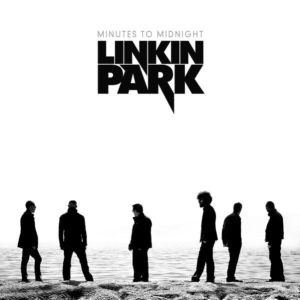
Review - Minutes to Midnight


Artist: Linkin Park
Album: Minutes to Midnight
Record Label: Warner Bros.
Producer(s):Rick Rubin, Mike Shinoda
Release Date: May 14, 2007
Genre: Rock
Strong Points: The band takes several big steps away from the repeat sound of Meteora, and does so surprisingly well; the bands lyrics remain simple, but are far more mature in nature.
Weak Points: The band seems to be straining themselves while reaching for a new sound.
Technical Score: B+
Artistic Score: B+
Final Score (not an average): B
Moral Warnings: A number of the songs use the F-word in them (Given Up, Bleed it Out, Hands Held High); the album is very politically charged against the former President Bush, with specific implications against the Iraq War.

Meteora was, ultimately, a carbon copy of Hybrid Theory. That album did not see Linkin Park growing as a band, musically or lyrically, as they performed a repeat of angry men growling angry words backed with angry music. Minutes to Midnight, while not perfect by any means, sees them taking several large steps in the right direction, and doing it with precision and grace. They attempt to shake the remaining dust from their previous sound and build a new image for themselves. Die-hard fans of Hybrid Theory and Meteora will likely have hard feelings towards this new album. For the rest of us, the result of the band's efforts is a Linkin Park that stretches for higher heights, newer sounds, and better music.

Despite this reach, the album is not without flaws. To change one's sound so extensively is a feat that must expect some mistakes along the way. Linkin Park is not immune. Even distantly, the band retains the feel of their previous work, and on occasion this conflicts with what they are trying to make new. For instance, the first song that shows a true difference in the band's style, "Leave Out All the Rest," reveals a far softer side to Linkin Park, but it's done through synthesized melodies and computerized beats that feel reminiscent to the final song off Meteora, "Numb."

In other areas of the album, the band strains for originality and just flat out misses the mark. One of the last songs on the album, "In Pieces," sounds like what would happen if Chester Bennington replaced Ben Gibbard's voice for The Postal Service. The song is well-written and performed, and on an album where the music is so varied, it fits in appropriately. But it's still a long stretch, and a sound that Linkin Park hopefully will not pursue in the future.

Indeed, songs like "In Pieces" or the ebow centered "In Between" seem to have been written for the sole purpose of Linkin Park being able to say that they're far from one dimensional. And they certainly have that right. Whether the change in sound is enjoyed or not, it's impossible not to be impressed at how they prove, song after song, that they deserve to be taken seriously.

In all the places where the band's old sound conflicts with the new, or the places when they stretch too far to find something new, there are just as many spots where old and new come together perfectly. "Given Up" shows Linkin park retaining their emotionally driven (that emotion being anger) lyrics and music. But the music is pure metal, something the band has never attempted before, and something they do with near perfection.

In comparison with the aggressive despair of "Given Up" and the politically charged "No More Sorrow," for most of the rest of the album, Linkin Park reveals a softer side - one far more thoughtful and mature than the Linkin Park from Hybrid Theory and Meteora. Perhaps the best example of this is "Valentine's Day", which is arguably the best song on the album. It's slow, gentle, melodic. The empty mood of the music reflects the story that Bennington sings of - a man who is burying his love after she has passed away. "And the crowds above moved closer/looking so dissatisfied/and the ground below grew colder/as they put you down inside." It's a lyrically simple, yet beautiful song, sure to tug at heart strings.

As far as moral content goes, the F-word is used on and off throughout the album, but no other bad language is used. The political attacks in Minutes to Midnight are frequent, and don't pull any punches, which could be a turn off for some. "Hands Held High" expresses the need to stand up and protest the war. "Jump when they tell us that they wanna see jumpin/**** that/I wanna see some fists pumpin'." "No More Sorrow," a metal song, has lyrics pretty close to hate aimed towards former President Bush. "Your crusade's a disguise/replace freedom with fear/you trade money for lies." Finally, "The Little Things You Give Away" expresses disgust for how Hurricane Katrina was handled.

Minutes to Midnight features several new sounds for Linkin Park, most of them fresh and impressively performed and writtten. Some will be disappointed in this switch in musical focus. For the rest, it's an impressive step in the right direction.

Album Highlights:

Given Up
What I've Done
Valentine's Day

Zak Mellgren - (zak@revolve21.com)

Read full article

Thursday, July 10, 2008

Review Quickie - Chase This Light


Artist: Jimmy Eat World
Album: Chase This Light
Record Label: Interscope Records
Producer(s): Butch Vig
Release Date: October 16, 2007
Genre: Alternative rock/Pop punk
Strong Points: Catchy rhythm and beats; poetic, well-engineered lyrics; sound that captures the listener's attention
Weak Points: Songs sometimes feel redundant; style tends to be generic
Technical Score: A
Artistic Score: B+
Final Score (not an average): A-
Moral Warnings: One song uses Jesus' name in vain (Dizzy)

Chase This Light is one of those albums you come across and think (after seeing the brilliant cover), “Ah, this is just going to be another album that’s like all the rest.” You get home and you start listening to it, and you’re actually pleasantly surprised. Jimmy Eat World breaks from the stereotypical confines of alternative rock and creates something refreshing with their albums. Chase This Light is a perfect example of this. The only problem I had was that many of the songs felt familiar. The lyrics are beautiful, and the front man, Jim Adkins, carries a voice that catches your attention from the start, while the music is nicely structured. Yet it just felt like they could’ve done a bit more. It’s a good album, but I think it could have gone just a few more inches to be great.


Album highlights:
Chase This Light
Dizzy
Big Casino
Firefight

-Riley McCarthy (riley@revolve21.com)
Read full article

Wednesday, June 25, 2008

Review - Viva La Vida


Artist: Coldplay
Album: Viva La Vida or Death and All His Friends
Record Label: Parlophone, Capitol Records
Producer(s): Brian Eno, Markus Dravs, Rik Simpson, Jon Hopkins
Release Date: June 17, 2008
Genre: Rock
Strong Points: Lyrics are once again strong; beautiful sonic soundscapes; moves away from the predominantly piano-based sound of past albums
Weak Points: Album feels too short
Technical Score: A
Artistic Score: A+
Final Score (not an average): A-
Moral Warnings: One song details a struggle with lust (Yes)


Sometimes a change in producers can change everything. After all, look what it did to Metallica: after staying with producer Bob Rock for years, the seminal metal band produced St. Anger, which was critically derided for moving to a more alt-metal, post-grunge sound. Or look what happened to Johnny Cash. His series of American records, the last in his career, were produced by Rick Rubin, and brought a more intimate view of the Man in Black to the public’s consciousness. A producer can ruin an album or bring it out of the gutter. Which is why when Brian Eno signed up to produce Coldplay’s latest, most that were familiar with his work knew that things would change.

Eno has produced some of the most acclaimed records of the past twenty-five years, including U2’s amazing albums, The Joshua Tree and The Unforgettable Fire, as well as the Talking Heads’ seminal Remain in Light and David Bowie’s foray into industrial rock, Outside. He’s also quite the accomplished ambient electronic artist, and that experience translates to his production for mainstream rock albums quite smoothly.

Under Eno’s watchful eye, the Oxford boys are back with an album that is harder, more epic sounding, and less introspective than before. Guitars are more of a focal point in Viva La Vida, and, although this is the case, that doesn’t mean that the band has abandoned the piano. Instead, wisely, they’ve chosen to use the instrument less as a focal point and more for rhythm, which means that Coldplay finally sounds like a band. Shocking, I know. Guitar solos are actually present in several songs, surrounded by swirling synth and string arrangements. In other words, you’re not going to find “Clocks” or “The Scientist” here, which is a very good thing.

Viva La Vida begins with “Life in Technicolor,” an instrumental track that seamlessly fits in with the end of the album. It showcases both angular guitars (reminiscent of U2’s The Edge, as all the guitars are on the album) and the synth sounds that the album uses to full effect. This is largely how songs on the album go: enveloping soundscapes combined with an excellent hook and no lack of poetic lyrics, which, this time, don’t succumb to lead singer Chris Martin’s obsessive introspection. Songs tackle subjects like politics, love, war, and God, but none of it is necessarily literal; instead, most songs are metaphorical in nature, and highly so, as if Martin wants the listener to speculate what’s behind the figurative mask that he wears.

As the album progresses, listeners are treated to “Lost!” a song that sounds necessarily hopeful despite the bleakness of its lyrics: “Just because I’m losing/Doesn’t mean that I’m lost.” These words amid claps, stomps, and a church organ. Later, “42” laments that “those who are dead are not dead/they’re just living in my head/and since I fell for that spell/I am living there as well.” Surrounded by a wall of sound, Martin speculates, saying, “Time is short/And I’m sure there’s something more.”

The sixth track on Viva La Vida, “Yes,” is easily my favorite on the album. This is largely due to the sound, which ventures away from a “typical” Coldplay sound, preferring instead to stray into a more Eastern-tinged sound, with words sung down low, into the chest voice, instead of in the trademark falsetto that Martin is known for. This is the one song on the album that feels intensely personal, almost like reading a page from Martin’s diary. “Yes” speaks of struggles with lust, and abstinence, in particular: “There we were dying of frustration/Saying, “Lord, lead me not into temptation”/But it’s not easy when she turns you on…” Yet there is no resolution to this song, only Martin saying, “God knows I’m trying my best.”

Lead single “Violet Hill” is another highlight, with pianos leading off the proceedings, followed by a hard guitar crunch that carries through the rest of the song and into a solo. Martin’s voice is mixed into the forefront, saying, “If you love me/Won’t you let me know?” This is, by far, one of the least “pop-like” singles that Coldplay has released and it reveals an interesting direction for the band. On the opposite end of that spectrum is second single and one-half-of-the-title track “Viva La Vida,” which opens with a catchy synth arrangement and a pounding drum, a song that either talks of being in love (if you take it as a metaphor) or being a king during the Crusades (if you take it literally). The song is catchy and radio-ready, and that’s really okay for a Coldplay song. With this song, at least, they’re doing something different with their sound, and not falling into repetition like they did on X&Y.

For all of the analyzing that I could do of the individual tracks, the fact of the matter is that Coldplay’s newest is a highly enjoyable, listenable album. The entire thing is good. It’s not at all hard to get into, and it shows that the band knew that they had to experiment and more fully embrace the source of their influences than they had before. In this respect, Viva La Vida is an absolute triumph. No, this isn’t Radiohead’s OK Computer, and it isn’t U2’s The Joshua Tree, but it’s close. The only question is, will Coldplay be able to duplicate the same success on their next album? Time will tell. For now, Coldplay has recorded the best album of their career and one that leaves the listener wanting more.

Album Highlights:
Lost!
Yes
Violet Hill
Strawberry Swing
Death and all His Friends

--Drew Regensburger (drew@revolve21.com)


===== Second Spin =====
I have to admit, it's been a while since I would have called myself a Coldplay fan. I loved songs on Parachutes and Rush of Blood to the Head, but X & Y kind of lost me. I wasn't thrilled about Viva La Vida, but reading Drew's review changed that for me. After listening to it a bit, I find myself pleasantly surprised.

The main review is right, Eno's magic touch is still magical, and it shines through brilliantly here. The album isn't as much of a departure from Coldplay's established sound as I thought it would be, but every track is solid and very well polished. I'm also very glad that the piano didn't disappear. It's nice that it now shares the spotlight more than it did on former albums, but it's still very much there, and it is very much a driving force.

On the whole, I feel fairly comfortable calling this the best Coldplay CD on the market. I think that established fans will find plenty to like here. Newcomers will also find a bit to enjoy. Overall, it's a very solid album.

-Kenny Yeager (kenny@revolve21.com)

Read full article

Wednesday, June 18, 2008

Review - This is Forever


Artist: She Wants Revenge
Album: This Is Forever
Record Label: Perfect Kiss, Flawless Records, Geffen Records
Producer(s): She Wants Revenge
Release Date: October 9, 2007
Genre: Darkwave, Goth Rock
Strong Points: Overblown goth rock stylings, reminiscent of Joy Division; slick production and emotive lyrics; heavy, danceable drums and bass
Weak Points: Lyrics tend to lean towards self-parody
Technical Score: B
Artistic Score: C+
Final Score (not an average): B+
Moral Warnings: Overall depressing content, as can be implied from the inspirations of the band; one f-word used (Written in Blood); religion is viewed as a negative (Checking Out); denial of God (Pretend the World Has Ended); mention of consequence-free sex (This is the End); casual sex mentioned (What I Want)

Editor's Note: The above artwork is not representative of This Is Forever's artwork. The artwork could be considered suggestive, and thus will not be shown.


She Wants Revenge burst onto the scene in mid-2005 and quickly rose to popularity through internet social networking site Myspace (I can’t believe I just described that). Featuring the talents of two seasoned hip-hop talents, in Justin Warfield and Adam “Adam 12” Bravin, the duo created music that throbbed with the echoing drum beats and tortured post-punk sounds of Joy Division, The Cure, and Depeche Mode, mixed with a healthy dose of seminal goth rockers Bauhaus. The music was tortured and angsty, immediately catchy and indescribably weird, much like their post-punk influences, and it remains much the same on their second album, This Is Forever.

By nature, the music is noir-ishly dark, fused with a romanticism that is very much modern and very much of the 1940s; the myths of the woman as the goddess and the femme fatale are alive and well here, and intentionally so. This style is even shown in the album artwork, with hard contrasts between darks and lights, and black and white pictures of vocalist Warfield and beatmaster Bravin earning a two page shot. That is, however, beside the point.

This Is Forever kicks off with a thumping bass, a kicking drum, and a simple piano melody on the instrumental track “First, Love.” From there, things move faster as “Written in Blood” begins. Warfield’s mostly-monotone delivery works well here, telling a tale of a doomed couple, one speeding through the dark, the other terrified. This song also really sets the tone for the album, Warfield’s voice constantly debating what the nature of love is: “You tell me that love don’t last…” and later, “…promise you that this is forever or until one of us dies.” This constant debate is a theme that runs throughout the album, and ebbing and flowing with each song.

Song after song, She Wants Revenge presents a bleak outlook on the relational landscape of today. One song, called “True Romance,” proclaims, “I know that you never really loved me/I know that you never cared at all/Maybe just one more dance/Cause that’s as close as we get to a true romance.” Throughout the song, thin, angular guitars penetrate the synth- and drum-heavy proceedings, adding an ominous layer to an already atmospheric track.

One of She Wants Revenge’s strengths is their lyricism. They’ve been criticized for using sophomoric lyrics, for their lyrics sounding like they came out of an angsty high schooler’s notebook. That’s pretty much true. But it’s also very intentional. Every song is about jilted lovers, about breakups, about obsession. It’s so layered on that it almost becomes a parody of itself, and the band is very much aware of this, much like they’re aware of wearing their influences on their sleeves. Warfield’s voice is a straight-up attempt to imitate the late, tortured Joy Division singer Ian Curtis, and the music throbs with the sound of the many bands that followed.

By the end of the album, however, it looks like Warfield may have seen the light at the end of the figurative tunnel, or at least realized a need for something a little less dark and gloomy. A realization is shown in “Replacement,” where Warfield sings, “And how you knew from the first kiss that I would break your heart.” Following that, “Rachael” begins, a simple song of a beautiful woman, a song that hints that it’s all going to begin again.

Sadly, This is Forever keeps up the band’s poetic use of sex as a weapon and nihilism as an excuse. One song questions a person’s faith, and the very next proclaims, “I’ve got no God to sell.” Certainly, This is Forever is a good album, but it’s not necessarily one to get if you’re uncomfortable with the content.

Album Highlights:
“It’s Just Begun”
“True Romance”
“She Will Always Be A Broken Girl”
“Replacement”
“Rachael”

--Drew Regensburger (drew@revolve21.com)

Read full article

Tuesday, June 17, 2008

Review - Accelerate


Artist: R.E.M.
Album: Accelerate
Record Label: Warner Bros. Records
Producer(s): Jacknife Lee and R.E.M.
Release Date: April 1, 2008
Genre: Alternative Rock
Strong Points: Crisp production; loud mix compared to previous recent releases; relevant, poignant, sometimes ambiguous lyrics
Weak Points: Short run time; album slows down a bit in the middle; not as amazing as early R.E.M. (from ‘80s through early ‘90s)
Technical Score: A
Artistic Score: B-
Final Score (not an average): B
Moral Warnings: One song seems to question faith (Hollow Man); another song questions the existence of heaven (I’m Gonna DJ); one F-bomb dropped (Horse to Water)

Suddenly faced with the prospect that the world had left them behind after 2004’s poorly received Around the Sun, the members of R.E.M. knew that something had to be done. Bassist Peter Buck even alluded to the band members’ acute awareness of their own plight, saying in interviews that the consensus was that, with another bad record, R.E.M. would be finished as a band.

So the veterans went to work, crafting ambitious and creative songs that, while not rivaling their early, phenomenal, landmark work, certainly aspired to live up to it, while being relevant to today’s world. What came out of that work was “Accelerate,” an album full of crunching, catchy rock songs that are introspective while looking out at the world.

Kicking off the disc is a cut called Living Well is the Best Revenge, a song that features a cyclical guitar and vocalist/lyricist Michael Stipe raging about being “set up like a lamb to slaughter,” later proclaiming that “the future is ours and you don’t even rate a footnote.” Certainly a political statement, and one that sets up for an exceedingly political work from the guys from Athens, Georgia, one that is more poignant than anything on Around the Sun could have hoped to have been.

Following that comes Man-Sized Wreath, a more melodious song than the previous one, but no less angry or political, with Stipe singing, “A motorcade of benign strength shows the people that you care.”

The lead single off of Accelerate is the next track, Supernatural Superserious, a song that evokes a sense of teenaged confusion and angst, from an adult perspective, at least. Hollow Man comes next, with an emotional, gutty, relatable lyric: “I’ve been lost inside my head/Echoes fall off me/I took the prize last night/For complicated mess/For saying things I didn’t mean and/Don’t believe.” As amazing as this song is, it doesn’t match the simple beauty of the next song, a ballad called Houston.

Houston is one of those songs, like The Beatles’ Happiness is a Warm Gun, that feels like it goes on forever while actually being pretty short. It’s a concentrated burst of paranoia (“If the storm doesn’t get me, the government will”), but it also brings to mind the beauty of cities, largely without saying anything more about the city than the name and a feeling. The real meaning of the song comes through with the last line: “Belief has not failed me and so I am put to the test.”

The title track comes next, and this is really where the album begins to hit a low. Accelerate is the halfway point, and is one of the final straight up rock songs on the album. After this, the songs tend to take a more relaxed route, and, while still good, aren’t as memorable as the first half of the disc. Until the Day is Done feels like a Civil War ballad out of time and completely in its element, while Mr. Richards seems to indict Michael Richard’s racist comments some time back.

The duo of songs that come next, Sing for the Submarine and Horse to Water, embrace more fully the slower sound that R.E.M. takes for the latter half of Accelerate. This is not a bad thing, since these songs happen to be some of the more beautiful songs on the album. Unfortunately, R.E.M. set a pace early on, and while none of the songs are bad, the sudden transition from the title track to a slower sound is a bit jarring. Horse to Water picks up the pace again without missing a beat, and the chorus is akin to a rowdy pub song: "I'm not that easy, I am not your horse to water," Stipe shouts, and with that, one of the catchiest songs on the album was crafted.

Even through the low points of Accelerate, the band still proves that they are more relevant and more in-tune with music than the vast majority of new bands that have come out in recent years. This might have something to do with the time that they started playing music, having kept a certain garage rock and jangle pop sound through their career, or it might have to do with musical evolution becoming stagnant. Either way, R.E.M. has proven that, like the last song on the album brags, they will DJ at the end of the world.

Album Highlights:
Living Well is the Best Revenge
Hollow Man
Houston
Horse to Water
I'm Gonna DJ

--Drew Regensburger (drew@revolve21.com)

Read full article