Showing posts with label Gaming - System: PC. Show all posts

Thursday, April 23, 2009

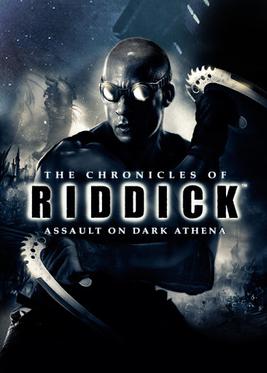
Review - Chronicles of Riddick: Assault on Dark Athena


Developer/Publisher: Starbreeze Studios/Tigon Studios/Atari
Release Date: April 7, 2009
Available On: Xbox 360, PS3, PC
Genre: Stealth shooter
Number of Players: 1-12
Strong Points: Excellent value for the money; Butcher Bay presents a challenging experience with few flaws; voice acting is top notch; Butcher Bay conversion looks and feels like an Xbox 360 game, rather than a port of a five-year-old game; story through both games is captivating and compelling
Weak Points: Dark Athena strays too far from franchise strengths; shooter segments are average and unsatisfying
Technical Score: A
Artistic Score: B+
Final Score (not an average): B
Moral Warnings: Violent and blood run rampant throughout; profanity is featured heavily in the game; brutal one-on-one combat a major part of game play; sexual references to rape and masturbation in both games

In 2004, right around the same time that everyone in the gaming industry had seemingly lost hope for movie tie-in games, “The Chronicles of Riddick: Escape from Butcher Bay” hit the original Xbox. Unlike many games related to movies where the player is asked to play through the events of the film itself, “Riddick” asked players to play a prologue of sorts to the films that had starred the character, Richard B. Riddick. The game did this by throwing the player into a “slam" (a prison), throwing away the key, and then taunting: escape.


Riddick’s subsequent escape is chronicled in “Escape from Butcher Bay,” the first and strongest part of “The Chronicles of Riddick: Assault on Dark Athena,” and its sequel, the eponymous “Dark Athena.” Much like “Thief” before it, “Riddick” is a first-person stealth game with an initial focus on brutally disabling both guards and fellow inmates. This is “Riddick” at its finest; the shooting elements, while solid, tend to be frustrating and more twitch based than anything else, detracting from the real strengths of the game.

Sadly, this also means that the latter half of “Dark Athena” isn’t what it could be. Once the player gains the SCAR, a remote detonating mine launcher, the game turns into something resembling a weak run-and-gun shooter. This disrupts an otherwise methodical game, replacing the basic risk and reward mechanic with trial and error, something that may work well with the likes of “Doom,” “Quake” or “Painkiller,” but most definitely does not play to the strengths of the developers here. That’s not to say that developer Starbreeze doesn’t know how to make a game with shooting as its focus, however. For example, their previous effort, “The Darkness,” featured shooting game play more prominently than it is here, but then that game also gave you an adequate health system, along with enemies that weren’t overpowered. In this case, the elements of what makes for a good stealth action title don’t equate a quality first person shooter, and herein lies “Riddick’s” main problem.

Beyond that, “Riddick” is a stunning success. Adding to the already well-implemented stealth game mechanics are adventure elements, requiring conversation but little finesse. Characters give side quests and scant background information, and that’s about it, but where that would be a shortcoming in other games, it works to the benefit of the game here, adding some depth without breaking up the flow of the game itself. “Riddick” is also hard, recalling “Butcher Bay’s” original release, and in itself indicative of the way that difficulty has been toned down in the five years since the game first came out. In “Butcher Bay,” the challenge is rewarding; in “Dark Athena,” it becomes something along the lines of prohibitive.

First person combat is one of the most intriguing and well-implemented aspects of “Riddick.” Not gunplay; I’ve already established that leaves something to be desired. Instead, I’m referring to fist fights, which are far more common in “Butcher Bay,” but still integral to “Dark Athena.” From stealth take downs to simple one-on-one brawls, impacts and attacks sound real and carry weight when they connect. This alone places “Riddick” in far more brutal territory than many M-rated games, its only comparison in brutality — but not depravity, since the “Riddick” universe does have a moral center, and a defined one at that — being the “Manhunt” series of games.

“Riddick” is also one of the more visually inconsistent games released to date on either the Xbox 360 or PS3. This is mostly due to “Butcher Bay’s” status as a polished port. Both games are good looking, and unless you were previously aware, you wouldn’t know that “Butcher Bay” was a port. Even so, “Dark Athena” holds the edge here simply because it looks smoother and the animation — and consequently, the characters — feel more realized and lifelike.

Enemy AI is a problem, proving to be both stupid and hypersensitive. Relying partially on line-of-sight and partially on extrasensory perception, the enemies in both “Riddick” games automatically discover the player when out of cover or in light, and otherwise haphazardly rely on line-of-sight, which enables the player to brutally kill the enemy. However, unlike other stealth games, such as “Splinter Cell,” where the player must hide the bodies of the dead or unconscious, here that never really comes into play, although it’s suggested. There’s just no real reason to hide the bodies. The guards aren’t smart enough to do anything about it if they find a body, and unlike other games, there’s no varying levels of alert or awareness to hinder the player’s progress and make their job harder. This does not, however, make the game play any less exciting or visceral during the stealth segments; it simply surprises me that such a basic element of stealth gaming could be left out of the equation, though with how solid the majority of the game is, it’s more a disappointment than anything else.

Of course, this wouldn’t be a big-budget action game without excellent voice acting, and here “Riddick” does not disappoint. In the first game, Vin Diesel, Cole Hauser, Xzibit and Ron Perlman all turn in top notch performances, only to be handily outclassed by the voice cast of “Dark Athena,” which includes Lance Henriksen and Michelle Forbes.

Much of the problem with the content with Riddick lies in the language that’s used by the various characters on display. Enemies use the full-range of profanities normally featured in an R-rated film, from variations of the f-word to lesser profanities, including blasphemies. One character drops the c-word twice and then mentions raping a female character that Riddick is helping out. Every word in the book is used during the course of both games, possibly — improbably — more in “Dark Athena,” a game not even set in a prison. In “Butcher Bay,” occasional references to prison rape are made. “Dark Athena” also has an inmate masturbating with his back to the player. Blood and gore splatter the walls, and enemies display wounds from attacks that they’ve received. Both games encourage players to hunt down and disable enemies, which can include brutal weapon disarms, unarmed kills and armed kills, all of which showcase Riddick’s particular brand of bloodlust.

“The Chronicles of Riddick: Assault on Dark Athena” comprises the best value seen in games since “The Orange Box,” and also contains one of the best Xbox games ever made. It is a testament to the fact that good movie games can and do exist, if the developers care about the project enough to implement quality game play. However, with that recommendation comes a warning: both “Riddick” games are astoundingly brutal, profane and dark, unrelenting in the atmosphere of oppression and captivity that they convey. This is a game based on an R-rated film franchise and is not for children; those mature enough and willing to venture into a prison and slave ship will find a rewarding, disturbing experience very much unlike any found on any system to date.


-Drew Regensburger (drew@revolve21.com)

Read full article

Friday, April 3, 2009

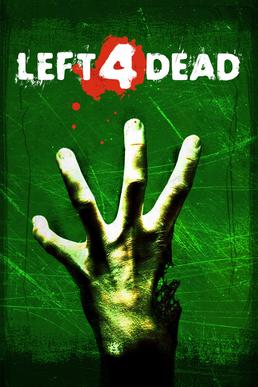
Review - Left 4 Dead


Developer/Publisher: Valve Corp. (Certain Affinity Xbox 360 version)

Release Date: November 18, 2008
Rating: M for Blood and Gore, Intense Violence, Language

Available On: PC, Xbox 360

Genre: First Person Shooter

Number of Players: 1-8 (online), 1-2 (local split screen)
Strong Points: Online and offline play; fast pace; solid gameplay; easy drop-in-drop-out play; lots of humor; high replay value; well-crafted horror setting (lighting, sounds, etc.); gives everyone a “this one time..!” story; lovable characters; ZOMIBES.

Weak Points: Not for everyone; limited weapons; single player is not enough to justify a purchase; just as described story is even less than a typical B movie; limited map selection (though DLC will increase this); the nature of the game can make getting an exact party difficult.
Technical Score: A-

Artistic Score:B+

Final Score (not an average): A

Moral Warnings: Lots of swearing (including GD and JC); “God is Dead” is spray painted a few locations; lots of violence; blood (splatters on HUD) and head explosions; violence includes sounds such as hearing your teammates screaming for help while being assaulted by various undead


Do you have your plan? Everyone needs one. I have had my plan for surviving the zombie apocalypse since I was about twelve. It predates my plans for supercomputer takeover, but not communist invasion. Whether you have one or not, Left 4 Dead gives us the best method for weeding out which of our friends you really want to keep around when the dead start shuffling; or rather running. Breaking from the Resident Evil and George Romero norm of stumbling, moaning brain eaters, Valve is following closer to the 28 Days Later style of dashing cannibals. I think this is mostly a control decision.

If Valve does one thing right, it is first person shooters. If you pit a team of four people who can headshot from the hip against old school zombies it might start out fun but lack of challenge will quickly kill the game. So instead of taking the Resident Evil or Silent Hill path of confining controls Valve chose a balance. They used fast zombies (“infected”) and “special infected," and they kept the shooting simple. There is no aiming down the sights (except with a scope) and no leaning to peer around corners or cover. As a straight FPS, L4D is rather basic, including when compared to Valve’s own products. They take this and implement it in a very “get from start point to safe room” gameplay style with lots of obstacles and events to make it fun along the way.


Another thing that you always need for your survival plan is guns. Lots of them and ammunition, too. This is something I have mixed feelings for in L4D. They provide two tiers of guns. The first consists of pistol, pump shotgun, and Uzi; the second has dual pistols, auto shotgun, assault rifle, and hunting rifle (the only gun with a scope). This basically limits the player to four weapons with nearly no variation. Even though it is a more practical design, I can’t help but be upset. Each gun is made very well however; great sounds, kick and firepower will keep you happy with what you do have. For a bit of an extra punch someone ran ahead of you and made large quantities of Molotov cocktails and timed pipe bomb grenades, both of which are perfect for killing massive quantities of zombies in a short period of time. But be careful with those Molotovs since survivors are flammable, too!

The last thing you need for firepower are the actual bullets, and they are fairly scarce in this game. As they should be. While this is not a resource managing game, if there was no end to the number of clips a survivor could carry, then nothing would stop them from holding down the trigger the entire game. I feel they hit the spot nearly on target, as I rarely have run out of ammo but often would if the group missed an ammo stockpile. Funny how there are heaping piles of all sorts of bullets lying around on tables at such a chaotic time (left by the same person as made the grenades?). I do think the shotgun could use a few fewer rounds as I have yet to run out and the assault rifle could use with perhaps one clip as I regularly run out with it.

But just who’s plans worked well enough to live long enough for you to play as them in L4D? Luckily, making great characters around the player through scripted events is something Valve takes pride in and does very well in L4D. I have talked with several people who, before knowing too much about the game, claimed that it would be much better if it was more customizable, specifically if it allowed players to make their own players. At first, prior to launch, I was leaning in favor of their argument. After playing it, though, I have to say they are completely wrong. Valve chose four characters and built the world around them. They each have very specific responses to locations, events, situations, and each other. They also have very specific voices, and I think this is incredibly important. Voice chat is a must, of course, but hearing the responses of the characters is incredibly moving, both in a uplifting and funny way, but mostly in a terrifying way as they are dragged kicking and screaming through near death again and again.

The four characters quickly grow on you and give you a feel for them and the situation; it associates them with the danger in a way that you would not get with a generically created avatar with the same voice as half the other players. You will be disappointed if you expect a great story but what you will get is a great experience. Most of the story that is there is told through writing scrawled on walls and floors through the levels and particularly in the safe rooms. From “God is Dead” and “We deserved this” and the like to messages for missing loves ones to a list of how many zombies the writer had killed. Portal, which was also a survival story without much story, used similar messages to depict the tales of those here in the past, to give you hints for what you may do in the future, and leave you with a chuckle now.


When, at last, one succumbs to the inevitable and becomes one of the undead, it turns out to actually be just as exciting as being alive, maybe even more so. When not playing through the game with three friends, or as many bots as needed to fill out the team, you can pit your team against four other former survivors in the Versus mode. Instead of respawning in a closet as usual there is no respawn at all and if at least one team member does not make it to the safe room they lose the round. As of the time of original writing, only two of the four campaigns are playable for Versus, but the rest will be added later for free by Valve. Until then, the rush of hunting down the other team in either a city or forest is more than enough.

Versus tends to make the game even more intense and exciting. While the AI is generally quite good, nothing compares to a living (or not so living), thinking human controlling your enemies. There is also nothing as exhilarating as pouncing a survivor as the hunter (a hoodie wearing, super jumping special zombie) or pulling one as smoker (a gangly special infected with a extra long tongue it uses to grab and pull as if fishing for humans) in a place you know no one will be able to save them. The point of that is that L4D makes you, as a survivor, completely dependent on your teammates. Without them to cover you, melee a special infected to save you, or to help you up you will die. When health reaches zero the survivor becomes incapacitated (with a “three strikes and you are out” rule for death) and will slowly bleed to death. Similarly, when pounced or hooked by a smoker, there is no way for you to free yourself.

The third special infected is not as deadly directly, but can wreak even more havoc; the boomer is a bloated zombie with a puke ability that will “slime” survivors and blur their screen. But that is not the worst of it. The regular infected are attracted to this goo and a horde of them will instantly spawn and come after anyone with it on their skin. The last playable infected is the tank. Basically the hulk lost his green and decided he likes to eat brains. Players are randomly chosen to play as the tank and will enjoy super strength and rock throwing abilities. I find it is better just to punch however, especially since logs and cars make for better people squishers than rocks. The last special infected is not playable but is perhaps the creepiest. The witch sits patiently in her spawn location crying and wailing until “startled.” Spooking a witch is very foolish. She instantly incapacitates anyone she hits at best and can kill them regardless of health. Stay away at all costs unless you are very good with the shotgun and can take her out before startling her. Otherwise turn off flashlights and don’t shoot around her or even get close.

On a more exact level, Left 4 Dead has a great interface and matchmaking system for easy play on both platforms. Getting a party is easy, just getting a party of people you know (the most fun way to play) can be hard and awkward, though it isn’t necessarily the game’s fault. Getting exactly four or eight people can leave teams lopsided, and if you want to play expert, you absolutely need four players. PC servers are sometimes buggy and good connections aren’t as common as they should be; it always takes a minute to properly establish the connections.


Sound plays a major role in any kind of horror or survival setting and Valve hits every note perfectly. From specific events to themes for witch and tank spawns to the sound effects, everything fits perfectly. The fear the witch’s cry incites or the terror of hearing the tank’s theme is incredible. Almost as good as those are terrible is the completion sound played when you make it into a safe room.

But that rewarding sound doesn’t come easy since the AI does an excellent job of keeping it challenging. Usually it does well for Survivor campaigns but it just doesn’t cut it in expert. It does have a few kinks still to work out, as they will do stupid things as all AI tend to do, but they generally function very well. In Versus it can actually be an advantage to have a bot on the Bloody Harvest campaign as they can "see" through trees and shoot infected when you would never have noticed. Valve also made a director AI that monitors stress levels of the survivors and sets up ratios against the number of infected currently spawned and killed and other factors to manipulate the game around the players. Hordes will be spawned suddenly or a witch or tank will be placed based on the player’s behavior and how well they are performing. Several times I have felt that the director hates particular teams when playing Versus, but that team has always been my own. so maybe it is just me. Versus, in the name of fairness, has also forced all tank and witch spawns to be in the same locations for both teams. In Versus, the teams take turns playing through each chapter of the each campaign so the second team will always know exactly what to expect as far as those two major obstacles are concerned. Hardly fair in my opinion.

Visually, both versions look very good. The Source engine is at its finest, but this game shows it is also clearly on its last legs. They are good but not great and certainly not amazing when compared to many other titles coming out. Valve did a very good job of prioritizing just what looks good, especially the animations. The faces of the survivors are depicted very well, and they portray their emotions (generally horror) particularly well. A special situation also throws the player into third person view and temporarily takes away control of the player. These situations provide a chance to see just how great he animations really are. Whether a hunter has you pinned to the ground and is tearing you apart, a witch just ran past and pushed you aside, or you are helping a teammate up, the animations and vocal responses fit perfectly. All the character models also look very good, the generic infected in particular have an immense number of skins keeping htem fresh visually, if not physically. Keeping with the B movie feel, this screenplay comes complete with a film grain slider bar to fit your personal preference when fighting off hordes of zombies. Oh, and there are several great explosions in the game that will make you smile, so don’t worry.

Left 4 Dead grabs the player and his friends and throws them right into a well crafted apocalypse with fun characters and terrifying enemies that will have them sweating bullets. Do you shoot the zombies and risk the harsh punishment of friendly fire, or do you call out and hope your friend reacts in time? Will you bleed out before your friends make it to you? Can you sneak past the witch, or will she completely destroy you with her Lady Deathstrike claws? I suggest you let the other guy go first.

I think the best part of Left 4 Dead is when you are talking about it. Nearly every time you play, it gives everyone playing a story to tell. A time you just made it to save all three of your team mates... or didn't. A time you blew a tank off the roof or were the tank and punched them all off. The possibilities are nearly endless and even though each campaign can be played through in roughly two hours, the variables of just Versus make them infinitely different in so many ways every time. In the four player Survivor campaigns there are different difficulties to create a constant challenge.

Besides the obvious violence the biggest issue this game has is language. Nearly every word in the book besides the f bomb is used and fairly regularly at that. It is not overly gory but there is plenty of blood. Fortunately, there is hardly any sexual content except a few zombies in hospital gowns show bare bottom.

When everything is lined up, I have to say that Left 4 Dead is an incredibly fun, incredibly replayable game simple enough for nearly anyone to enjoy but having enough depth and strategy for the hardcore. I can’t recommend it enough to those not put off by its moral content, especially with Valve’s promise and track record of content updates.

-Paul Alfred Brown, guest reviewer

Read full article

Friday, March 6, 2009

Review - Dead Space


Developer/Publisher: EA Redwood Shores (EARS)/EA
Release Date: October 14, 2008
Rating: M for Blood and Gore, Intense Violence and Strong Language
Available On: Xbox 360, PS3, PC
Genre: Action-Horror
Number of Players: 1
Strong Points: Strategic gunplay forces player to pick their shots; effective creation of atmosphere that permeates game world; strong story drives player along; plenty of replay value
Weak Points: Game tends towards easiness; boss battles are inventive, though not challenging; game seems too short (10-12 hours long); unlocked items cannot be carried over to a new save at a harder difficulty
Technical Score: A
Artistic Score: B
Final Score (not an average): A
Moral Warnings: Combat revolves around dismemberment of enemy limbs; blood spray hits everything and coats the player character; profanity shows up every once in a while, from “f***” to “s***”; imagery throughout tends to be very disturbing and is designed to unsettle the player in an effort to create an effective atmosphere


Imagine taking two of science fiction’s best horror movies-Alien and Event Horizon-throwing them into a blender with Resident Evil 4, and then sprinkling in elements strongly reminiscent of Scientology. Dump that goop onto a pan, throw it in an oven, and what comes out should be Dead Space.

Dead Space is one of the "new" EA’s first forays into something called the original IP, an experiment that has brought new life with games like Mirror’s Edge, Spore and Skate. These are unlicensed games, unestablished properties, and they are not necessarily going to bring in as much revenue as, say, a Madden or Call of Duty title would.


In this instance, the experiment is largely successful: Dead Space is a game that, while never exactly adventurous with its game play elements, does what it sets out to do very well. Everything here is borrowed from another game. The camera and game play, from Resident Evil 4; the way that the story and environment mesh, including presentation of certain story elements, from Bioshock; these and many more influences litter the halls of the USG Ishimura, a place dense and claustrophobic with the newly dead and newly reanimated.

You control Isaac Clarke, an engineer who, along with the crew of a repair ship, has been dispatched to help the crippled vessel called the USG Ishimura. Clarke has a personal stake in the mission, however; a woman named Nicole Brennan, Isaac’s ex-girlfriend, is a doctor stationed aboard the ship. Upon docking (sorta) with the ship, it soon becomes pretty apparent that there’s something very, very wrong with the Ishimura, and that maybe repairs aren’t going to cut it. The crew is missing. The halls are darkened, and the walls splattered with blood. And there are... things roaming the halls, things that don’t seem to die. It is through this that Isaac must traverse to figure out what went wrong, to save the repair ship crew, and to save Nicole.

Things aren’t going to be easy on that front. Dead Space introduces an element to the game play that challenges the player to pick their shots, and pick wisely. Enemies don’t go down by headshots, and they don’t go down from hits to the body, at least not very easily. Instead, the developers force the player to aim at the extremities: it slows down the target, and, for some reason, enables the player to kill enemies (called Necromorphs) far faster than if the player shot at the head or the body. This slows down the pace of a game that could have been a sci-fi reimagining of RE4, and also makes the game much gorier. It also encourages ammo conservation since, like many horror games, ammunition becomes more difficult to come by in the later stages of the game.

Dead Space has twelve missions in it which generally last an hour each (less if you don’t take your time). Each of these missions tends to have a very simple structure - the player receives orders, tries to fulfill said orders, has to clear out a ton of enemies, maybe has to solve a puzzle, and then returns to mission start. A tram that transports the player around the ship connects all missions, and through this most areas are revisited once or twice, though never for reasons that are illogical. The developers wisely chose to have you revisit an area if a reasonable item was there. If you have to search a dead body, check the morgue; if you have to reactivate the engines, you go to the engine room, etc. Nothing is out of place, and the progression always makes sense.


Game play variety is where Dead Space falters. Most of the time, the game has you running from point A to pick up an item at point B, with a couple of monster closets and rooms to best along the way. This isn’t exactly boring because Dead Space manages to be consistently entertaining throughout the length of its ten or so hours. But it isn’t exactly varied, either. Variety comes into play in two areas: zero gravity and zero oxygen sections. Since you’re traversing what is essentially a crippled freighter floating dead in space, you’re bound to run into areas on the ship where external repairs have to be made or internal malfunction has caused some sort of gravity or oxygen deficiency. These sections of Dead Space add some more flavor to the mix, and they tend to be executed quite well with the exception of one ridiculously unnecessary asteroid shooting segment, a set piece that has controls so terrible that they reminded me of the worst parts of the N64 game Shadows of the Empire. That is to say that they’re loose and unresponsive, spurring multiple attempts to complete the segment should the player be compelled to do so.

Graphically, Dead Space is gorgeous. The Ishimura, where most of the game takes place, is a varied environment, not all gray corridors and atmospheric lighting. No one area on the ship looks the same, which is great for the progression in the game. Texture work on both character models and environments is right up there with the best of them. Lighting is phenomenally impressive and animation is the same. All of it lends credence to the idea that you, as Isaac, are really on the ship and really experiencing the horrors that might be lurking behind every door and around every curve. On the other hand, any printed text in-game tends to be too small on an SDTV; I got a headache a few times after playing too long, which is a problem.

Side story bits, inventory, and the on-screen map are handled through a pop up menu since the game does not actively pause (except for when you press the Start button) for pretty much anything. All of this adds to the game but is essentially optional and not required to complete the game. Upgrades for weapons, new weapons, and suit upgrades are all handled like this, too, except through collection of valuable items as the player travels the ship. Upgrades are handled through a workbench feature which is much like leveling up, RPG-lite style, while new purchases and suit changes are handled through a store that you can generally access around tram stations.

The audio is, likewise, amazing. From sound effects to voice acting, everything rings true to the genre and never comes off as cheesy or misplaced. All of the music in-game adds tension and contributes to the ominous atmosphere that the developers were going for. Add in the excellent use of surround sound, and at times it really does feel like you’re surrounded by the enemies that populate the ship, fighting for your life.


Gore is prevalent in Dead Space. The entire combat system is based around the player strategically dismembering enemies. Blood often splatters the walls and floor and, sometimes, Isaac’s body. There’s also a ton of frightening images strewn throughout the game from imposing boss enemies (three of them, I think) to standard, disturbing horror fare (bodies being autopsied, an apparent suicide, etc.) meant to unnerve the player. Profanity doesn’t tend to be a problem, which means that it’s not featured throughout the game, though there are some instances of curse words, one or two of which is the f-word. A major facet of the story deals with a cult-like religion; some of the religious concepts that the followers believe in are detailed for the player, though there’s not much exposition on that front.

Dead Space is easily one of the best games that I’ve played in the last year. It’s not perfect, and it’s certainly not original, but it’s a great example of what happens when a good idea meets strong execution coupled with a compelling story and universe. However, while Dead Space is certainly well done, it’s definitely not frightening, and hardly creepy. The atmosphere, while set up well, isn’t exactly successful in creating an ominous tone; I can honestly say that I was only mildly creeped out once or twice during the game, and those times were due to incidental happenings in the game world, only one of which I’m sure the developer had anything to do with. That said, those going in expecting an excellent story and a great game can’t go wrong here; those expecting to be scared like they were playing Silent Hill 2 should maybe rent Dead Space first.

-Drew Regensburger (drew@revolve21.com)

Read full article

Tuesday, December 23, 2008

Review - Fallout 3

Developer/Publisher: Bethesda Game Stuidos/Bethesda Softworks, ZeniMax Media
Release Date: October 28th, 2008
ESRB Rating: Mature for Blood and Gore, Intense Violence, Sexual Themes, Strong Language, Use of Drugs
Available On: Microsoft Xbox 360 (version reviewed), Sony Playstation 3, Windows PC
Genre: Role Playing Game
Number of Players: 1
Strong Points: Fantastically realized post-apocalyptic world; gameplay blends real-time combat with mathematical mechanics of traditional RPGs; astounding production qualities
Weak Points: The Wastes are so barren that it's possible to feel like wandering around aimlessly when traveling; no voice acting from the player's character.
Technical Score: A
Artistic Score: A
Final Score (not an average): A+
Moral Warnings: Extreme violence that includes limbs (and heads) being blown apart upon death; violence is dealt through a variety of weapons (from hand-to-hand to explosives); the game's freedom allows you to kill anyone (of adult age) and anything you so choose; cannibalism is an option to evil characters later in the game; profanities up to, and including, the f-bomb may be heard throughout the game; it is possible to hire a prostitute (though sexual dialogue is avoided, and nothing visual takes place); questionable (and medication) drugs can be taken for boosts and may lead to addiction; slavery (including implied sex slavery) is present in the game.


Fans of the Fallout series have been waiting a very long time for Fallout 3 to arrive. The game series has been set in an alternate timeline where technology continued to improve, but society held true to the ideals and forms of the atomic age. In the game's universe, nuclear war in the late 21st century destroyed much of the human population and radically changed the earth (from the animal life to the water sources, everything biological has been affected). The humans that survived did so by retreating to Vaults. It is in Vault 101 that this game's protagonist begins his/her journey some 200 years after the bombs had dropped.

Previously, the game series came in the form of an isometric turn-based RPG. Even more importantly is that the series was was developed by another company, Black Isle Studios. When development of Fallout 3 was announced to be placed in the hands of Bethesda, known for the Elder Scrolls series, and that the game would shift to using an engine similar to that of the Elder Scrolls games, longtime fans trembled. The rest of us, who never managed to play Fallout in the past, quickly became giddy with the idea of "Oblivion with guns in a post-apocalyptic world." A great number of people in both camps have walked away from Fallout 3 thoroughly impressed, but not all of them got what they expected.


The first thing to note about Fallout 3 is that it absolutely is not Oblivion with guns. The graphics and physics engines may bear similarity, but that's largely it for common ground in terms of gameplay. So, if we can do away with that preconceived notion, let's talk about what Fallout 3 is instead of what it isn't.

At its most basic level, Fallout 3 is an experience of epic proportions. From the opening act of the game (which is a cleverly veiled character creation and basic control tutorial) to its conclusion, you can tell that the game is designed with a scope that few others come close to. The story picks up with you finding Vault 101 in a state of panic. Your father, for reasons unknown, has left the vault with no explanation or note. The chaos that followed his disappearance has resulted in the deaths of many of your fellow vault dwellers. Before you even escape Vault 101, you will be faced with a number of moral decisions to make.

These moral decisions, which fill the entire game, do a great deal to set Fallout 3 even further apart from games that could be considered its contemporaries. Any moral decision made (be it in the form of conversation or in explicit action) results in good or bad karma. Your karma affects the way the rest of the game can be played. If you opt to play the game with heavy leans towards good, shady characters in the game will not trust you. Without spoiling anything too surprising, your actions can greatly impact the game world around you (adding even more to the huge scope of the game). So great an impact do you have on the game world that an entire town can be destroyed by your hands. The inverse is true if you play with an evil bent. The game also allows for party members to join you in your quests. Your karma directly affects which party members will actually choose to join you. In many ways, the game encourages you to be rather moderate in your morality, but the moral decisions (in practically every instance) are entirely yours to make. Karma also guides character development in that it decides which Perks you can apply to your character.


Which leads us to a look at Perks and the other elements of character development. As a full-fledged RPG (don't let the real-time, gun-based combat lead you to believe that it is anything short of an RPG), you are given a great deal of control over your character's abilities. Characters have seven base stats (known in the game by the acronym SPECIAL). Each of these stats affects the effectiveness of your character's skills and base attributes. For instance, a character's Charisma stat influences his/her ability to deal in marketplaces, Endurance impacts how much life the character has, and so on. Beyond the base stats are a host of skills or abilities. Skills include things like Medicine, which determines how effective healing items are; Small Guns, which include pistols, rifles, and the like; and, among many other skills, Sneak, which allows you to get past enemies undetected. To add one more layer to the complexity of character building, Fallout contains Perks. You can choose from a list of available Perks once every time you level up. A Perk is a permanent addition to your character. Some Perks raise statistics or skills, others open up new topics in conversations, and others increase the amount of money and ammo you find in fallen enemies and boxes. There are more Perks than these, including the Bloody Mess perk (which raises the explosive nature of the violence even more), but this list serves as a basic overview of the benefit of Perks.

Character development takes place in true RPG fashion. Experience points are gained in order to level up. Experience points are gained after any successful use of a skill or death of a foe. Sneaking around does not gain experience (since there is no way to confirm success or failure), but picking a lock or hacking a computer does result in an experience boost. Still, the majority of your experience will be gained through combat.

Fortunately, the combat in Fallout 3 is beyond excellent. People who play first-person shooters will find the basic combat fairly comfortable. Move, aim, shoot, reload. Simple enough on the surface. However, in practice, you are not so very likely to play the game as you would a conventional shooter. Considering that the game truly is an RPG, hits are determined by mathematical probabilities that are computed behind the scenes instead of by pure aiming skill. Because of that, impossible shots that could potentially pulled off in a conventional shooter are not likely to be pulled off in Fallout. More importantly, though, Fallout includes what is called V.A.T.S. (Vault-Tec Assisted Targeting System).

VATS works by pausing the gameplay, zooming in on a targeted character, and allowing you to select a certain body part to aim for before firing. VATS provides you with the computed probabilities mentioned before, which helps in deciding whether to go for a headshot for maximum damage, a series of body shots for greater hit potential, or sniping the missile launcher out of the foe's hands. The computations shown on screen reflect hit probability, resulting damage, and the amount of AP (Action Points) that firing will use. See, VATS requires AP to use. Fortunately, AP regenerates quickly while playing, but this limits the use of VATS. The result of this is a balancing act of tactical positioning, run and gun tactics, and the precision of VATS.

Of course, Bethesda seemed to want to continually drive home the fact that Fallout 3 is a legitimate RPG. To prove the point, ammunition is limited in every non-melee weapon and, more importantly, weapons break down over time. As weapons break down, their effectiveness is quickly reduced. Naturally, this means that you're going to need to have your weapons repaired. You can pay to have weapons repaired at a dealer, but money is somewhat hard to come by in the game, so another option was made available: You can repair the weapons yourself. Your ability to repair weapons is limited by your Repair skill. Additionally, repairing a weapons means sacrificing another weapon of the same kind for parts. Thus, that Laser Rifle you just used to the point of failure will need you to have another rifle of the same kind in your possession in order to repair it. This mechanic requires you to decide whether or not to sell that third rifle you picked up on your last excursion.


The combat in the game is amazing in concept, balance, and execution. Few games are this ambitious in their combat systems, and fewer yet are able to reach their goals with such masterful skill. Still, for as much fighting as you'll do in the game, I would have a hard time truly calling it the game's focus. No, the game's focus is the unfolding of a tale that will determine the fate of the remnant of humanity. The narrative is carried out through exploration of the Wasteland and many junctures with significant characters and some scripted events. Still, there are few times in which the narrative is forced upon you after leaving Vault 101. For the most part, pursuit of game objectives is left to you. If you would rather go adventuring through the Wastes to see what is out there, the game allows for that and even rewards you with powerful items and experience. There are also a good number of optional side quests in addition to the main quest for you to go on. Each of these quests carries its own story with it.

The main quest is fairly lengthy. I walked away from the main quest a little bit in my playthrough, but I would estimate that the narrative spans 20-25 hours of gameplay for those who rigidly stick to it. Still quality is far more significant than duration when it comes to the narrative of a game like this. It is a good thing then that the narrative is interesting and engaging. I found myself caring about what came next, as well as figuring out who/what I needed to track down to continue. The fact that many of the significant characters carry their own lives and backstories with them adds to the pull of the narrative. The ability to twist the narrative by your moral actions make it even more interesting to watch unfold.

Beyond the narrative aspect of the exploration is the atmosphere the game carries with it. If the story isn't compelling enough on its own, the design of the game world serves as the clincher. It's easy to play the game and assume that a nuked DC would look quite like the world of Fallout. The ruins of residential areas, the rubble strewn about the remains of the subway, the barely standing Washington Monument, the remnants of civilization that have pulled together to survive the harsh environment, it all adds up for a result that is both devastating and beautiful.


And the game is beautiful not just in artistic direction, but also in technical prowess. By and large, the world is highly detailed in polygon count (resulting in character/object smoothness) and texture maps (resulting in fine details). Likewise, the special effects are largely appealing. Lighting is handled excellently. Really, though, words fail to capture the visual beauty of the game, so I can only recommend viewing more screenshots and watching some videos to appreciate the quality of the visuals. There is, however, a significant shortcoming: Animation, while smooth in terms of framerate, often seems bulky. This is especially noticeable when playing the game in the third-person view. Still, it is an offense that is relatively minor and easy to overlook in the grand context of things.

In terms of audio, everything except for player dialogue is spoken. The voice work in the game is largely good. A few voice actors seems somewhat uninspired, but the majority actually add a bit to the gameplay and narrative. Of course, the presence of Liam Neeson and Ron Perlman on the voice cast is sure to help make the narrative that much more appealing. Similarly, the audio effects, from gunshots to the sound of footsteps, suit the game well and really place you in your character's shoes.

The also game features a one-two punch of licensed music from the early Atomic Era and masterful original music by Inon Zur (who has composed music for a host of other games and some movies). Though the visuals may be credited for setting the atmosphere of the game, I would say that the licensed soundtrack is what sets the game setting in stone. Who would have thought that music from the 1940s could actually accentuate over-the-top post-apocalyptic violence and questing?

Ah, but there is that matter of the over-the-top violence. Make no mistake, Fallout 3 absolutely earns its Mature rating from the ESRB in every respect. The violence alone is over-the-top. Headshots on enemies typically result in decapitations. These decapitations are pretty gross, and the can be amplified further with the acquisition of the Bloody Mess Perk (at which point heads and limbs can be blown into further fragmented pieces). The game demands violent behavior to progress (whether you kill in cold blood or for survival is up to you). For the most part, you can kill anyone and anything in the game world. A few select characters will only be rendered unconscious since they are needed for the game story. Additionally, children cannot be killed in the game (except for one small piece that is a simulated world within the game). Depending on how you choose to play the game, you can become a contract killer or a mercenary. It's possible to become a cannibal. On a larger scale, it is possible to blow an entire town away in a very explosive sense.

Beyond the violence (which will likely turn many away) there is a lot of profanity in the game. Some characters are more prone to cussing than others, but profanities up to, and including, the f-bomb can be heard (and even used by the player) throughout the game. Sexuality is a mixed bag. Immodesty is scarcely an issue (some of the female Raiders are underdressed, but not horrifically so). It is possible to hire a prostitute. However, little-to-no sexual talk takes place. Hiring her results in following her to a room where she literally falls asleep on top of the bed and you can do likewise to regain health (as you would in any other bed). Beyond these moral issues, it is possible to take drugs (both medication and illicit) for stat boosts. In taking these drugs, it is possible to become addicted and require more drugs or formal treatment to keep health moving. Slavery is also an issue in the game. There are a couple of instances where sex slavery is implied but not explicitly stated. To match the freedoms present in the game, you can fight slavery, or you can use slavery to turn a profit (enslaving everyone from criminals to children).

In the end, however, it is impossible to deny that Fallout 3 is not only an amazing game, but it is also a strong contender for game of the year. In terms of gameplay, it is masterful. In terms of production quality, it is absolutely top notch. In terms of narrative, it keeps you playing. In the way that freedom is so unhindered, and the ability to become as good or evil as you would like, it is astounding. In every respect, Fallout 3 has lived up to, if not surpassed, the hype that has been building around it for the last year. Morally, however, it is messy to say the least. For those of you who are remotely likely to be put off by the violence or language in the game, I cannot advise you to go against your conscience. For the rest of us, the game is practically a must have.


-Kenny Yeager (kenny@revolve21.com)

Read full article

Monday, September 1, 2008

Review - Strong Bad's Cool Game for Attractive People


Developer/Publisher: Videlectrix / Telltale Games
Release Date: August 11, 2008
Available On: Nintendo WiiWare, Windows
Genre: Adventure
Number of Players: 1 Player
Strong Points: Captures the web cartoon's humor perfectly; a great throwback to point and click adventure games of the past
Weak Points: Playtime feels short for a game
Technical Score: B
Artistic Score: B+
Final Score (not an average): A-
Moral Warnings: Use of mild language ("crap"); some crude humor (presence of the Poopsmith); pranking that involves indecent exposure and prank calls


Strong Bad's Cool Game for Attractive People - Episode 1: Homestar Ruiner may be a ridiculously long title for a downloadable game, but the game is the first in an episodic series packed full with ridiculous gags and a refreshing change of pace.

For those unfamiliar with the name of Strong Bad, a brief explanation may be useful. Strong Bad is a character from the popular web cartoon, Homestar Runner (http://www.homestarrunner.com). One of the cartoon's recurring series is Strong Bad Emails. In this particular segment, the luchador-esque Strong Bad responds in a snide manner to emails sent in by fans. These responses commonly end up in the development of some new product (like the Ab-Abber 2000, sure to give users ten-pack abs) and/or pranking of the locals.

SBCG4AP begins as any Strong Bad Email would... almost. The game opens up with a genius (if, of course, you appreciate the humor) musical number, the first of many things that set the game apart from the cartoon series. The bigger, and more obvious, change from the cartoon series is the ability to interact with practically everything in the game's world.

From the pile of laundry on Strong Bad's floor to the Stick to all of the residents of Freetown USA, Strong Bad has some witty remark to make. Indeed, the game is packed full of jokes and references that fans of the series are sure to get.

On the other hand, those who are unfamiliar with the series will still find things to laugh about, but will not be able to appreciate the depth of the game's world and design. I wouldn't say that it's a prerequisite that you should already be a fan of the series before buying the game, but it certainly does make the game that much better.

As far as actual gameplay is concerned, the developers seemed to have taken plenty of notes from the classic point-and-click adventure games put out by LucasArts. The game is played in a semi-linear fashion that sends Strong Bad off on a quest in which you must come up with ways to progress by interacting with environments and using items you will acquire throughout the game (often in unpredictable ways). By no means is SGCG4AP an action-based game, requiring wit over reflex, and that's part of what makes the game so enjoyable. The game is comparable to a Caesar salad hidden among meal after meal of spicy buffalo wings: It's lightweight, cool, and a nice break from the norm.

Fortunately for fans (and everyone, really), the game has kept the voice and creative talent from the series. Moreover, the game retains, with surprising grace, the humor and pacing of the cartoon. I would be hard pressed to name many games that more smoothly transition a animated series or film into a game than SBCG4AP.

Visually, the game is simple in presentation. Of course, that is the case with the source material, and it would be unfair to condemn the game for not pushing the system's hardware limitations. In all reality, the developers should be commended for keeping the game so true to its source.

The same can't quite be said for the audio. The voice work is, depending on how you judge it, amazing and terrible. All of the characters are unique in their voicing (including accents and speech impediments). However, some voices (many of them, actually) may be annoying to some people. It, like most of the series, is wholly dependent on whether or not you "get" the humor and style. The same can be said for the music, which is both cheesy and perfectly suited for the game.

Morally, there isn't a great deal to worry about. Some implied violence (through verbal threats or being thrown out of a window) is present, but it is presented in an entirely humorous fashion. Strong Bad quips about his love for the "pretty ladies" and comments about making out (in a tame manner). "Crap" and "freaking" are the extent of profanity. If you've seen an episode of Homestar Runner, you can expect the same thing here.

On the whole, Strong Bad is a game that I absolutely loved. Having been a fan of the series for years, I downloaded the game with high hopes as well as high demands. Needless to say, I was quite happy when both were met. The game is outrageously funny (and, relatively speaking, remarkably clean) and a lot of fun to play. The game is short, but worth every cent... and even a second playthrough. If the relatively minor moral issues do not bother you, it is easy to recommend SBCG4AP as your next WiiWare (or Windows) download.

-Kenny Yeager (kenny@revolve21.com)

Read full article