Thursday, April 23, 2009

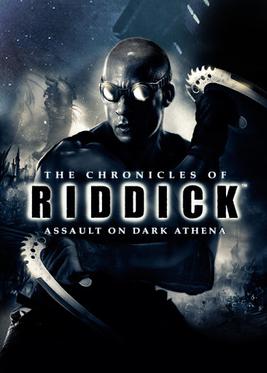
Review - Chronicles of Riddick: Assault on Dark Athena


Developer/Publisher: Starbreeze Studios/Tigon Studios/Atari
Release Date: April 7, 2009
Available On: Xbox 360, PS3, PC
Genre: Stealth shooter
Number of Players: 1-12
Strong Points: Excellent value for the money; Butcher Bay presents a challenging experience with few flaws; voice acting is top notch; Butcher Bay conversion looks and feels like an Xbox 360 game, rather than a port of a five-year-old game; story through both games is captivating and compelling
Weak Points: Dark Athena strays too far from franchise strengths; shooter segments are average and unsatisfying
Technical Score: A
Artistic Score: B+
Final Score (not an average): B
Moral Warnings: Violent and blood run rampant throughout; profanity is featured heavily in the game; brutal one-on-one combat a major part of game play; sexual references to rape and masturbation in both games

In 2004, right around the same time that everyone in the gaming industry had seemingly lost hope for movie tie-in games, “The Chronicles of Riddick: Escape from Butcher Bay” hit the original Xbox. Unlike many games related to movies where the player is asked to play through the events of the film itself, “Riddick” asked players to play a prologue of sorts to the films that had starred the character, Richard B. Riddick. The game did this by throwing the player into a “slam" (a prison), throwing away the key, and then taunting: escape.


Riddick’s subsequent escape is chronicled in “Escape from Butcher Bay,” the first and strongest part of “The Chronicles of Riddick: Assault on Dark Athena,” and its sequel, the eponymous “Dark Athena.” Much like “Thief” before it, “Riddick” is a first-person stealth game with an initial focus on brutally disabling both guards and fellow inmates. This is “Riddick” at its finest; the shooting elements, while solid, tend to be frustrating and more twitch based than anything else, detracting from the real strengths of the game.

Sadly, this also means that the latter half of “Dark Athena” isn’t what it could be. Once the player gains the SCAR, a remote detonating mine launcher, the game turns into something resembling a weak run-and-gun shooter. This disrupts an otherwise methodical game, replacing the basic risk and reward mechanic with trial and error, something that may work well with the likes of “Doom,” “Quake” or “Painkiller,” but most definitely does not play to the strengths of the developers here. That’s not to say that developer Starbreeze doesn’t know how to make a game with shooting as its focus, however. For example, their previous effort, “The Darkness,” featured shooting game play more prominently than it is here, but then that game also gave you an adequate health system, along with enemies that weren’t overpowered. In this case, the elements of what makes for a good stealth action title don’t equate a quality first person shooter, and herein lies “Riddick’s” main problem.

Beyond that, “Riddick” is a stunning success. Adding to the already well-implemented stealth game mechanics are adventure elements, requiring conversation but little finesse. Characters give side quests and scant background information, and that’s about it, but where that would be a shortcoming in other games, it works to the benefit of the game here, adding some depth without breaking up the flow of the game itself. “Riddick” is also hard, recalling “Butcher Bay’s” original release, and in itself indicative of the way that difficulty has been toned down in the five years since the game first came out. In “Butcher Bay,” the challenge is rewarding; in “Dark Athena,” it becomes something along the lines of prohibitive.

First person combat is one of the most intriguing and well-implemented aspects of “Riddick.” Not gunplay; I’ve already established that leaves something to be desired. Instead, I’m referring to fist fights, which are far more common in “Butcher Bay,” but still integral to “Dark Athena.” From stealth take downs to simple one-on-one brawls, impacts and attacks sound real and carry weight when they connect. This alone places “Riddick” in far more brutal territory than many M-rated games, its only comparison in brutality — but not depravity, since the “Riddick” universe does have a moral center, and a defined one at that — being the “Manhunt” series of games.

“Riddick” is also one of the more visually inconsistent games released to date on either the Xbox 360 or PS3. This is mostly due to “Butcher Bay’s” status as a polished port. Both games are good looking, and unless you were previously aware, you wouldn’t know that “Butcher Bay” was a port. Even so, “Dark Athena” holds the edge here simply because it looks smoother and the animation — and consequently, the characters — feel more realized and lifelike.

Enemy AI is a problem, proving to be both stupid and hypersensitive. Relying partially on line-of-sight and partially on extrasensory perception, the enemies in both “Riddick” games automatically discover the player when out of cover or in light, and otherwise haphazardly rely on line-of-sight, which enables the player to brutally kill the enemy. However, unlike other stealth games, such as “Splinter Cell,” where the player must hide the bodies of the dead or unconscious, here that never really comes into play, although it’s suggested. There’s just no real reason to hide the bodies. The guards aren’t smart enough to do anything about it if they find a body, and unlike other games, there’s no varying levels of alert or awareness to hinder the player’s progress and make their job harder. This does not, however, make the game play any less exciting or visceral during the stealth segments; it simply surprises me that such a basic element of stealth gaming could be left out of the equation, though with how solid the majority of the game is, it’s more a disappointment than anything else.

Of course, this wouldn’t be a big-budget action game without excellent voice acting, and here “Riddick” does not disappoint. In the first game, Vin Diesel, Cole Hauser, Xzibit and Ron Perlman all turn in top notch performances, only to be handily outclassed by the voice cast of “Dark Athena,” which includes Lance Henriksen and Michelle Forbes.

Much of the problem with the content with Riddick lies in the language that’s used by the various characters on display. Enemies use the full-range of profanities normally featured in an R-rated film, from variations of the f-word to lesser profanities, including blasphemies. One character drops the c-word twice and then mentions raping a female character that Riddick is helping out. Every word in the book is used during the course of both games, possibly — improbably — more in “Dark Athena,” a game not even set in a prison. In “Butcher Bay,” occasional references to prison rape are made. “Dark Athena” also has an inmate masturbating with his back to the player. Blood and gore splatter the walls, and enemies display wounds from attacks that they’ve received. Both games encourage players to hunt down and disable enemies, which can include brutal weapon disarms, unarmed kills and armed kills, all of which showcase Riddick’s particular brand of bloodlust.

“The Chronicles of Riddick: Assault on Dark Athena” comprises the best value seen in games since “The Orange Box,” and also contains one of the best Xbox games ever made. It is a testament to the fact that good movie games can and do exist, if the developers care about the project enough to implement quality game play. However, with that recommendation comes a warning: both “Riddick” games are astoundingly brutal, profane and dark, unrelenting in the atmosphere of oppression and captivity that they convey. This is a game based on an R-rated film franchise and is not for children; those mature enough and willing to venture into a prison and slave ship will find a rewarding, disturbing experience very much unlike any found on any system to date.


-Drew Regensburger (drew@revolve21.com)

Read full article

Friday, April 17, 2009

Review - Wrath


Artist: Lamb of God
Album: Wrath
Record Label: Epic
Producer(s): Josh Wilbur
Release Date: February 24, 2009
Genre: Death metal
Strong Points: Solid instrumentals; raw sound from live recording
Weak Points: Songs strangely lack hooks; feels like a regression from previous efforts
Technical Score: B-
Artistic Score: D
Final Score (not an average): C
Moral Warnings: Profanity is featured throughout, particularly the various permutations of "f***"; violent imagery is prominent; one song (Fake Messiah) could be considered blasphemous

The state of the American metal scene was starting to seem pretty stagnant by the time Virginia’s Lamb of God burst onto the scene in the late-90s. Their debut, “Burn the Priest” (an eponymous album at that point; the name change came later), as well as the albums that followed, were well received by critics and fans alike, earning the band a significant audience because of both the ferocity of their albums and the brutality of their live shows.

In particular, 2004’s “Ashes in the Wake” and 2006’s “Sacrament” secured the band’s status as a lasting presence on the American popular metal scene; the former spawning the now-signature Laid to Rest, the latter contributing singles Redneck and Walk With Me in Hell to the band's name.

The problem here is that “Wrath” has to follow up two immensely successful and stunning albums, and it predictably cannot do so. Opening with instrumental track The Passing, LoG segues into In Your Words, a track dripping with political anger and a vow to “unleash this hate refined.” Following that is Set to Fail, a track that doesn’t attempt to hide its thrash metal influence, but loses itself with the chorus: “So go and weave your tale of woe/convincing yourself it’s so…,” a rhyme that simply does not resonate as it should, especially considering what listeners of this band are generally used to on the lyrical front.

For all of Lamb of God’s anger, all of the political lyrics and anger at the establishment, something just feels off on this newest album. Nothing hooks the listener in, though Grace and Broken Hands provide a stretch of solid metal that isn’t ably provided by many bands but Lamb of God. This is likely because not much of the album sounds like Lamb of God. All too often the band is taking pages from other band’s books, most obviously Metallica. That’s not a bad thing, but it’s not good when a band loses sight of who they are, and that’s what it feels like Lamb of God is starting to do here. Certainly there are parts of the album that ostensibly feel like Lamb of God-proper, such as Grace, Contractor, and Broken Hands, but parts of those songs still feel like they’re straying from the feel that the band established with their previous albums.

“Wrath” does have some things worth noting if you’re particularly concerned the moral content of the album. The lyrics all tend to focus around violent content, with songs speaking of crucifixion (In Your Words), violent patriotism (Contractor), and including violent imagery (Fake Messiah), and focusing on death and destruction (Grace, Dead Seeds, Everything to Nothing, Reclamation). Other songs deny repentance (Grace, Broken Hands) and accuse the church of hypocrisy (Choke Sermon). Foul language, particularly various permutations of "f***", are featured prominently throughout the album. The fifth track, Fake Messiah, could also be considered blasphemous.

None of this is to say “Wrath” is a bad album, because it isn’t; there’s plenty here to love. “Wrath” just never reaches the levels of excellence that previous efforts have, and as such is a solid album, but it is ultimately a disappointment. What “Wrath” could have been is hinted at in the brilliant final stretch, from the raging Dead Seeds to the expansive seven-minute epic Reclamation, but those last four songs are not enough to elevate “Wrath” up to anything beyond average.

-Drew Regensburger (drew@revolve21.com)

Read full article

Friday, April 10, 2009

Review - Adventureland


Studio/Production Company: Miramax
Director: Greg Mottola
Written by: Greg Mottola
Rating: R for language, drug use and sexual references
Release Date: April 3, 2009
Genre: Comedy-drama
Strong Points: Excellent use of soundtrack; excellent acting all around; understated direction adds to the film; dialogue flows naturally; nothing feels forced or off kilter
Weak Points: Some cheap laughs thrown in feel out of place; not really a comedy
Technical Score: A
Artistic Score: A
Final Score (not an average): A+
Moral Warnings: Some drug and alcohol use; at least three scenes feature prominent marijuana use; profanity litters the film, including several uses of f*** and several blasphemies; sex is featured prominently, though no sex scenes occur, just implications

Once in a while, a movie will come out of nowhere and surprise the viewer with the sheer quality of the film presented. Often, a film like this will have no business being as good as it is, but somehow, through the efforts of the director or the actors or of something else, all the parts come together and make a whole that is, quite literally, stunning. This is in a word what “Adventureland” is: Stunning.

Coming from Greg Mottola, director of “Superbad,” and starring Jesse Eisenberg (“The Squid and the Whale”) as James Brennan, Kristen Stewart (“Into the Wild,” “Twilight”) as Em Lewin, and featuring Ryan Reynolds (“Waiting…”) in a surprisingly understated performance, “Adventureland” initially surprised me. Advertised as a comedy, the film is written and directed as more of a drama with subtle comedy elements. Much of the slapstick and witty dialogue of “Superbad” is left behind for more subtle comedy elements, greatly lending to the dramatic feel of the film.

In fact, one of the greatest things about “Adventureland” is its feel. Throughout the entire film, “Adventureland” remains understated. Each scene feels natural, and dialogue flows more naturally than Kevin Smith’s best work. What’s absolutely amazing is how skillfully Mottola makes us care for his characters, despite the occasionally horrible and often sophomoric things that they do. These are, absolutely, a group of the most fully realized college kids that I’ve yet seen on film, a feat that both impressed me as it occurred and stuck with me long after the film had ended its 107 minute runtime.

The premise is quite simple: James, a recent college grad, is forced to work at a small amusement park in his hometown after his parents inform him that not only is he not going to Europe for the summer (which they had volunteered to pay for as a graduation gift), but that they can’t help with his grad school payments, either. This set up introduces James to love interest Em, as well as secondary characters, such as nerdy Joel (Martin Starr), and eccentric Adventureland owners and husband-and-wife team Bobby (Bill Hader) and Paulette (Kristen Wiig).

Through the course of the film, as we see James stumble awkwardly through parties and pot smoke and romance, a feeling of sympathy is formed. Everything James goes through is utterly understandable, if not relatable: his feelings of isolation, his awkwardness, his mistakes.

Throughout the slow evolution of the film, we find both Mottola’s script and direction combining in skillful ways that, while not altogether innovative or unexpected, provide “Adventureland” with a directorial confidence rarely found in this type of film. James’ pubescent awkwardness is masterfully portrayed by Jesse Eisenberg, who conveys a sort of virginal fascination with the opposite sex without ever explicitly saying so, while Kristen Stewart’s Em seems simultaneously world-weary and naïve, innocent and sensual, something that hints at the skill that the young actress has at her craft.

If there would be any hesitation I would have about recommending this movie to others, it would be because of the content of the film. Two or three scenes feature prominent marijuana usage, and profanity litters the proceedings, with every word in the book, including blasphemy. Sex is also a major component of the movie, though there are no sex scenes, just scenes of sensuality, involving kissing and not much more.

“Adventureland” is, by far, the best film I’ve yet seen in 2009. It hits all the right bases and comes off as a sweet and sympathetic reflection on young love. Certainly it won’t be for everyone, and one’s enjoyment will likely depend on both age and personal experience, but for those for whom the film is meant, it feels like someone finally got it: that elusive feeling that comes with really falling in love for the first time while still being so uncertain about one’s sense of self.

-Drew Regensburger (drew@revolve21.com)

Read full article

Saturday, April 4, 2009

Review - Watchmen


Studio/Production Company: Warner Brothers/Paramount Pictures
Director: Zack Snyder
Written by: David Hayter and Alex Tse (graphic novel by Alan Moore)
Rating: R for strong graphic violence, sexuality and nudity.
Release Date: March 6, 2009 (theatrical)
Genre: Action/Drama
Strong Points: Awesome visuals are met with smart direction by Zack Snyder, and strong performances by the actors; it’s a story with so many themes and messages that it requires several viewings to absorb everything and much thought to properly understood
Weak Points: Suffers from occasional narrative lull
Technical Score: A
Artistic Score: A
Final Score (not an average): A-
Moral Warnings: The violence is gritty, dark and graphic. It is used only when necessary to carry the plot forward, but when it appears, it is gruesome and occasionally disturbing (for example, one scene shows in detail a man’s arms being cut off with a chain saw while he is still alive, then dying from blood loss/trauma); language is frequent, with the F-word popping up 20 times or so; there is an extended sex scene where bare breasts and buttocks are shown; one of the characters is often naked (he glows with blue energy, which takes away some of the realism, but his genitals are not often covered)


For those who don’t know, this movie is based off of the graphic novel of the same name. It totaled 12 issues, which were released between September of 1986 and October of 1987 and then went on to become basically what the movie trailer called it - the most celebrated graphic novel of all time. Watchmen introduced the world to an alternative 1985 America - one where masked avengers were not confined to comic books, but were a part of history.

The movie is the closest thing to a panel-by-panel adaptation that one can get. The problem with this is that, while it will almost certainly please the fans, it runs the risk of confusing the wider audience that haven’t read it. Critics have been quite split on this issue, and I guess I’m one of those that took Watchmen for brilliance. I had no trouble at all following the plot nor understanding the characters (though the film certainly rewards study after the initial viewing).

As previously mentioned, Watchmen takes place in an alternative 1985 America (mostly New York). This America is darker, grittier, and at the same time recognizable. Unlike most superhero films, Watchmen doesn’t require much of an active suspension of disbelief, as its alternate reality really isn’t all that hard to accept as a possibility. It’s an America that could have been and still could be. That alone is a chilling thought.

What brought this nation to such a despairing state? A collection of things, no doubt, but ultimately it’s fear. An energy crisis has caused the Cold War to escalate to dangerous levels, and its effect on the American citizenry is disgusting. Rampant crime, riots, and prostitution are the norm. At one point, costumed heroes would have been expected to help quell these problems, but “masks” have recently been outlawed, due mostly to the public’s violent demand for it and the government’s desire to keep the peace. And now, amidst all this chaos and fear, someone is one by one assassinating the retired vigilantes that once referred to themselves as Watchmen.

I won’t give away any more of the story, as it really is a delight to watch unfold, though it’s not without its issues. The plot briefly suffers from the two words no director or screenwriter wants associated with his film - narrative lull. But this was mostly because of backstory on the characters, and while it did temporarily disrupt the natural flow that carried the rest of the plot, the backstory is well done and was interesting enough to hold my attention. Probably because I don’t get bored when people aren’t slamming knives through other people’s elbows and cutting off arms with chain saws.

Or maybe that’s just me.

Even so, there is plenty of action/gore to go around for the action/gore buffs, and the rest of us will be impressed anyway. Watchmen is directed by Zack Snyder, who caused quite the stir with his 2007 blockbuster hit 300. 300 featured some of the most incredible action visuals ever seen in cinema, as well as some of the lamest dialogue and most uninspired of plots. Granted, it wasn’t mean to be anything more thant an action flick, but it nonetheless remains a film of very, very little substance.

Watchmen combines those impressive visuals with everything that 300 lacked - a great script, great characters, great acting, a fantastic plot, themes, a message, and, of course, substance. So while action is nowhere near the core of the film, when it shows up, it’s a thing of beauty. They’re the kind of action/fight scenes that you look up randomly on YouTube just to again experience the greatness (and I will openly admit to having already done this). But the beauty is not just in the action. The whole visual style of the film is based around Dave Gibbon’s art work on the graphic novel, which means that the movie is pretty much cinematic eye candy from start to finish.

Yet as good and impressive of a film as Watchmen is, I couldn’t go around suggesting it to everyone I know. It’s a dark, sinister, mature movie - the kind that doesn’t hold punches, and lets the punches land hard. Humanity is depicted through the blackest of lenses, touching even on rape and the murdering of children. When violence occurs, it is often graphic and can be disturbing, depending on the viewer. Language is certainly present, and there is an extended sex scene with nudity (breasts and buttocks are shown). This all reflects the degenerate world that Watchmen takes place in, but it is a world that some will likely not feel comfortable entering.

In the end, Watchmen is a haunting piece of cinema. Its faithfulness to the graphic novel will please fans, and those that haven’t read it will find a film that deserves and rewards study and discussion. Not everyone will be able to appreciate its depth, which is unfortunate, as in the depth there is much to appreciate.

-Zak Mellgren (zak@revolve21.com)

Read full article

Friday, April 3, 2009

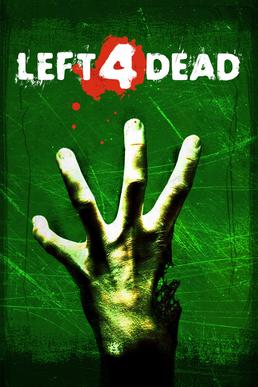
Review - Left 4 Dead


Developer/Publisher: Valve Corp. (Certain Affinity Xbox 360 version)

Release Date: November 18, 2008
Rating: M for Blood and Gore, Intense Violence, Language

Available On: PC, Xbox 360

Genre: First Person Shooter

Number of Players: 1-8 (online), 1-2 (local split screen)
Strong Points: Online and offline play; fast pace; solid gameplay; easy drop-in-drop-out play; lots of humor; high replay value; well-crafted horror setting (lighting, sounds, etc.); gives everyone a “this one time..!” story; lovable characters; ZOMIBES.

Weak Points: Not for everyone; limited weapons; single player is not enough to justify a purchase; just as described story is even less than a typical B movie; limited map selection (though DLC will increase this); the nature of the game can make getting an exact party difficult.
Technical Score: A-

Artistic Score:B+

Final Score (not an average): A

Moral Warnings: Lots of swearing (including GD and JC); “God is Dead” is spray painted a few locations; lots of violence; blood (splatters on HUD) and head explosions; violence includes sounds such as hearing your teammates screaming for help while being assaulted by various undead


Do you have your plan? Everyone needs one. I have had my plan for surviving the zombie apocalypse since I was about twelve. It predates my plans for supercomputer takeover, but not communist invasion. Whether you have one or not, Left 4 Dead gives us the best method for weeding out which of our friends you really want to keep around when the dead start shuffling; or rather running. Breaking from the Resident Evil and George Romero norm of stumbling, moaning brain eaters, Valve is following closer to the 28 Days Later style of dashing cannibals. I think this is mostly a control decision.

If Valve does one thing right, it is first person shooters. If you pit a team of four people who can headshot from the hip against old school zombies it might start out fun but lack of challenge will quickly kill the game. So instead of taking the Resident Evil or Silent Hill path of confining controls Valve chose a balance. They used fast zombies (“infected”) and “special infected," and they kept the shooting simple. There is no aiming down the sights (except with a scope) and no leaning to peer around corners or cover. As a straight FPS, L4D is rather basic, including when compared to Valve’s own products. They take this and implement it in a very “get from start point to safe room” gameplay style with lots of obstacles and events to make it fun along the way.


Another thing that you always need for your survival plan is guns. Lots of them and ammunition, too. This is something I have mixed feelings for in L4D. They provide two tiers of guns. The first consists of pistol, pump shotgun, and Uzi; the second has dual pistols, auto shotgun, assault rifle, and hunting rifle (the only gun with a scope). This basically limits the player to four weapons with nearly no variation. Even though it is a more practical design, I can’t help but be upset. Each gun is made very well however; great sounds, kick and firepower will keep you happy with what you do have. For a bit of an extra punch someone ran ahead of you and made large quantities of Molotov cocktails and timed pipe bomb grenades, both of which are perfect for killing massive quantities of zombies in a short period of time. But be careful with those Molotovs since survivors are flammable, too!

The last thing you need for firepower are the actual bullets, and they are fairly scarce in this game. As they should be. While this is not a resource managing game, if there was no end to the number of clips a survivor could carry, then nothing would stop them from holding down the trigger the entire game. I feel they hit the spot nearly on target, as I rarely have run out of ammo but often would if the group missed an ammo stockpile. Funny how there are heaping piles of all sorts of bullets lying around on tables at such a chaotic time (left by the same person as made the grenades?). I do think the shotgun could use a few fewer rounds as I have yet to run out and the assault rifle could use with perhaps one clip as I regularly run out with it.

But just who’s plans worked well enough to live long enough for you to play as them in L4D? Luckily, making great characters around the player through scripted events is something Valve takes pride in and does very well in L4D. I have talked with several people who, before knowing too much about the game, claimed that it would be much better if it was more customizable, specifically if it allowed players to make their own players. At first, prior to launch, I was leaning in favor of their argument. After playing it, though, I have to say they are completely wrong. Valve chose four characters and built the world around them. They each have very specific responses to locations, events, situations, and each other. They also have very specific voices, and I think this is incredibly important. Voice chat is a must, of course, but hearing the responses of the characters is incredibly moving, both in a uplifting and funny way, but mostly in a terrifying way as they are dragged kicking and screaming through near death again and again.

The four characters quickly grow on you and give you a feel for them and the situation; it associates them with the danger in a way that you would not get with a generically created avatar with the same voice as half the other players. You will be disappointed if you expect a great story but what you will get is a great experience. Most of the story that is there is told through writing scrawled on walls and floors through the levels and particularly in the safe rooms. From “God is Dead” and “We deserved this” and the like to messages for missing loves ones to a list of how many zombies the writer had killed. Portal, which was also a survival story without much story, used similar messages to depict the tales of those here in the past, to give you hints for what you may do in the future, and leave you with a chuckle now.


When, at last, one succumbs to the inevitable and becomes one of the undead, it turns out to actually be just as exciting as being alive, maybe even more so. When not playing through the game with three friends, or as many bots as needed to fill out the team, you can pit your team against four other former survivors in the Versus mode. Instead of respawning in a closet as usual there is no respawn at all and if at least one team member does not make it to the safe room they lose the round. As of the time of original writing, only two of the four campaigns are playable for Versus, but the rest will be added later for free by Valve. Until then, the rush of hunting down the other team in either a city or forest is more than enough.

Versus tends to make the game even more intense and exciting. While the AI is generally quite good, nothing compares to a living (or not so living), thinking human controlling your enemies. There is also nothing as exhilarating as pouncing a survivor as the hunter (a hoodie wearing, super jumping special zombie) or pulling one as smoker (a gangly special infected with a extra long tongue it uses to grab and pull as if fishing for humans) in a place you know no one will be able to save them. The point of that is that L4D makes you, as a survivor, completely dependent on your teammates. Without them to cover you, melee a special infected to save you, or to help you up you will die. When health reaches zero the survivor becomes incapacitated (with a “three strikes and you are out” rule for death) and will slowly bleed to death. Similarly, when pounced or hooked by a smoker, there is no way for you to free yourself.

The third special infected is not as deadly directly, but can wreak even more havoc; the boomer is a bloated zombie with a puke ability that will “slime” survivors and blur their screen. But that is not the worst of it. The regular infected are attracted to this goo and a horde of them will instantly spawn and come after anyone with it on their skin. The last playable infected is the tank. Basically the hulk lost his green and decided he likes to eat brains. Players are randomly chosen to play as the tank and will enjoy super strength and rock throwing abilities. I find it is better just to punch however, especially since logs and cars make for better people squishers than rocks. The last special infected is not playable but is perhaps the creepiest. The witch sits patiently in her spawn location crying and wailing until “startled.” Spooking a witch is very foolish. She instantly incapacitates anyone she hits at best and can kill them regardless of health. Stay away at all costs unless you are very good with the shotgun and can take her out before startling her. Otherwise turn off flashlights and don’t shoot around her or even get close.

On a more exact level, Left 4 Dead has a great interface and matchmaking system for easy play on both platforms. Getting a party is easy, just getting a party of people you know (the most fun way to play) can be hard and awkward, though it isn’t necessarily the game’s fault. Getting exactly four or eight people can leave teams lopsided, and if you want to play expert, you absolutely need four players. PC servers are sometimes buggy and good connections aren’t as common as they should be; it always takes a minute to properly establish the connections.


Sound plays a major role in any kind of horror or survival setting and Valve hits every note perfectly. From specific events to themes for witch and tank spawns to the sound effects, everything fits perfectly. The fear the witch’s cry incites or the terror of hearing the tank’s theme is incredible. Almost as good as those are terrible is the completion sound played when you make it into a safe room.

But that rewarding sound doesn’t come easy since the AI does an excellent job of keeping it challenging. Usually it does well for Survivor campaigns but it just doesn’t cut it in expert. It does have a few kinks still to work out, as they will do stupid things as all AI tend to do, but they generally function very well. In Versus it can actually be an advantage to have a bot on the Bloody Harvest campaign as they can "see" through trees and shoot infected when you would never have noticed. Valve also made a director AI that monitors stress levels of the survivors and sets up ratios against the number of infected currently spawned and killed and other factors to manipulate the game around the players. Hordes will be spawned suddenly or a witch or tank will be placed based on the player’s behavior and how well they are performing. Several times I have felt that the director hates particular teams when playing Versus, but that team has always been my own. so maybe it is just me. Versus, in the name of fairness, has also forced all tank and witch spawns to be in the same locations for both teams. In Versus, the teams take turns playing through each chapter of the each campaign so the second team will always know exactly what to expect as far as those two major obstacles are concerned. Hardly fair in my opinion.

Visually, both versions look very good. The Source engine is at its finest, but this game shows it is also clearly on its last legs. They are good but not great and certainly not amazing when compared to many other titles coming out. Valve did a very good job of prioritizing just what looks good, especially the animations. The faces of the survivors are depicted very well, and they portray their emotions (generally horror) particularly well. A special situation also throws the player into third person view and temporarily takes away control of the player. These situations provide a chance to see just how great he animations really are. Whether a hunter has you pinned to the ground and is tearing you apart, a witch just ran past and pushed you aside, or you are helping a teammate up, the animations and vocal responses fit perfectly. All the character models also look very good, the generic infected in particular have an immense number of skins keeping htem fresh visually, if not physically. Keeping with the B movie feel, this screenplay comes complete with a film grain slider bar to fit your personal preference when fighting off hordes of zombies. Oh, and there are several great explosions in the game that will make you smile, so don’t worry.

Left 4 Dead grabs the player and his friends and throws them right into a well crafted apocalypse with fun characters and terrifying enemies that will have them sweating bullets. Do you shoot the zombies and risk the harsh punishment of friendly fire, or do you call out and hope your friend reacts in time? Will you bleed out before your friends make it to you? Can you sneak past the witch, or will she completely destroy you with her Lady Deathstrike claws? I suggest you let the other guy go first.

I think the best part of Left 4 Dead is when you are talking about it. Nearly every time you play, it gives everyone playing a story to tell. A time you just made it to save all three of your team mates... or didn't. A time you blew a tank off the roof or were the tank and punched them all off. The possibilities are nearly endless and even though each campaign can be played through in roughly two hours, the variables of just Versus make them infinitely different in so many ways every time. In the four player Survivor campaigns there are different difficulties to create a constant challenge.

Besides the obvious violence the biggest issue this game has is language. Nearly every word in the book besides the f bomb is used and fairly regularly at that. It is not overly gory but there is plenty of blood. Fortunately, there is hardly any sexual content except a few zombies in hospital gowns show bare bottom.

When everything is lined up, I have to say that Left 4 Dead is an incredibly fun, incredibly replayable game simple enough for nearly anyone to enjoy but having enough depth and strategy for the hardcore. I can’t recommend it enough to those not put off by its moral content, especially with Valve’s promise and track record of content updates.

-Paul Alfred Brown, guest reviewer

Read full article